Glencore just locked in the most important land deal nobody's talking about.

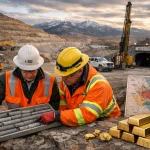
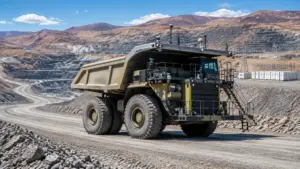
The Swiss mining giant finalized a land access agreement with Congo's Gecamines that unlocks previously restricted ore zones at its Kamoto Copper Company (KCC) operations. This isn't a modest expansion. This is the foundation for Glencore's plan to nearly double copper output over the next decade and position itself as one of the three largest copper producers on the planet.
The Gecamines agreement extends KCC's operational life into the mid-2040s and clears the path to 300,000 tonnes of annual copper production. That's a 50% increase from current levels at a single asset. More importantly, it removes the single biggest production bottleneck constraining Glencore's copper ambitions in the Democratic Republic of Congo: a jurisdiction where most Western miners have either exited or are planning to.
Glencore is sprinting in the opposite direction.
The $23.4 Billion Copper Build-Out
The DRC agreement is one piece of a much larger puzzle. Glencore's strategic pivot to copper encompasses over $23 billion in organic growth investments designed to push annual production from roughly 900,000 tonnes today to 1.6 million tonnes by 2035.
More Read



That's not incremental growth. That's transformation.
The company is allocating 35% to 40% of its annual capital expenditure: roughly $5 to $7 billion per year over the next three years: specifically to copper projects. Peak development spending could hit $4.5 billion in 2031 when four major projects advance simultaneously. For context, that's more capital than most mid-tier miners deploy across their entire portfolio.
More Read

Management insists the growth plan is self-funded. Consensus forecasts project EBITDA climbing from approximately $12.8 billion in 2025 to $16 to $20 billion by 2030, driven almost entirely by copper volume expansion and favorable pricing dynamics. Translation: Glencore believes copper will carry the company through the next decade, and they're willing to bet the balance sheet on it.
The project pipeline backs up that confidence:
- Collahuasi (Chile): Brownfield expansion at one of the world's largest copper operations
- MARA (Argentina): Restart of a previously mothballed asset
- El Pachón (Argentina): Greenfield development still in feasibility stage but positioned as a cornerstone long-term asset
Glencore expects production volumes to climb steadily from 2027 onward after 2026 marks what CEO Gary Nagle calls "the low point." Current output sits roughly 40% below 2018 levels: a decline driven by asset sales, mine depletion, and jurisdictional exits. The next phase reverses that trajectory aggressively.
Two Deals That Could Reshape the Industry
While Glencore hammers out its organic growth strategy, it's simultaneously pursuing two wildly different M&A pathways that could fundamentally alter the global copper supply chain.
Deal One: The Rio Tinto Mega-Merger
Glencore has resumed merger negotiations with Rio Tinto for a potential $260 billion combination that would create the world's largest mining company. This isn't a new idea: the two companies have circled each other for years: but the strategic rationale has never been stronger.
A combined Glencore-Rio entity would control a dominant copper portfolio, particularly across South America, where both companies hold Tier 1 assets. The deal would also create operational efficiencies in logistics, marketing, and capital deployment that neither company can achieve independently. More importantly, it would give the combined entity pricing power in a market where copper deficits are expected to widen dramatically through 2030.
Nagle has been careful to frame consolidation as beneficial to shareholders while avoiding any specific timeline or commitment. Translation: they're interested, but not desperate.
Deal Two: The US Government Partnership
Simultaneously, Glencore signed a non-binding memorandum of understanding to potentially sell 40% of its DRC copper and cobalt assets to the Orion Critical Mineral Consortium, a US government-backed entity designed to secure Western access to critical minerals.
This is where geopolitics meets corporate strategy.

Glencore is currently the only major Western producer of copper and cobalt in the DRC. China controls the majority of processing capacity for both metals, creating a supply chain vulnerability that Washington views as a national security risk. By bringing in Orion as a minority partner, Glencore achieves three objectives:
- Secures capital for further DRC expansion without diluting the parent company
- Aligns itself with US strategic priorities, reducing political risk
- Maintains operational control while sharing jurisdictional exposure
The 40% stake sale would apply to Glencore's entire DRC copper and cobalt portfolio, including the newly expanded KCC operations. If finalized, the deal would make the US government a direct stakeholder in Congolese copper production for the first time in decades.
That's not just a commercial transaction. That's industrial policy.
Why "Double Down" Is the Only Strategy That Works
Glencore's aggressive copper expansion isn't happening in a vacuum. The company is responding to a market dynamic that's becoming impossible to ignore: structural copper deficits driven by energy transition demand.
Global copper demand is projected to climb from approximately 25 million tonnes in 2025 to over 30 million tonnes by 2030. Supply, meanwhile, is constrained by declining ore grades, permitting delays, and a brutal lack of new discoveries. The result is a widening gap that mining majors are scrambling to fill.
Glencore's strategy acknowledges a hard reality: you can't outrun geology with balance sheet engineering. The only way to capture value in a supply-constrained market is to control physical metal. That requires long-term capital commitments in jurisdictions where most investors are heading for the exits.
The DRC is the perfect example. Political risk is real. Infrastructure challenges are constant. Labor disputes are frequent. But the copper grades are world-class, and the geological endowment is unmatched outside of Chile and Peru.
Glencore is betting that operational competence and strategic patience will trump short-term volatility. The Gecamines agreement suggests that bet is paying off.
What This Means for Copper Markets
If Glencore executes on its production targets, the company will add roughly 700,000 tonnes of new annual copper supply by 2035. That's equivalent to three world-class mines coming online over the next decade: except it's all coming from existing operations and brownfield expansions with significantly lower execution risk than greenfield projects.

But even that won't be enough.
The International Energy Agency projects that meeting net-zero targets will require roughly 6 million tonnes of additional copper supply by 2040. Glencore's entire expansion plan covers roughly 10% of that gap. BHP, Rio Tinto, and Freeport-McMoRan are all pursuing similar strategies, but the combined industry pipeline still falls short of demand projections.
The strategic calculus here isn't subtle: copper prices need to stay elevated to justify the capital intensity required to bring on new supply. Glencore is positioning itself to benefit from that dynamic while hedging its bets through both organic growth and potential M&A.
The Rio Tinto merger, if it happens, would accelerate that timeline. The Orion partnership, if finalized, would de-risk the DRC exposure. The Gecamines agreement ensures that production can scale without running into land access constraints.
None of this is accidental.
The Risk No One Wants to Talk About
Glencore's copper pivot carries one glaring risk that the market is mostly ignoring: cobalt price volatility.
The DRC assets that underpin Glencore's copper expansion also produce significant volumes of cobalt as a byproduct. Cobalt prices have been brutal over the past 18 months, driven by oversupply from Chinese-controlled operations and weakening demand from the battery sector. If cobalt remains depressed, the economics of Glencore's DRC operations deteriorate significantly.
The company is clearly aware of this risk. The potential Orion stake sale would shift some of that exposure to a partner with a strategic: rather than purely commercial: interest in cobalt supply. But it doesn't eliminate the underlying problem.
Glencore needs copper prices to stay elevated and cobalt prices to recover. That's a needle that's almost impossible to thread.
The 2026 Inflection Point
CEO Gary Nagle has been clear: 2026 represents the low point for Glencore's copper production. From 2027 onward, volumes are expected to climb steadily as the Gecamines expansion ramps up, MARA restarts, and Collahuasi brownfield projects come online.
The timing matters.
If copper prices hold above $4.50 per pound through 2026: and most analysts believe they will: Glencore will be entering its growth phase at the exact moment when supply constraints become most acute. That's not luck. That's strategic positioning.
The company's EBITDA trajectory supports this view. Consensus forecasts show steady earnings growth through 2030, driven almost entirely by copper volume expansion. Marketing and trading divisions: historically Glencore's bread and butter: are expected to contribute relatively less as the company transitions from a diversified trader to a pure-play copper producer.
That transformation is already underway. The only question is whether Glencore can execute on the production ramp without stumbling on permitting delays, labor disputes, or geopolitical shocks in the DRC.
The Gecamines agreement suggests they've cleared the biggest hurdle. Everything else is execution risk. And Glencore has a track record of delivering on operational promises, even in jurisdictions where most Western miners struggle.
The copper bet is locked in. The only variable left is price.