By Charles Pitts

Most analysts still look at BHP and see a giant iron ore machine rooted in the red dirt of Western Australia. They are looking at the rearview mirror. The reality on the ground in 2026 is that the Big Australian is no longer tethered to the Pilbara.
BHP is effectively an American copper company in transition.
The appointment of Brandon Craig as President Americas wasn't just a routine executive shuffle. It was a declaration of war on the status quo. For years, the market viewed BHP’s South American and North American assets as secondary appendages to the iron ore cash cow. But as of the first half of fiscal 2026, copper accounted for 51% of BHP’s underlying profit.
That isn't a rounding error. It’s an inflection point.
More Read

The strategy is clear: follow the geology where the policy is supportive. Right now, that path leads directly away from the regulatory headaches of Canberra and straight into the heart of the Andes and the American Southwest.

Why Brandon Craig?
Brandon Craig didn't get this job because he likes the weather in Santiago or Tucson. He got it because he knows how to scale a titan. Craig is the man who ran Western Australia Iron Ore (WAIO), the crown jewel of the BHP portfolio. Moving the guy who mastered the world’s most efficient iron ore supply chain to lead the Americas is a massive tactical signal.
It means BHP is finished with "exploration mode" in the Americas. They are moving into "execution mode."
More Read

The Craig Era is defined by a brutal realization: iron ore is the past; copper is the future. While iron ore prices face headwinds from a cooling Chinese steel sector and the uncertain future of U.S. Steel, copper demand is being driven by an insatiable, non-negotiable global energy transition. You can’t build a global battery revolution without red metal.
Craig’s mandate is to take the operational discipline of the Pilbara and apply it to the high-altitude, high-stakes environments of Chile, Peru, and Arizona.

The Vicuña District: The New Frontier
If you want to see where the real action is, look at the Vicuña District. BHP’s partnership with Lundin Mining on the Filo del Sol project is the centerpiece of this strategic pivot. This isn't just another mine; it’s a jurisdictional play that bridges the border between Chile and Argentina.
The industry is watching the Vicuña District with a mix of awe and desperation. As we detailed in our recent Mining Intelligence report, this region is becoming the "New Copper Frontier."
BHP is committing between $10 billion and $14 billion to its Chilean operations. They aren't just digging holes; they are reinventing extraction. By implementing proprietary "supergene leaching" processes at the Cerro Colorado mine under the Pampa Norte revitalization, BHP is squeezing value out of ore that others would have walked away from years ago.
The goal? A production target of 2.5 million tonnes of copper equivalent annually across the global portfolio. To hit that, they need the Americas to perform like a well-oiled machine.
Australia’s Loss, America’s Gain
Why the pivot? Because you can’t disrupt geology, but you can certainly disrupt a business climate.
In Australia, the mining industry is currently grappling with a "triple threat" of rising royalties, tightening labor laws, and a regulatory environment that feels increasingly hostile to large-scale greenfield development. The message from Melbourne is subtle but firm: if the Australian government wants to tax mining into stagnation, BHP will simply take its billions elsewhere.
The Americas, meanwhile, are rolling out the red carpet.
Washington is waking up to the reality that a "Green Revolution" made in China is a strategic nightmare. The geopolitical surge involving $1 billion in U.S. funding for Latin American critical minerals is a tailwind BHP is more than happy to catch.
In Arizona, Resolution Copper is finally seeing real momentum. Despite years of litigation and environmental pushback, the project represents one of the largest untapped copper deposits on the planet. Under Brandon Craig’s leadership, Resolution is being framed not just as a mine, but as a piece of American national security infrastructure.

The Math is Brutal
Let’s look at the numbers. They don't lie.
BHP expects a 5% compound annual growth rate in copper production from 2027 through 2035. That is aggressive. It requires everything to go right: from the Escondida concentrator approval in Chile to the successful integration of Lundin’s assets in the Vicuña.
Meanwhile, the iron ore division, while still immensely profitable, is no longer the growth engine. It’s the bank. The cash generated in Western Australia is being siphoned off to fund the copper pits of the Western Hemisphere.
This is a classic "Harvest and Reinvest" strategy. Harvest the iron ore profits while the sun is still shining, and reinvest them in the one commodity that has no substitute in a decarbonizing world.
Operational Challenges and Realism
It’s not all sunshine and rising LME prices. Moving to the Americas brings a different set of headaches.
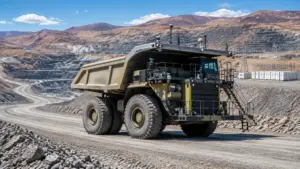
The high-altitude Andean environment is brutal on equipment and people. Water scarcity in the Atacama Desert is a constant existential threat. BHP has spent billions on desalination plants, but the social license to operate in Chile remains fragile.
Brandon Craig’s background in the Pilbara: a flat, hot, and isolated desert: is relevant, but it didn't prepare him for the complex socio-political landscape of South America. In Australia, you deal with unions and the occasional tax hike. In the Americas, you deal with shifting constitutional frameworks, local community roadblocks, and a level of geopolitical risk that can evaporate a $10 billion investment overnight.

The Resolution Factor
In the United States, the challenge is different: permits.
Resolution Copper is the ultimate test of BHP’s patience and Craig’s diplomacy. If permitted, it could supply 25% of U.S. copper demand. If it stays stuck in the courts, it remains a multi-billion dollar hole in the balance sheet.
BHP is betting that the "Critical Minerals" narrative will eventually override local opposition. They are positioning copper as the "new oil," and Brandon Craig is the new pipeline manager.
What Happens Next?
The "Craig Era" will be judged by one metric: how much of that 51% profit share BHP can sustain or grow as iron ore inevitably plateaus.
We are seeing a massive consolidation of power and capital in the Americas. BHP is no longer content to be a passive partner or a cautious explorer. They are acting with the urgency of a company that knows the clock is ticking on its traditional revenue streams.
Expect more joint ventures. Expect more aggressive capital allocation toward Chile and the U.S. And expect Brandon Craig to become the most important face in the BHP C-suite over the next three years.
The strategic calculus isn't subtle:
- De-risk Australia: Move capital away from high-tax, high-regulation zones.
- Double down on Copper: Capture the 2030 supply-demand deficit.
- Execute in the Americas: Turn the Vicuña and Resolution from "potential" to "production."

The Uncomfortable Truth
The uncomfortable truth for Australian policymakers is that their biggest company is slowly leaving them behind. They aren't moving their HQ: yet: but they are moving their future.
BHP’s pivot toward the Americas and copper is a rational response to a changing world. It’s a bet on electrification over urbanization. It’s a bet on the Andes over the Pilbara.
Welcome to the Craig Era. It’s going to be red, it’s going to be American, and it’s going to be expensive.
But in a world starving for copper, BHP knows they can’t afford to be anywhere else.
Social Media Snippet (LinkedIn/X):
BHP is no longer just an iron ore giant. With 51% of profit now coming from copper and Brandon Craig taking the helm of the Americas, the "Big Australian" is undergoing its most significant strategic pivot in decades. From the Vicuña District to Resolution Copper, the focus is shifting to the Western Hemisphere. Is this the end of the Pilbara's dominance? #BHP #Copper #MiningLeadership #CriticalMinerals #EnergyTransition