By Penny Langford

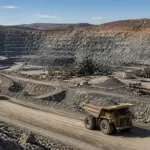
Autonomous mining technology 2026 is moving beyond pilot fleets. EACON says its autonomous haulage systems now operate on more than 3,500 mining trucks globally, including more than 1,500 battery-electric units. The figures point to a wider shift in mining: autonomy and electrification are no longer separate equipment strategies but increasingly connected parts of mine design.
The commercial question is also changing. Operators are no longer asking only whether a truck can navigate without a driver. They are assessing whether autonomous fleets can deliver reliable production across charging, loading, dumping, maintenance, communications and mixed-traffic environments.
That transition is visible across several technology platforms. EACON is scaling autonomous electric haulage, Epiroc is extending automated truck cycles between underground and surface operations, Hexagon is strengthening automated collision intervention, and Sandvik’s Sami concept shows how autonomous drilling could develop.
EACON’s fleet scale changes the electric-haulage debate
EACON’s reported fleet is one of the clearest indicators that autonomous battery-electric haulage is reaching industrial scale.

The company says its autonomous solution has been deployed on more than 3,500 haulage trucks, with more than 1,500 battery-electric trucks in operation as of September 2026. That would put battery-electric vehicles at roughly 42% of EACON’s reported autonomous fleet, although the figures remain company-reported rather than independently audited.

The number is significant because electric mining trucks introduce operating constraints that diesel fleets can often absorb more easily. Charging queues, grid capacity, battery state of charge, haul-road gradients and weather all affect productivity. Autonomy can help coordinate those variables, but it cannot remove them.
At EACON’s Taihe iron ore deployment in China, the company reported that 18 autonomous battery-electric trucks were operating after 12 additional vehicles joined an initial six-truck fleet. EACON said the initial trucks had operated for more than a year, with zero reported safety incidents and average monthly haulage output of approximately 430,000 tonne-kilometres.

The results are site-specific, but they illustrate the type of operating data mine owners will need before expanding electric fleets.

Battery-electric haulage combines autonomous control with new charging and energy-management requirements.
The technology stack is becoming a mine-wide system
Autonomous haulage depends on more than vehicle control software. EACON’s ORCASTRA platform combines fleet and production management, autonomous vehicle control and coordination with manually operated equipment.
That architecture reflects the reality of most mine sites: autonomy will be introduced into mixed fleets rather than deployed across every asset at once. Autonomous trucks may share roads with excavators, graders, water carts, light vehicles and maintenance equipment.
The system must therefore manage:
- vehicle-to-vehicle and vehicle-to-infrastructure communications;
- LiDAR, radar, cameras and inertial measurement systems;
- traffic rules and exclusion zones;
- loading and dumping coordination;
- remote intervention and controlled-stop procedures;
- battery status and charging availability.
For operators, the main benefit is consistency. Autonomous trucks can follow repeatable routes, maintain spacing, reduce unnecessary stops and continue through shift changes. The productivity case is strongest where roads are repetitive, traffic can be controlled and loading and dumping locations are stable.
The risks are concentrated in the interfaces. A truck may be technically capable of autonomous operation but still lose productive hours because of poor road conditions, network gaps, charging congestion or manual vehicles entering the operating zone.
Epiroc links underground and surface autonomy with 3D LiDAR
Epiroc is addressing a different part of the autonomy challenge through its Deep Automation platform.
The company has demonstrated an autonomous battery-electric mining truck moving from an underground environment toward surface haul roads using 3D LiDAR for localization, mapping and obstacle detection. The objective is to keep the vehicle within one automation architecture instead of requiring a manual handover at the mine portal.
That transition zone is operationally difficult. Portals can combine steep ramps, changing light levels, fixed infrastructure, pedestrians, service vehicles and unreliable satellite positioning. A system based on dense 3D point clouds can help the truck build a more detailed view of the environment while continuing to identify berms, vehicles, personnel and loose rock.
For underground mine planners, the potential value is continuity. Automation that ends at the portal may improve production in one part of the mine while leaving a manual bottleneck elsewhere. Connecting the underground haul cycle with surface dumping could make autonomous equipment more useful across the full route.
Epiroc’s demonstration should not be treated as proof that every underground-to-surface haulage route is ready for immediate commercial deployment. The company has not publicly provided a broad customer rollout schedule or pricing for this specific 3D LiDAR function. The commercial test will be sustained performance in dust, rain, changing light and mixed traffic.

3D LiDAR can support continuous localization as autonomous trucks move between underground and surface environments.
Hexagon’s Level 9 intervention adds a safety layer
Autonomy and collision prevention are closely related but not identical. A mine can use automated safety systems on manually operated equipment, autonomous trucks or both.
Hexagon’s Vehicle Intervention System is positioned within the EMESRT control-effectiveness framework as a Level 9 solution. At that level, the system can automatically intervene in vehicle propulsion or braking when a detected hazard creates a high-risk situation and the operator does not respond to warnings.
The intervention layer sits above advisory systems such as collision alerts and operator-alertness monitoring. Depending on the configured application, it can support functions including speed control, propulsion inhibition, braking and bringing equipment to a safe state following a critical fault.
Hexagon has reported deployments across multiple continents and mine sites, while its latest system has also undergone independent testing associated with machine control, event logging and safe-state diagnostics.
The importance for operators is not the label alone. Level 9 systems must be evaluated against site-specific traffic rules, vehicle types, response times, maintenance procedures and regulatory requirements. The system is a last line of defense, not a substitute for road design, berm standards, equipment separation or disciplined mine control.
Sandvik’s Sami shows the next stage for autonomous drilling
Sandvik’s Sami is a fully autonomous, battery-electric surface drill concept unveiled at the company’s Future of Mining event in Finland.
The cabinless concept is designed to navigate a mine, plan and execute drilling cycles, measure hole depth and deviation, identify people and equipment, and distinguish between stationary and moving obstacles. It also carries drill bits, collar pipes and down-the-hole hammers, with an onboard robotic manipulator performing tool changes and related tasks.
Sami is linked to a continuously updated digital twin and managed through Sandvik’s Sandi artificial-intelligence agent. In the concept presented by Sandvik, Sandi assigns drilling tasks and coordinates activity across the wider mining fleet, while the drill executes its own work cycle.
Sandvik has been clear that Sami is a concept rather than a commercial product. Its importance is therefore strategic rather than immediately financial: it demonstrates how electrification, robotics, autonomy and digital mine coordination could be combined in surface drilling.
The company’s earlier battery-electric surface-drill work provides a technical foundation. Sandvik has described a concept rig capable of using battery power for tramming and individual holes while relying on a tethered cable for longer drilling patterns. That approach highlights a broader industry reality: electric equipment may use different power architectures depending on duty cycle and site infrastructure.

Sandvik’s Sami concept combines autonomous drilling, battery-electric power and robotic tool handling.
Autonomous mining technology 2026: commercial deployment tracker
| Technology or company | Reported capability | Status | Main operating implication |
|---|---|---|---|
| EACON autonomous haulage | More than 3,500 trucks, including 1,500+ battery-electric units | Company-reported commercial fleet scale | Charging, fleet dispatch and mixed-traffic control become central |
| Epiroc Deep Automation | 3D LiDAR supports underground-to-surface autonomous truck movement | Demonstrated technology | Mine portals can become part of one automated haul cycle |
| Hexagon VIS | EMESRT Level 9 automated vehicle intervention | Deployed safety technology | Systems can intervene with propulsion or braking in defined hazards |
| Sandvik Sami | Cabinless, battery-electric autonomous surface drill concept | Concept stage | Points toward robotic drilling and digital-twin coordination |
| EACON Taihe deployment | 18 battery-electric autonomous trucks reported at one iron ore mine | Operating deployment | Provides site-level data on utilization, output and safety |
The table also shows why “autonomous” should not be treated as a single category. A commercial haulage fleet, a safety intervention system and a concept drill occupy different stages of maturity.
Base, bull and bear framework
| Scenario | What it looks like | Key drivers | Main risks |
|---|---|---|---|
| Base case | Large surface mines expand autonomous haulage in mixed fleets while underground and drilling applications move through controlled deployments | Proven uptime, labor redesign, safety requirements and lower diesel exposure | Charging bottlenecks, network outages, retrofit complexity and workforce transition |
| Bull case | Autonomy becomes a standard mine-design requirement, with electric haulage, automated drilling and centralized control operating as one production system | Falling sensor costs, reliable private networks, better batteries and regulatory acceptance | Integration still requires high capital spending and strong technical skills |
| Bear case | Adoption remains concentrated in a limited number of large, repetitive operations | Smaller fleets cannot justify infrastructure and support costs | Poor road quality, weak grid capacity, cybersecurity incidents and underperforming pilots |
What mine decision-makers should measure
The most useful metrics are operational rather than promotional:
- autonomous availability and productive hours;
- intervention frequency and emergency stops;
- tonnes moved per operating hour;
- charging queue time and energy use per tonne;
- network latency, coverage and failover performance;
- sensor faults in dust, rain and low light;
- maintenance time for high-voltage and autonomous systems;
- cycle-time variation across loading, hauling and dumping.
These measures provide a better basis for investment decisions than fleet announcements alone.
Autonomous mining technology 2026 is reaching commercial scale first in haulage, where repetitive routes and large fleets support the economics. The next phase will depend on integration. EACON’s electric fleet provides evidence of industrial deployment; Epiroc’s 3D LiDAR work addresses continuity across mine environments; Hexagon’s Level 9 system adds automated risk intervention; and Sandvik’s Sami concept points toward autonomous drilling.
The mines that gain the most will be those that treat autonomy as an operating model rather than a software upgrade. Charging, road design, communications, maintenance, safety and workforce planning will determine whether electric autonomous equipment delivers consistent production.
Related reading: Skillings mining technology coverage and Autonomous mining technology: 1,500 electric trucks deployed.
Social snippets
LinkedIn:
Autonomous mining technology is moving into commercial scale. EACON reports more than 3,500 autonomous trucks globally, including 1,500+ battery-electric units. Epiroc is extending autonomous haulage between underground and surface operations with 3D LiDAR, while Hexagon’s Level 9 VIS adds automated vehicle intervention. The next test is mine-wide execution: charging, network resilience, mixed-traffic control and uptime.
X:
EACON reports 3,500+ autonomous trucks, including 1,500+ battery-electric units. Epiroc is using 3D LiDAR to connect underground and surface haulage. Hexagon adds Level 9 intervention, while Sandvik’s Sami points to autonomous electric drilling. Commercial scale now depends on integration.