Collapsed artisanal shafts at a gold-mining site in Sudan’s West Kordofan state.

At least 60 people were killed after a gold mine collapsed in Sudan’s West Kordofan state, while reports that survivors remain trapped underground have prompted urgent calls for rescue assistance.
The collapse occurred at the Al-Zaraa mine near al-Nuhud, an area where artisanal miners work through networks of narrow, hand-dug shafts. The incident has drawn renewed attention to the safety risks facing Sudan’s small-scale miners and to the wider gold trade that links remote mining sites to regional trading routes and the United Arab Emirates.
The Northern Miner reported that more than 60 people had been confirmed dead. The final toll could rise as recovery teams reach sections of the mine that remain inaccessible.
Rescue efforts face severe constraints
Local miners and residents have reportedly been leading rescue efforts with limited equipment. In many Sudanese artisanal operations, miners rely on hand tools, ropes, buckets and improvised lifting systems rather than engineered shaft infrastructure or specialist emergency teams.
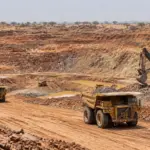
The mine is understood to consist of several adjoining shafts dug close to one another. When one shaft fails, the collapse can destabilize neighboring workings, making rescue operations dangerous and slowing access to trapped workers.

Reports from the site describe unstable, sandy ground and a lack of specialized machinery. Rescue teams must therefore balance the urgency of reaching survivors with the risk of triggering further collapses.
What is known about the incident
| Indicator | Reported situation |
|---|---|
| Location | Al-Zaraa mine, near al-Nuhud in West Kordofan |
| Mine type | Artisanal and small-scale gold mining |
| Confirmed fatalities | At least 60 |
| Rescue status | Survivors were reportedly still trapped underground |
| Main operational risks | Unstable ground, closely spaced shafts and limited rescue capacity |
| Wider significance | Highlights systemic safety and oversight failures in Sudan’s gold sector |
The casualty figure remains subject to change because informal mine sites often do not maintain reliable worker registers. The number of people underground at the time of a collapse may be difficult to establish, particularly in conflict-affected areas where local authorities have limited access.
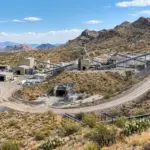

Informal mining in Sudan commonly relies on narrow shafts, basic tools and improvised lifting equipment.
Artisanal mining supplies most of Sudan’s gold
The collapse occurred in the part of Sudan’s mining economy that produces most of the country’s gold. Artisanal and small-scale mining accounts for roughly 80% to 85% of declared national production, according to research from Chatham House and Yale Environment 360.
Chatham House reported that Sudan produced about 64.36 tonnes of declared gold in 2024, of which approximately 53.71 tonnes came from artisanal and small-scale operations. Other official and semi-official estimates put 2025 production at about 70 tonnes, although the actual figure is likely higher because a significant volume is not recorded through formal channels.
The sector supports livelihoods for millions of people, including miners, traders, transporters and processors. It has also expanded as Sudan’s industrial mining sector and broader economy have been disrupted by war.
That economic importance has made artisanal mining difficult to regulate. Workers often operate outside formal employment systems, while mine owners, local traders and armed groups may control access to sites and transport routes. In remote areas, production can continue even when government agencies lack the personnel or equipment to inspect workings.
The result is a sharp gap between the value of the gold being produced and the level of protection available to the people extracting it.
A regulatory vacuum worsened by conflict
Sudan has formal mining laws and licensing requirements, but enforcement has weakened as the conflict between the Sudanese Armed Forces and the Rapid Support Forces has fragmented state authority.
West Kordofan and neighboring regions have experienced insecurity, displacement and competing systems of control. That makes routine geological assessments, shaft inspections, worker registration and emergency planning difficult to carry out.
Artisanal shafts may lack:
- Geological surveys and ground-stability assessments
- Proper timber, steel or concrete support
- Ventilation and escape routes
- Worker training and personal protective equipment
- Emergency communication systems
- Rescue plans and access to heavy lifting equipment
The absence of those safeguards is particularly dangerous where multiple shafts are excavated in close proximity. A collapse can spread across connected workings and leave rescuers unable to determine where miners are located.
The sector also faces environmental and health risks. Research published by Yale Environment 360 describes widespread use of mercury and cyanide in Sudan’s small-scale gold processing. Sudan announced restrictions on both chemicals in 2019, but enforcement has been limited. Those hazards are separate from the immediate structural risks at Al-Zaraa, but they reflect the same broader lack of oversight.
The tragedy is therefore not only a mine-safety incident. It is also an indicator of the governance and supply-chain risks embedded in Sudan’s gold economy. Skillings’ reporting on mining ESG compliance has examined how weak permitting, safety enforcement and disclosure can turn operational risks into wider financial and reputational liabilities.
Where Sudan’s gold goes
Gold from Sudan enters both formal and informal trading networks. The United Arab Emirates is the dominant destination for officially recorded Sudanese gold and a major global refining and trading hub.
Chatham House has reported that almost 97% of Sudan’s official gold exports from areas controlled by the national government went to the UAE in 2024. Other reporting on 2025 exports has placed the UAE’s share above 99%, although the figures differ depending on whether they measure Sudanese export declarations, UAE import data or broader estimated flows.
The gap between production and official exports is substantial. Sudanese officials have said that the country produced about 70 tonnes in 2025, while only about 15 to 20 tonnes moved through official export channels.
The remainder is thought to move through informal networks, including routes across neighboring countries. Reported transit corridors include Egypt, Chad, Libya, South Sudan and the Central African Republic before gold reaches Gulf trading markets.

Informal gold flows can pass through several regional trading and transport hubs before reaching international markets.
This opacity complicates efforts to determine the origin of gold entering refineries and bullion markets. Gold from different sites can be consolidated by traders, melted into new forms and moved across borders with limited documentation.
The UAE’s role has attracted scrutiny from researchers and policymakers because gold revenues have become an important source of foreign currency during the war. Analysts have said that armed groups and military-linked networks benefit from control over mining areas, trading points and transport corridors.
That does not mean every shipment entering the UAE is illicit or linked to a conflict actor. It does mean that the country’s dominant position in Sudan’s formal and informal gold trade makes due diligence, origin tracking and sanctions enforcement central to the sector’s future.
What the collapse means for Sudan’s gold output
The direct production loss from one mine is unlikely to materially change Sudan’s national gold output. Artisanal production is dispersed across thousands of sites, and miners may shift quickly to other workings when a site is closed or becomes unsafe.
The broader effects could be more significant.
A major rescue operation or official investigation could temporarily disrupt mining around Al-Zaraa. Local authorities may also face pressure to close adjacent shafts, improve controls or restrict access to especially dangerous workings. Such measures could reduce short-term production, but without alternative livelihoods and credible enforcement, miners may simply move to another informal site.
The collapse may also increase scrutiny of gold shipments from Sudan and neighboring transit countries. Refiners, banks, traders and downstream buyers face growing pressure to demonstrate that gold is not connected to armed groups, forced labor or severe human-rights abuses.
For investors and policymakers tracking gold and silver markets, the incident is unlikely to create a standalone global supply shock. Its importance lies elsewhere: it exposes the human and governance costs behind a material portion of Sudan’s production and highlights the difficulty of separating formal output from conflict-linked informal flows.
Regional implications for East Africa
Sudan is one of Africa’s leading gold producers, and its output is connected to a wider East African and North African supply system. Gold may move from mining areas in Sudan through Egypt or across western and southern borders before entering formal international markets.
That regional network means tighter controls in one corridor can redirect trade through another rather than eliminate it. It also creates challenges for governments seeking to collect royalties, enforce safety rules and prevent conflict financing.
The West Kordofan collapse is likely to renew calls for three measures:
- Emergency rescue capacity for remote artisanal mining regions.
- Formalization and safety inspections for small-scale operations.
- Stronger origin and conflict-risk checks across regional gold supply chains.
Those measures would require more than new rules. They would depend on functioning local institutions, secure transport routes, credible licensing systems and access to safer processing and mining equipment.
For now, the immediate priority remains reaching anyone still underground. The longer-term challenge is addressing the system that sent miners into unstable shafts with little protection while their gold continued moving into one of the world’s most important bullion markets.