By Salini Krishnan

Bannerman Energy has declared its Etango uranium project in Namibia fully funded through construction and ramp-up after completing a A$124 million institutional placement, clearing a key hurdle ahead of a final investment decision expected in the fourth quarter of 2026.
The Australian-listed company said the fully underwritten placement, combined with existing cash, near-term payments from Chinese partner CNNC Overseas Limited and pro-rata working capital contributions, is expected to cover Bannerman’s funding requirements for the project.
Etango is one of the largest undeveloped uranium projects in the world. Bannerman is targeting a final investment decision on the mine after the completion of the company’s strategic transaction with CNNC, the state-owned Chinese nuclear group. The timing and funding position were outlined in the company’s placement announcement.
The development is being watched closely by uranium producers, utilities and investors as the market prepares for a potential supply shortfall. Benchmark Mineral Intelligence forecasts that the primary uranium market could face a deficit equivalent to 18% of demand in 2027.
Placement removes Etango’s funding hurdle
Bannerman raised the A$124 million through the issue of approximately 31 million new shares to institutional and sophisticated investors at A$4 per share. The placement was fully underwritten and attracted support from existing shareholders as well as new domestic and international institutions, according to the company.

Bannerman said the capital raising is expected to fully fund Etango through construction and ramp-up on a debt-free basis when combined with the broader CNNC financing arrangement.
The company is also conducting a separate share purchase plan of up to A$10 million for eligible shareholders. The placement, rather than the share purchase plan, forms the principal component of the latest funding package.
| Etango funding and development indicators | Detail |
|---|---|
| Institutional placement | A$124 million |
| Placement issue price | A$4 per share |
| New shares issued | Approximately 31 million |
| Additional share purchase plan | Up to A$10 million |
| Targeted final investment decision | Fourth quarter of 2026 |
| Etango mineral resource | 206.8 million pounds U₃O₈ |
| Average resource grade | About 225 parts per million |
Bannerman Executive Chairman Brandon Munro said the placement resolved the company’s remaining funding hurdle as it moves toward a final investment decision and full-scale construction.
The company has spent more than 15 years advancing Etango, including feasibility studies, environmental approvals and test work on the proposed processing route. Its resource and reserves disclosure reports a total mineral resource of 416.1 million tonnes at 225 parts per million uranium oxide, containing 206.8 million pounds of U₃O₈ at a 100 parts per million cut-off.

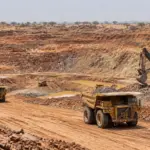
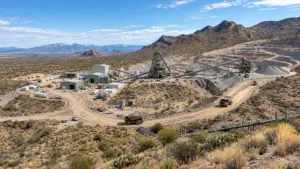
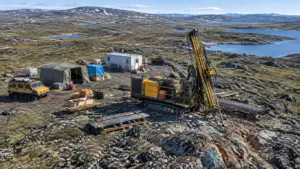
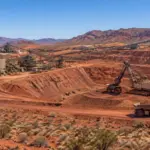
Exploration and development infrastructure in Namibia’s Erongo uranium corridor.
CNNC partnership supports the next decision
Etango’s development pathway is linked to a strategic investment and joint venture with CNNC Overseas Limited, a subsidiary of China National Nuclear Corporation.
The broader agreement provides for CNOL to acquire an interest in the Etango joint venture and contribute to the project’s development and operating costs. CNOL is also expected to take a cornerstone share of future uranium production under market-based offtake arrangements.
Bannerman’s earlier strategic financing announcement described the CNNC arrangement as a debt-free construction funding solution. The agreement also gives the Chinese utility a long-term role in the project’s development and supply chain.
Completion of the CNOL transaction was expected in September, according to the company announcement and related market reports. Once the transaction is completed, Bannerman plans to move toward the FID process, with a decision targeted for the fourth quarter of 2026.
That decision will be central to the project’s timeline. It is expected to determine whether Etango advances from early works and development preparation into full-scale construction.
Bannerman’s project studies envisage conventional open-pit mining and heap-leach processing at an initial throughput of 8 million tonnes per year. The company’s definitive feasibility study outlined average annual production of about 3.5 million pounds of U₃O₈, while a later scoping study examined the potential to expand production to about 6.7 million pounds annually.
The project already has environmental approvals and a mining licence granted in December 2023. Bannerman has also operated a demonstration plant to test the heap-leach process intended for commercial production.
Uranium market provides a stronger backdrop
Etango’s funding milestone comes as uranium prices remain substantially higher than the levels that discouraged new mine development during much of the last decade.
Uranium spot prices have climbed from approximately US$81.75 per pound earlier in 2026 to about US$89.75 per pound. Cameco’s industry-average data, which draws on monthly prices published by UxC and TradeTech, placed the uranium spot price at US$89.68 per pound and the long-term price at US$96.50 per pound at the end of August.
The gap between spot and long-term prices is important because utility contracting is a central component of uranium project financing. Unlike many metals, uranium does not trade through a fully open, centralized spot market. Producers and utilities generally negotiate contracts privately, with prices reflecting delivery schedules, contract terms and security-of-supply considerations.
Cameco’s uranium price data shows the long-term price has risen steadily through 2026, reaching its highest level in the company’s recent monthly series in August.
Benchmark Mineral Intelligence has warned that the market’s supply position could tighten further. Its analysis points to a marginal deficit in 2026 and a potential shortfall equal to about 18% of demand in 2027 if new mine supply does not develop quickly enough.
For developers such as Bannerman, the market backdrop improves the potential commercial case for bringing new production online. It does not, however, remove the construction, commissioning, operating and permitting risks associated with a large greenfield mine.
Namibia remains a key uranium growth region
Namibia is the world’s third-largest uranium producer and has become an important part of the global nuclear fuel supply chain. Benchmark expects the country to be the only jurisdiction in its outlook with uranium output continuing to grow through 2030.
The country’s main uranium operations are concentrated in the Erongo region, where Etango is located alongside the Langer Heinrich, Rössing and Husab mines. The region benefits from established roads, power networks, port access and a long history of uranium mining.
That operating base is one reason the CNNC relationship is strategically significant. The Chinese nuclear group has an existing presence in Namibia through its interests in Rössing and Langer Heinrich, giving the partnership regional operating experience as well as downstream nuclear-market exposure.
For Bannerman, the location provides access to a recognized uranium-producing jurisdiction. For CNNC, Etango offers an additional potential source of long-term uranium supply at a time when utilities are seeking greater visibility over future deliveries.

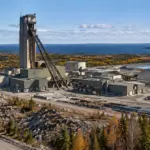
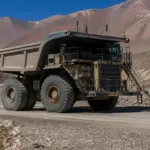
Processing infrastructure reflects the scale of the proposed Etango development.
What remains before construction
The placement changes Etango’s immediate financial position, but the project still faces several execution milestones before production can begin.
The first is completion of the CNOL transaction and the associated ownership and funding arrangements. Bannerman must then complete the formal FID process, including final reviews of capital requirements, construction planning, contracting and operating assumptions.
Construction costs and schedules will remain important variables. Greenfield mining projects can face changes in equipment pricing, labour availability, power and water infrastructure requirements, logistics and commissioning performance. Uranium projects also operate within strict regulatory and environmental frameworks.
The company’s proposed mine would rely on open-pit mining and acid heap-leach processing. The demonstration plant has reduced some process uncertainty, but commercial-scale construction and ramp-up will still determine whether the operating assumptions in the feasibility studies are achieved.
Market conditions will also matter. Higher uranium prices support project economics, but uranium contracting remains cyclical and prices can move independently of individual project milestones. The 18% deficit forecast from Benchmark is a market outlook, not a guarantee of future pricing or offtake terms.
Still, Bannerman’s latest financing announcement puts Etango closer to a formal development decision. With equity funding secured and CNNC positioned as a strategic partner, the project is now moving from the financing phase toward the construction test.
If the targeted FID is delivered in the fourth quarter, Etango would become one of the more advanced new uranium developments in a market where additional production is increasingly being sought by utilities and governments concerned about long-term nuclear fuel security.

Namibia’s established uranium infrastructure is concentrated in the Erongo region.