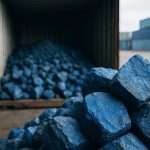
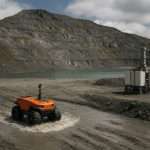
September 29, 2025 – San Juan, Argentina — Argentina has formally approved Canadian miner McEwen Copper’s $2.7 billion Los Azules project, granting it eligibility under the government’s flagship Large Investment Incentive Regime (RIGI). The approval paves the way for one of South America’s most ambitious new copper developments, with annual exports projected at $1.1 billion once production begins.

Los Azules: A Copper Restart for Argentina
Situated at 3,500 meters above sea level in San Juan province’s Calingasta district, Los Azules is set to become Argentina’s first mine to deliver high-purity copper cathodes for direct industrial use. According to Economy Minister Luis Caputo, the project’s approval signals a broader push by the Javier Milei administration to revive dormant mining potential and secure fresh streams of foreign currency inflows.
Argentina’s copper industry has been largely idle since 2018. San Juan, long the country’s leading gold mining region, is also home to multiple stalled copper ventures. With Los Azules, the province is positioning itself as the hub of Argentina’s copper revival.
Economic Impact and Export Potential
The project is expected to create more than 3,500 direct and indirect jobs during its construction and ramp-up. A preliminary economic assessment (PEA) released in June 2023 estimates Los Azules could generate more than $30 billion in export revenues over its initial mine life, helping shore up Argentina’s fragile reserves.
The RIGI programme is central to this plan. Los Azules is now the eighth project to qualify under the scheme, joining a pipeline of $15.7 billion in approved investments designed to stabilize Argentina’s economy and attract long-term foreign capital.
More Read

Corporate Backing and Strategic Partners
McEwen Copper currently holds a 46.4% stake in Los Azules. The project also boasts heavyweight strategic partners: Stellantis, the global automaker, with 18.3%, and Nuton, a Rio Tinto venture focused on emerging copper technologies, with 17.2%.

Vice-president and general manager Michael Meding called the RIGI approval “a reinforcement of McEwen Copper’s long-term commitment to Argentina and San Juan,” noting that the programme provides operational predictability and a structured framework for stakeholder engagement.
Funding requirements are estimated at $3 billion over the next three to four years. The company plans to complete a definitive feasibility study in the coming months, targeting first production in 2029.
More Read

Why the Los Azules Approval Matters
For Argentina, the project represents more than just a new mine. Copper is a critical input for renewable energy and electric vehicles — sectors at the center of global decarbonization efforts. With annual output forecast to contribute $1.1 billion in exports, Los Azules will provide a steady hard-currency inflow and cement Argentina’s position on the global copper supply map.
For the mining sector, the move underscores how incentive frameworks like RIGI can accelerate large-scale investment even in high-risk jurisdictions. By anchoring major international stakeholders, Los Azules demonstrates that Argentina can still attract foreign miners, provided fiscal terms are clear and predictable.
Skillings analysis
- The approval of Los Azules shows Argentina’s willingness to pivot toward mining-led growth at a time of persistent economic volatility.
- By aligning with automakers and global mining majors, McEwen is hedging against capital scarcity while positioning itself as a long-term supplier to the EV and energy transition sectors.
- The feasibility study and permitting milestones will be key markers to watch. If McEwen delivers on timelines, the project could reset investor perceptions of Argentina as a copper jurisdiction.
Looking Ahead
McEwen aims to release its feasibility study in 2026, with permitting steps and early site works running in parallel. First copper cathode production is penciled in for 2029 — a timeline that aligns with expected supply deficits in the global copper market. For Argentina, the Christmas cycle and into Q1 2026 will be the real test: whether the Milei government can translate marquee approvals like Los Azules into a steady pipeline of mining-led growth.