Sanctions, collapsing prices, and logistical strain push miners toward structural decline

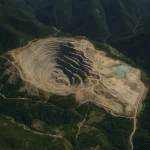
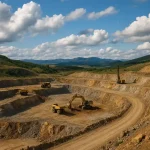
Russia’s coal sector — once a symbol of industrial might and regional stability — has entered its steepest crisis since the early 1990s. According to Rosstat, the industry reported losses of ₽225 billion ($2.8 billion) in the first seven months of 2025 — twice the total loss recorded in 2024, which had already been the worst-performing year in Russia’s post-Soviet history.
The collapse, rooted in a confluence of sanctions, shrinking export markets, and soaring logistics costs, underscores a deeper truth about Russia’s war economy: while oil and gas have so far adapted to sanctions, coal is cracking under the strain.
Crumbling Margins, Collapsing Prices
Global thermal coal prices — used in power generation — have fallen to around $93 per tonne, down 78% from the 2022 wartime peak. But for Russian producers, the reality is far worse. Discounting to buyers in Asia, who still accept Russian cargoes despite Western bans, has forced domestic miners to sell up to 20% below global benchmarks, according to Argus data.
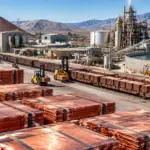
At the same time, the share of logistics costs in the total coal price has nearly doubled since 2022 — from 50% to almost 90%, according to the Russia-based Price Benchmark Center. Rail bottlenecks, rerouted oil shipments, and congestion at Far East ports have all driven up freight costs.
More Read

“Producers continue exporting at razor-thin margins or outright losses because pulling back would cut access to hard currency and trigger mass layoffs,” said Firat Ergene, senior analyst at Kpler. “It’s economic triage — survival over profitability.”

Regional Fallout: Kuzbass and Beyond
Coal accounts for less than 1% of Russia’s GDP, but its regional impact is profound. The Kemerovo region (Kuzbass), Russia’s largest coal-producing area, employs over 140,000 miners and heavily depends on tax revenue from coal. The region ended 2024 with a ₽70.6 billion ($863 million) deficit, plugging the gap through heavy borrowing — an unsustainable model as losses deepen.
“Thousands of jobs across a dozen Russian regions are at stake,” admitted Vladimir Korotin, CEO of Russian Coal, in an interview with Interfax.
More Read
The crisis is also rippling through the occupied Donbas region, where aging Soviet-era mines, once subsidized by Kyiv, are now failing under Russian control. “The Donbas mining industry relied on $1 billion in annual subsidies — now the industry is collapsing,” said Pavlo Kukhta, Ukraine’s former deputy economy minister.
Asia Lifeline Frays Under Pressure
Following the EU’s 2022 ban on Russian coal — once the destination for 20% of its exports — Moscow rapidly pivoted to Asia. Exports to China, India, and Vietnam increased sharply in volume but fell in value due to discounts and rising transport costs.
https://www.cargus.ro/en/personal/Even those Asian gains are weakening as Chinese domestic output hits record levels. “Our forecast for global coal prices remains bearish through 2027,” said Alex Thackrah, senior manager at Argus. “Any short-term lift this winter won’t offset the structural decline.”
For miners like SUEK and Mechel, maintaining export flows has become a balancing act between earning foreign currency and bleeding capital. Smaller companies are folding: 23 coal firms shut down in 2025, with another 53 at risk, according to Russia’s energy ministry.
Moscow’s Tepid Response
In May, President Vladimir Putin signed a scaled-down coal sector rescue plan, focusing on tax deferrals, loan holidays, and discounted freight tariffs rather than direct subsidies. The plan, initially broader, was watered down under pressure from the finance ministry and central bank.
Even Energy Minister Sergei Tsivilev, a former Kuzbass governor and coal magnate himself, appears constrained. His home region now faces debt stress and mounting social tension.
At a September forum, Putin conceded the obvious: “Coal producers are having a tough time.”
But the Kremlin’s calculus remains political — maintaining employment and currency flows outweighs long-term reform. The government fears a repeat of the 1989 coal miners’ strikes that helped trigger the Soviet collapse.
Skillings Analysis
- War Fatigue in the Resource Economy: Russia’s coal woes illustrate how wartime economics distort incentives — keeping loss-making sectors afloat for social stability rather than efficiency.
- Asia’s Diminishing Appetite: As China and India prioritize domestic mining and renewables, Russian coal may face a permanent loss of market share.
- Mining Beyond Sanctions: While gold and nickel producers have adapted via opaque trading networks, coal’s bulk and visibility make circumvention nearly impossible.
Outlook: Winter Won’t Save It
Coal once fueled the Soviet engine of industrial progress. Today, it is a stranded asset in a sanctions economy — heavy, hard to move, and politically untouchable.
Unless global prices spike unexpectedly, 2026 could mark the start of a permanent contraction for Russia’s coal sector. Winter may bring a temporary reprieve in demand, but the long freeze for Russia’s miners has already begun.