The mining industry sits on billions of dollars worth of abandoned real estate: and most operators have no idea what to do with it. Old pits, exhausted shafts, and scarred landscapes from a century of extraction are scattered across every mining region on Earth. But here’s the thing: mine closure and reclamation isn’t just a regulatory headache anymore. It’s becoming one of the most overlooked revenue opportunities in the entire sector.

Operators who’ve been treating post-mining obligations as pure liability are missing the plot. The landscape is shifting, and those 100-year-old holes in the ground? They’re starting to look a lot more like assets.
The Old Playbook Is Burning Cash
For decades, the standard approach to mine closure and reclamation has been straightforward: reshape the terrain, throw down some topsoil, plant native vegetation, cross your fingers, and wait for the regulators to release your bond. That process alone can take over 10 years after completion, with companies posting reclamation bonds upfront that equal their estimated total closure costs.
The financial burden is real. Depending on the operation’s size, reclamation can take several years to complete after mining ceases, and the meter keeps running the entire time. You’re paying for site monitoring, water treatment, slope stabilization, and revegetation: all while that land generates exactly zero revenue.
Most companies view this as an unavoidable cost of doing business. They budget for it, grumble about it, and move on to the next deposit. But that mindset leaves money on the table.
More Read



Flipping the Script: Post-Mining Land as a Revenue Stream
The smarter operators are starting to ask a different question: what if the land itself could pay its way after the ore runs out?
Mine closure and reclamation planning begins during the permitting stage: long before the first blast. That early window is where the real opportunity lives. Companies that bake economic end-uses into their reclamation plans from day one are positioning themselves for returns that continue well past the mine’s operational life.
More Read

The post-mining land uses aren’t limited to letting grass grow back. Depending on site conditions, reclaimed land can support:
- Renewable energy installations : Solar farms and wind projects love flat, cleared terrain with existing road access and grid connections
- Agriculture and forestry : Pasture, timber operations, and specialty crops can generate steady cash flow on properly restored soil
- Recreation and tourism : Former quarries and open pits are being converted into adventure parks, zip-line courses, and even scuba diving sites
- Industrial redevelopment : Warehousing, manufacturing, and logistics facilities can occupy sites with established infrastructure
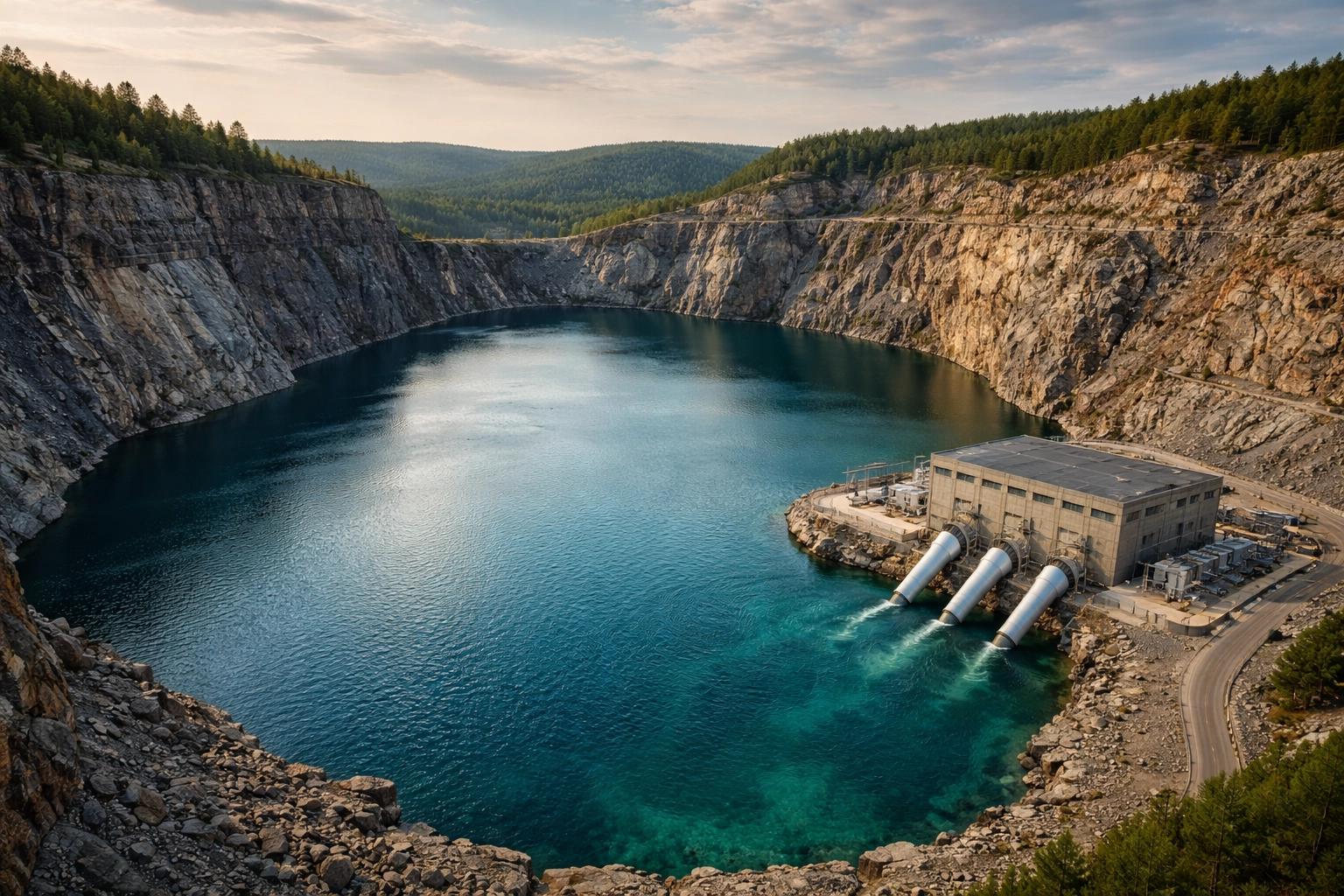
- Pumped hydro storage : Deep pits with favorable topography are increasingly attractive for grid-scale energy storage projects
Each of these options transforms a cost center into something that actually pays.
The Pumped Hydro Play: Old Pits as Energy Batteries
This one deserves its own section because it’s moving fast.
The global push toward renewable energy has created a massive demand for grid-scale storage solutions. Wind and solar are intermittent by nature: the sun goes down, the wind stops blowing: and utilities need ways to store excess power and dispatch it when demand spikes.
Pumped hydro storage is one of the oldest and most reliable technologies for this, and it turns out that abandoned open-pit mines are almost perfectly designed for it. The basic concept: pump water uphill into a reservoir when electricity is cheap, then release it through turbines when prices rise.
Deep pits with stable rock walls, proximity to water sources, and existing electrical infrastructure are ideal candidates. Several projects are already underway globally, and mining companies are starting to realize they can either sell these sites to energy developers or partner with them for long-term revenue sharing.
The numbers can be substantial. A single pumped hydro installation can operate for 50+ years and generate consistent returns throughout: turning a decommissioned liability into a multi-generational asset.
Solar Farms Love Flat, Cleared Land
Reclaimed mine sites often check every box on a solar developer’s wish list. Flat terrain? Check. Cleared of vegetation? Check. Existing roads and access points? Check. Connection to the electrical grid? Often, check.
The solar industry is actively hunting for large land parcels that can accommodate utility-scale installations, and former mining operations fit the profile perfectly. In regions with strong solar resources, leasing reclaimed land for photovoltaic projects can deliver steady income streams for 25-30 years.
Some mining companies are going further: developing solar projects themselves rather than leasing to third parties. The capital requirements are higher, but so are the potential returns. Either way, the land that once held ore can now hold electrons.
Tourism and Recreation: The Unexpected Cash Cow
It sounds counterintuitive, but tourists actually want to visit old mines.
Former quarries and open pits across Europe and North America have been successfully converted into adventure tourism destinations. Flooded pits become dive sites. Steep walls become climbing venues. Vast excavated spaces host concerts, festivals, and motorsport events.
The Eden Project in Cornwall, UK, is perhaps the most famous example: a former clay pit transformed into a world-renowned botanical garden housed under massive geodesic domes. It attracts over a million visitors annually and has generated hundreds of millions in economic impact for the region.
Not every site has Eden Project potential, but many can support smaller-scale tourism operations that generate meaningful revenue while meeting reclamation obligations.

Agricultural Reclamation: The Long Game
Mine closure and reclamation has traditionally included agricultural restoration as a primary end-use option. Forestry, pasture, wetlands, and even crop production are all viable post-mining scenarios when soil restoration is done properly.
The key is in the planning. Reclamation involves reshaping terrain, placing growth media and cover materials, and establishing native, site-appropriate vegetation. When executed with agricultural use in mind, these steps can produce land that rivals or exceeds pre-mining productivity.
For mining companies operating in regions with strong agricultural markets, leasing reclaimed land for grazing or timber production provides a reliable income stream that can offset ongoing monitoring and maintenance costs.
Water Treatment as a Business
Here’s one that most operators overlook entirely: the water treatment systems required for mine closure can sometimes be repurposed as commercial operations.
Mining operations develop significant expertise in treating contaminated water: process fluid stabilization, acid mine drainage management, heavy metal removal. That know-how, combined with the physical infrastructure already in place, can form the basis for a water treatment business serving other industrial customers in the region.
It’s not a fit for every site, but for operations located near other industrial facilities with water treatment needs, it’s worth exploring.
Getting Ahead of the Regulatory Curve
Governments worldwide are tightening requirements around mine closure and reclamation. The days of walking away from exhausted sites with minimal restoration are ending. Companies that treat closure as a strategic priority: rather than a last-minute compliance exercise: will be better positioned to capture economic value from their post-mining assets.
The zero-carbon mining push is already reshaping how operators think about environmental obligations throughout the mining lifecycle. Forward-thinking companies are extending that mindset to closure planning, recognizing that sustainable practices can align with profitable outcomes.
The Bottom Line
Mine closure and reclamation doesn’t have to be a pure expense line. The 100-year-old pits dotting mining regions worldwide represent untapped potential: for renewable energy development, agriculture, tourism, and industrial reuse.
The operators who figure this out first will extract value long after the ore is gone. The ones who don’t will keep writing checks to regulators while their competitors turn liabilities into revenue.
The choice seems obvious. The only question is whether the industry moves fast enough to capture it.
By Penny Laneford