Here's the thing nobody wants to admit: most mining companies talk endlessly about "digital transformation" and "AI-powered operations," but almost none can show you the actual dollar figure that innovation delivered.

Eurasian Resources Group just did.
At Mining Indaba in Cape Town, ERG CEO Shukhrat Ibragimov put a number on the table that should make every mining executive sit up: $111 million in economic impact from digital tools and AI in 2025 alone. Not projected. Not modeled. Delivered.
That's the kind of hard ROI that separates actual operational innovation from PowerPoint theater.
What ERG Actually Built

More Read

ERG didn't buy an off-the-shelf AI platform and call it transformation. They built their own stack in-house through their BTS (Business Technology Solutions) team, focusing on three core pillars:

Computer vision systems that monitor equipment health, identify safety hazards in real-time, and optimize material flow through processing plants. These aren't fancy cameras: they're integrated visual intelligence systems that feed directly into operational decision-making.
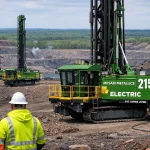
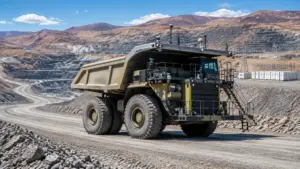
Robotic and autonomous equipment deployed across multiple sites. ERG is running autonomous haul trucks, automated drilling systems, and remotely operated machinery in environments where putting humans is either inefficient or dangerous.
More Read

Generative AI applications for process optimization, predictive maintenance scheduling, and operational planning. This is the least visible but potentially highest-impact category: using large language models and generative systems to digest massive operational datasets and surface actionable insights that human analysts would miss.
The $111 million impact came from measurable improvements in three areas: operational efficiency gains, safety incident reduction, and process automation that eliminated bottlenecks in production workflows.
Here's what's particularly notable: ERG didn't farm this out to a Silicon Valley consultancy. They hired internally, built custom solutions for their specific operational challenges, and deployed them across a diversified portfolio that includes copper, cobalt, iron ore, alumina, and energy assets across Kazakhstan, Africa, and Brazil.
The Projects Where AI Delivered
ERG isn't running pilot programs. They're deploying AI at industrial scale across major capital projects, including:
A 2 million ton-per-year hot briquetted iron (HBI) plant where AI systems optimize the direct reduction process, monitor furnace performance in real-time, and adjust input parameters to maximize yield while minimizing energy consumption. HBI production is notoriously sensitive to input quality and process conditions: small optimizations compound rapidly at 2 Mt/y throughput.
A new 5 million ton pelletising plant at SSGPO (Sokolovsko-Sarbaiskoye Mining Production Association) in Kazakhstan, where computer vision and machine learning systems monitor pellet quality, predict equipment failures before they happen, and optimize the grinding and agglomeration process to reduce energy intensity per ton of output.

These aren't experimental deployments. They're production-critical systems operating in environments where downtime costs millions per day.
The safety applications are equally tangible. ERG's computer vision systems have flagged thousands of potential safety incidents before they escalated: workers in dangerous positions, equipment operating outside safe parameters, structural issues that human inspectors hadn't caught yet. Each avoided incident has a direct cost savings, but more importantly, it keeps people alive.
Why In-House Development Matters
Most mining companies trying to adopt AI run into the same problem: the consultants selling them "industry-leading solutions" don't actually understand mining operations. They understand algorithms. They understand cloud architecture. They don't understand the difference between a SAG mill and a ball mill, and they certainly don't understand the operational constraints of a mine running three shifts in sub-zero temperatures with legacy equipment that's been modified seventeen times since installation.
ERG's approach: building a dedicated BTS team that reports directly to operations: solved this problem by putting data scientists and machine learning engineers inside the mines, plants, and smelters where the work actually happens.
That proximity matters. When your AI team sits in the same building as your metallurgists and your maintenance planners, they build systems that solve real problems instead of impressive-sounding ones.
It also means ERG owns their IP. They're not licensing someone else's generic platform and paying perpetual subscription fees. They built tools tailored specifically to their operational profile, and those tools get better with every ton of material they process because the models train on their own data.
The Industry Context Nobody Wants to Discuss

ERG's results land in an industry moment where "AI in mining" has become simultaneously overhyped and underutilized.
Major miners have announced billions in "digital transformation" spending. Most of that money has disappeared into vendor contracts, pilot projects that never scaled, and dashboards that look impressive in board presentations but don't actually change how operators make decisions.
The $111 million figure from ERG matters precisely because it's auditable, attributable, and tied to specific operational improvements that show up in production metrics and cost structures.
It also exposes an uncomfortable truth: if a mid-tier diversified miner can extract nine figures of value from AI in a single year, the industry leaders spending 10x that amount on "innovation" should be showing proportionally larger returns. Most aren't.
The gap between AI theater and AI deployment is wider in mining than in almost any other industrial sector. Part of that is justified: mining operations are complex, legacy infrastructure is difficult to integrate with modern systems, and the consequences of getting it wrong in a production environment are severe.
But part of it is organizational inertia and a fundamental misunderstanding of what AI actually does. AI doesn't replace experienced operators. It augments them. It spots patterns in sensor data that no human could catch. It optimizes complex multi-variable processes faster than any human could calculate. It handles the relentless, grinding analysis work that burns out talented engineers.
What 2026 Looks Like for Mining AI
Ibragimov called 2026 "the Year of AI" for ERG. That's not marketing speak: it's a signal of accelerated deployment across their global portfolio.
Expect to see ERG extend computer vision systems to more sites, particularly in remote locations where skilled labor is expensive and difficult to retain. Autonomous equipment will expand beyond haulage into more complex operations like dozing, blasting, and secondary processing.

The generative AI applications are where things get particularly interesting. ERG is reportedly developing AI systems that can draft operational procedures, identify optimization opportunities by analyzing decades of production data, and even suggest equipment modifications based on performance patterns across similar assets.
That last capability: cross-asset learning where AI identifies optimization strategies that worked at one site and suggests adaptations for similar operations elsewhere: could be transformative for diversified miners. Most mining companies have terrible institutional knowledge management. The expertise that a veteran metallurgist develops over 30 years typically walks out the door when they retire. AI systems that learn from historical operational data can capture and apply that knowledge at scale.
The safety implications are equally significant. If ERG's computer vision systems can prevent accidents by identifying hazards before they harm anyone, scaling those systems industry-wide could fundamentally change mining's safety profile. That's not just a moral imperative: it's an operational and financial one. Safer operations are more productive operations.
The Real Test
The $111 million result from 2025 establishes a baseline. The real test is whether ERG can sustain and scale those returns as they deploy AI more broadly.
Early AI deployments in any industry typically capture the easiest, highest-value optimizations first. The difficult question is whether returns persist as you move beyond the obvious applications into more complex, subtle operational improvements.
ERG's in-house development model gives them a structural advantage here. They're not locked into a vendor's product roadmap. They can iterate, experiment, and deploy custom solutions as fast as their BTS team can build them.
That flexibility matters in an industry where operational contexts vary wildly between sites. What works in a copper concentrator in the DRC won't necessarily work in an iron ore pelletizing plant in Kazakhstan. Custom-built, adaptable AI systems can handle that variability. Generic platforms can't.
What This Means for Operators and Investors
For mine operators: the ERG case study proves that properly implemented AI delivers measurable, significant returns on industrial timescales. The key word is "properly": this isn't about buying a platform, it's about building capability.
For investors: companies showing hard ROI numbers from digital initiatives deserve premium valuations compared to peers still in the pilot phase. ERG's $111 million impact translates directly to free cash flow that funds expansion, dividends, or debt reduction.

The mining industry is entering a period where operational excellence will increasingly depend on digital capabilities. ERG just set a benchmark that every other diversified miner will now be measured against.
The question isn't whether AI works in mining. ERG proved it does. The question is which companies can actually deploy it at scale and show the numbers to prove it.
Most won't. ERG did.