Going-private transactions don't usually make headlines. They're the mining industry's equivalent of taking your LinkedIn profile offline: you're still working, you just don't want everyone watching.

But Loncor Gold's C$267 million exit from public markets on February 11, 2026, tells a different story. This isn't a distressed asset fire sale or a management team trying to escape activist shareholders. This is strategic positioning by a Chinese state-affiliated mining group securing critical gold exploration ground in Central Africa while everyone else is distracted by copper and lithium.
The Transaction Mechanics
Chengtun Gold Ontario Inc., a wholly owned subsidiary of China's Chengtun Mining Group Co., Ltd., acquired all 183,660,846 outstanding Loncor shares at C$1.38 per share. The math is straightforward. The valuation sits at C$267 million for a company that had spent the better part of a decade building a resource base in the Democratic Republic of the Congo's Ngayu Greenstone Gold Belt.
The shares delisted from the TSX and Frankfurt Stock Exchange effective immediately. Trading ceased on the OTCQX Market. Loncor has applied to cease being a reporting issuer in all applicable Canadian jurisdictions, which means the financial transparency and disclosure requirements that come with public company status disappear.

More Read

Mr. Shing Yip Iu was elected as director following the transaction close. That's the only governance change disclosed publicly. Everything else: operational strategy, development timelines, capital allocation: now happens behind closed doors.

This is the entire point of going private. Remove the quarterly earnings scrutiny. Eliminate the need to justify every exploration dollar to retail investors who don't understand 10-year development timelines. Operate on a strategic horizon that makes sense for resource development, not stock price management.
What Chengtun Actually Bought
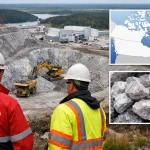
Loncor's crown jewel is the Imbo Project, situated in the Ngayu Greenstone Gold Belt in northeastern DRC. This isn't prime real estate by global gold standards. The DRC carries political risk, infrastructure challenges, and the kind of regulatory uncertainty that makes institutional investors nervous.
More Read

But Chengtun isn't an institutional investor playing by Western capital allocation rules. It's a state-affiliated mining group executing China's long-term resource security strategy. The calculus is different.
The Ngayu Belt has produced limited historical output, but the geological setting is compelling. Archean-age greenstone belts have a track record globally: Canada's Abitibi, Western Australia's Yilgarn, Ghana's Ashanti Belt. The structures are there. The mineralization patterns fit. What's missing is systematic modern exploration with patient capital.
That's what Chengtun just acquired: the option value on a frontier gold district with incomplete exploration coverage. In public markets, that's a tough sell. As a private strategic holding, it's a bet on long-duration resource optionality.
The Strategic Timing
February 2026 is not a random moment for this deal to close. Gold prices shattered the $5,000 per ounce milestone in recent months, driven by central bank accumulation at record levels and persistent monetary uncertainty. Valuations for gold explorers with defined resources are climbing.
Chengtun locked in this acquisition before that valuation inflation fully permeated the junior exploration space. C$1.38 per share represents a premium to where Loncor traded in late 2025, but it's below where comparable African gold explorers are currently valued on a per-ounce resource basis.
The premium paid was enough to get the deal done. It wasn't enough to reflect 2026's gold price reality. That's smart execution.

Meanwhile, most mining M&A attention is focused on copper and battery metals. Rio Tinto is pivoting exploration budgets toward copper. Barrick and Newmont are locked in competitive positioning around Nevada joint ventures. The Street is obsessed with the 800-kiloton copper deficit everyone's talking about.
Gold exploration in frontier jurisdictions? That's off the radar. Which makes it exactly the kind of asymmetric opportunity a strategic buyer targets.
Jurisdictional Positioning and China's Africa Strategy
The DRC component matters more than most Western analysts acknowledge. Chinese mining companies have methodically built dominant positions across multiple DRC commodities over the past 15 years: cobalt, copper, and increasingly gold.
This isn't opportunistic dealmaking. It's infrastructure-backed resource diplomacy. China has financed roads, power grids, and processing facilities across the DRC's mining belt. Chengtun's acquisition of Loncor slots into that established operating framework.
When Loncor was a TSX-listed company with Canadian management, developing Imbo meant negotiating independently with DRC authorities, securing power purchase agreements, and building logistics chains from scratch. Under Chengtun ownership, those elements plug into existing Chinese-built infrastructure and established government relationships.
The operational leverage is real. Development timelines compress. Capital costs decline. Permitting friction reduces.
Western mining companies talk about navigating resource nationalism as a risk management challenge. Chinese state-affiliated groups navigate it as an embedded competitive advantage.
The Going-Private Playbook
Taking a mining explorer private isn't novel. What's notable is the pattern: Chinese and Middle Eastern capital systematically acquiring control of early-stage resource projects in jurisdictions where Western institutional capital won't deploy.
These transactions happen below the M&A radar because they target sub-$500 million market cap companies with no production and limited liquidity. They don't move markets. They don't trigger regulatory reviews in Washington or Brussels. They just quietly transfer control of future supply to buyers with decades-long investment horizons.
The strategic logic for sellers: in this case, Loncor's pre-transaction shareholders: is straightforward liquidity. Junior explorers in frontier jurisdictions trade at persistent discounts to NAV. Share structures are messy. Institutional ownership is minimal. Getting to production requires hundreds of millions in future capital that public markets won't provide at reasonable valuations.
A buyout at 20-30% premium to recent trading levels provides an exit. For shareholders who bought in at higher prices years ago, it's often a loss. For those who accumulated during the discount phases, it's a realized gain. Either way, the alternative: continuing to hold illiquid shares in a perennially underfunded explorer: looks worse.

For buyers like Chengtun, the logic is inverted. Patient capital deployed at depressed valuations into assets with 10-20 year development timelines. If gold holds structural strength and the DRC remains accessible, the IRR math works at C$1.38 per share entry points.
What This Signals for the Junior Gold Space
Loncor's exit is a data point in a broader trend: the de-equitization of early-stage gold exploration. Public markets are increasingly unwilling to fund multi-year exploration programs with uncertain timelines and binary outcomes. Risk capital is flowing to private equity, sovereign wealth funds, and strategic buyers instead.
The TSX Venture Exchange: historically the primary funding mechanism for global mineral exploration: has seen listing volumes decline and average market caps compress. The model of raising C$5-10 million in equity every 18 months to drill targets and publish resource estimates no longer attracts retail or institutional buyers at scale.
That creates opportunity for buyers with alternative capital sources. Chengtun doesn't need to convince Bay Street fund managers that the Ngayu Belt is worth exploration spending. It needs to convince internal capital allocation committees operating under different return thresholds and timeline expectations.
The result is strategic consolidation of exploration assets by non-traditional buyers, which removes future supply optionality from the publicly traded ecosystem. When these projects eventually reach production: if they reach production: they won't be listed entities generating royalties and equity returns for Western shareholders. They'll be private operations contributing to Chinese state resource security.
The Capital Reallocation Context
Zoom out to the macro picture. Global gold exploration budgets have been declining as a percentage of total mining capex for over a decade. Major producers are allocating exploration dollars to extend mine life at existing operations rather than greenfield discovery in new jurisdictions.
That leaves frontier exploration to juniors, who are increasingly unable to access growth capital through public equity. The gap is being filled by strategic buyers: often state-affiliated: who view resource access as a strategic priority rather than a financial return optimization.
Loncor represents that capital reallocation in microcosm. A Canadian-listed explorer in a challenging jurisdiction, unable to fund the path to development through traditional equity markets, acquired by a Chinese strategic buyer with patient capital and infrastructure advantages.
From Chengtun's perspective, this isn't a speculative bet on gold prices. It's securing access to a district-scale exploration portfolio in a jurisdiction where they have operational and political infrastructure already deployed.
The C$267 million acquisition cost is immaterial relative to China's broader resource security budget. The strategic optionality on future gold supply from a frontier belt with exploration upside? That's the actual asset being acquired.
Where This Leaves the Market
The Loncor transaction won't move gold prices. It won't shift M&A multiples for mid-tier producers. It's a small deal by mining industry standards.
But it's a pattern recognition signal. Going-private transactions at sub-$300 million valuations in frontier jurisdictions are becoming the norm for early-stage projects unable to access development capital through traditional channels.
For investors still holding junior gold explorers in similar situations: frontier jurisdictions, pre-feasibility stage, limited liquidity: the Loncor outcome is the realistic exit scenario. Not a strategic takeout at 2x NAV by a major producer. Not an equity re-rating driven by discovery. A going-private transaction at a modest premium to depressed trading levels, transferring control to a strategic buyer with different capital and timeline expectations.
For the gold exploration sector more broadly, it represents the continued bifurcation between Tier 1 jurisdictions where public equity still functions and frontier districts where strategic capital from non-Western sources is displacing the traditional funding model.
Chengtun just acquired future optionality on Central African gold supply for C$1.38 per share while Western markets chase copper deficits and battery metal narratives. That's not distraction. That's strategic patience.
The transaction closed. The shares delisted. Loncor Gold no longer exists as a public company. The assets remain. The exploration continues. Just without quarterly disclosure requirements or TSX listing obligations.
That's the entire point of going private. And in February 2026, with gold at record highs and public market capital scarce, it's an increasingly common playbook.
For more mining industry insights and M&A analysis, visit Skillings Mining Review.