By Charles Pitts

ANTOFAGASTA, Chile : The legal saga of the Dominga mining and port project just took another sharp, unexpected turn. In a move that has blindsided environmental advocates and provided a flicker of hope for industrial backers, the Antofagasta Court of Appeals has suspended its own prior ruling against the $2.5 billion development.
This isn't a final green light. Far from it. But for Andes Iron, the project’s proponent, it represents a stay of execution in a decade-long regulatory death match. By temporarily restoring the project's environmental permit, the court has effectively kicked the ultimate decision back to the Chilean Supreme Court.
The whiplash is real. One day, the project is buried under a mountain of environmental rejections; the next, a procedural pivot pulls it back into the light. This is the brutal reality of permitting in modern Chile: a landscape where geology is certain, but the law is anything but.
A Decade of Regulatory Whiplash
To understand why this suspension matters, you have to look at the timeline. The Dominga project has been a political football since its inception. It has survived: and been smothered by: multiple administrations, including the current government of President Gabriel Boric, which has made no secret of its opposition to the site.
More Read

In early 2025, Chile’s Committee of Ministers denied the environmental permit, citing irreversible damage to the Humboldt Penguin National Reserve. Then, in September 2025, the Supreme Court appeared to breathe life back into the project, suggesting that legal and technical questions had been cleared.

But by February 2026, the Antofagasta Court of Appeals had issued a ruling that seemed to hammer the final nail in the coffin. Until now.
This latest suspension of that negative ruling doesn't address whether the mine is "good" for the environment. It focuses on the enforcement methods used in the earlier proceedings. It’s a technicality: a procedural hitch: but in the world of $2.5 billion capital expenditures, a technicality is often the difference between a functioning mine and a stranded asset.
More Read

The $2.5 Billion Stakes: Iron and Copper
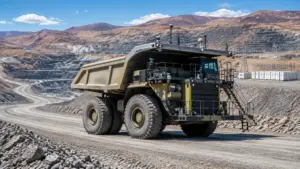
The scale of Dominga is hard to ignore, regardless of which side of the political fence you sit on. We aren't talking about a boutique operation. We are talking about an integrated mine and port facility designed to produce 12 million tons of iron concentrate and 150,000 tons of copper annually.
That’s not a rounding error. That’s a massive injection of supply into a global market that is increasingly desperate for high-grade iron and copper. As we’ve noted in our analysis of the critical minerals corridor, the gap between projected demand and actual supply is widening into a canyon.
The strategic calculus here isn’t subtle:
- Iron Potential: Andes Iron is targeting high-grade magnetite concentrate, which is essential for "green steel" production.
- Copper Necessity: With the global energy transition requiring a massive scale-up of copper, Dominga’s 150,000-ton annual output is a significant prize.
- Infrastructure: The project includes a deep-water port, which would serve as a major export hub for the Coquimbo region.
But you can't disrupt geology, and you certainly can't ignore the sensitive coastal ecosystem that sits right in the project's backyard.

The Environmental Flashpoint: Penguins vs. Profits
The core of the opposition remains unchanged: the Humboldt Penguin National Reserve. Environmental groups and the Boric administration argue that the construction of a mega-port and the resulting shipping traffic would devastate one of the world’s most important biodiversity hotspots.
The critics aren't just loud; they are organized. They’ve successfully framed Dominga as a test case for Chile’s commitment to environmental protection versus extractive industries.
Ironically, the mining industry is already shifting toward more sustainable models. As seen in Lundin Mining’s expansion in the Vicuña District, companies are increasingly willing to pay a premium for projects that can clear ESG (Environmental, Social, and Governance) hurdles. Dominga, however, remains the industry’s most controversial outlier.
The "chickens-coming-home-to-roost" moment for the Chilean government is the realization that they need the revenue. Chile is the world’s top copper producer, but its output has been flagging due to aging mines and declining ore grades. To maintain its dominance, it needs new projects. But to protect its environment, it needs to stop projects like Dominga. Those two clocks do not sync.
Investor Uncertainty and the Chile Risk
For international investors, the Dominga saga is a cautionary tale. The constant reversal of court rulings creates a "nasty" level of uncertainty. If an environmental permit can be granted, stripped, restored, and then suspended over a decade, how can any board of directors justify a multi-billion-dollar investment?
The strategic shift we are seeing: where the U.S. is pouring billions into Latin American minerals to counter China: depends entirely on jurisdictional stability. Chile has historically been the "safe" bet in South America. But the Dominga project permit drama is eroding that reputation.
The strategic calculus is changing. Investors are starting to look at the "Chile Risk" with the same scrutiny they once reserved for much more volatile regions. It’s not just about the copper in the ground anymore; it’s about whether you’re allowed to take it out.

What Happens Next: The Supreme Court referral
The Antofagasta Court’s suspension means the case now moves to the Supreme Court for what many hope will be the final word.
Here is the kicker: the Supreme Court has already shown a willingness to side with Andes Iron on technical grounds. If the high court rules in favor of the project again, the Boric administration will face a massive political crisis. They would be forced to choose between defying the judiciary or allowing a project they have staked their environmental reputation on stopping.
Meanwhile, the mining industry watches and waits.
The clock is already ticking. 2026 marks an inflection point for global copper supply. If Dominga remains in legal limbo, it’s just one more missing piece in the puzzle of the energy transition.
Final Assessment: A Pyrrhic Victory?
Even if Andes Iron wins in the Supreme Court, the battle is far from over. A legal permit does not equal "social license." The local opposition is fierce, and the political climate is hostile.
We’ve seen this play out before. A company wins the legal war only to lose the ground war of protests, blockades, and endless secondary litigation.
For now, the Dominga project permit is alive: barely. It is a zombie project, neither fully dead nor truly functional, walking through the halls of the Chilean judiciary while the rest of the world looks for copper elsewhere.

LinkedIn/X Snippet:
Chile’s $2.5B Dominga project is back from the dead: again. The Antofagasta Court of Appeals just suspended its own ruling against the mine/port development, pushing the final decision to the Supreme Court. With 150kt of copper and 12Mt of iron on the line, is Chile risking its reputation for stability, or is this a necessary pivot for the energy transition? #MiningNews #Chile #Copper #IronOre #DomingaProject #SMR100K
For more in-depth analysis on the shifting landscape of South American mining, check out our latest report on the Structural Pivot and Copper's $13,000 Reset.