LIMA, Peru : Zijin Mining Group has officially committed approximately $1.5 billion toward the development of the La Arena II project, a massive expansion aimed at converting the site into a primary copper-gold hub. The announcement, made by Luo Yuchuan, CEO of the La Arena mine, underscores the Chinese mining giant’s long-term reliance on Peru as a cornerstone of its global copper production strategy.
The investment is earmarked for the transition of the La Arena operation from its current gold-focused oxide phase into a large-scale copper-gold sulfide project. The move follows Zijin’s $245 million acquisition of the asset from Pan American Silver in late 2024, a deal that signaled a shift in ownership from Canadian to Chinese hands as global miners race to secure critical mineral supplies.
Strategic Expansion into Sulfide Porphyry
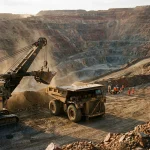
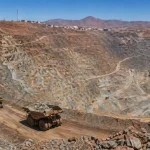
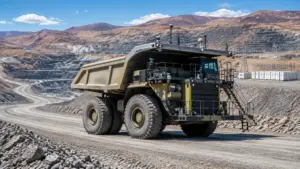
The La Arena project, located in the La Libertad province of northern Peru, has historically operated as an open-pit gold mine. However, the true value of the deposit lies beneath the surface in the deeper porphyry copper-gold sulfides. Zijin’s $1.5 billion capital expenditure plan focuses on Phase II, which involves the construction of a new concentrator and flotation plant to process these deeper ores.
The expansion is projected to extend the mine’s operational lifespan by at least 19 to 20 years. At nameplate capacity, Phase II is designed to process 33 million tonnes of ore annually, yielding approximately 100,000 tonnes of copper and 3.8 tonnes of gold per year. This significant output will contribute to Zijin’s stated goal of becoming a top-three global copper producer by 2028.
More Read

According to company filings and recent updates from the Lima mining forum, the technical studies for Phase II are advancing rapidly. The project will utilize open-pit mining methods followed by standard flotation processes to produce a high-grade copper concentrate.

Peru as a Stable Mining Destination
The commitment comes at a critical juncture for Peru, the world’s second-largest copper producer. While the country has faced periods of political volatility, Zijin executives expressed firm confidence in the nation’s fiscal and financial framework.
“Peru maintains a unique political situation, but its fiscal and financial stability remains attractive for long-term industrial investment,” Luo Yuchuan stated during the announcement. He emphasized that the mining potential of the region, particularly the “Andean Copper Belt,” justifies the heavy capital commitment.
More Read

The investment is also seen as a win for the Peruvian government, which is eager to revitalize its mining pipeline after several years of stalled projects due to social unrest and regulatory hurdles. The La Arena expansion is expected to generate thousands of jobs in the La Libertad region and provide a significant boost to local infrastructure and tax revenues.
Comparative Analysis: La Arena Project Evolution
The transition from Phase I to Phase II represents a fundamental shift in the site’s economic drivers.
| Feature | Phase I (Current/Oxide) | Phase II (Expansion/Sulfide) |
|---|---|---|
| Primary Commodity | Gold | Copper & Gold |
| Deposit Type | Oxide Gold | Sulfide Porphyry |
| Processing Method | Heap Leaching | Flotation Concentrator |
| Est. Annual Copper Output | Negligible | 100,000 tonnes |
| Est. Annual Gold Output | ~80,000 – 100,000 oz | ~120,000 oz (3.8 tonnes) |
| Additional Mine Life | Depleting | ~20 Years |
| Investment Level | Operational Maintenance | $1.5 Billion (Capex) |

Contextualizing Zijin’s Copper Ambitions
Zijin Mining’s move in Peru is part of a broader, aggressive expansion into the “energy transition metals” sector. The company has recently made waves with similar high-stakes investments in other jurisdictions. For instance, China’s $1.7 billion deal to unlock Ecuador’s Los Cangrejos project mirrors the strategy seen at La Arena: acquiring high-potential assets from junior or mid-tier miners and applying massive capital to bring them to full scale.
Zijin already holds significant interests in the Kamoa-Kakula copper mine in the Democratic Republic of Congo and the Bor copper complex in Serbia. By adding 100,000 tonnes of annual capacity from Peru, the company is positioning itself to bridge the projected global copper supply gap as the world shifts toward electrification.
The global copper market is currently facing a structural deficit. With the rise of electric vehicles, renewable energy grids, and data center infrastructure, demand is expected to double by 2035. Peru, alongside Chile, remains the most critical source of new supply. However, the lack of new “greenfield” projects has forced majors like Zijin to focus on “brownfield” expansions like La Arena II.
History of the La Arena Asset
The asset was previously a core part of Pan American Silver’s portfolio, acquired through its purchase of Tahoe Resources in 2019. While Pan American successfully operated the gold oxide portion, the development of the copper sulfide deposit required capital and technical specialization that fell outside the company’s primary silver-gold focus.
The divestment to Zijin in late 2024 allowed Pan American to strengthen its balance sheet while ensuring the project reached its full potential under a dedicated base-metals operator. For Zijin, the acquisition was a strategic entry point into the Peruvian copper sector, providing an established footprint with an existing permit framework and community relations history.

Regional Impact and Regulatory Hurdles
Despite the optimism, the $1.5 billion investment faces the standard suite of risks associated with large-scale mining in the Andes. Social licensing remains a top priority; Zijin will need to maintain the community agreements established by previous owners and ensure that the increased scale of Phase II does not negatively impact local water resources or agricultural land.
The Peruvian Ministry of Energy and Mines (MINEM) has been supportive of the expansion, noting that projects like La Arena are vital for the country’s economic recovery. Regulatory streamlining has been a recurring theme in Lima, as officials look to compete with other jurisdictions for Chinese and Western capital.
Beyond La Arena, Zijin has indicated that its appetite for Peruvian assets is not satiated. The company is actively scouting for further exploration opportunities in the northern mining cluster, where the geology suggests significant undiscovered porphyry systems.
Copper Outlook 2026: The Global Race for Supply
The timing of Zijin’s investment aligns with broader market trends discussed in the Skillings Mining Intelligence 2026 outlook. While lithium and rare earths have dominated headlines, copper remains the “metal of electrification” that underpins all green technology.
Analysts suggest that Zijin’s ability to deploy capital rapidly gives them a competitive edge over Western majors, who are often slowed by more stringent ESG-linked financing requirements and shareholder caution regarding “frontier” market exposure. By committing $1.5 billion now, Zijin is betting that the copper price will remain elevated as the supply-demand imbalance matures toward the end of the decade.
The La Arena II project stands as a testament to the shifting dynamics of global mining finance. As traditional capital becomes more selective, state-backed or large-cap diversified firms from the East are increasingly the ones “unlocking” the next generation of tier-one copper provinces in South America.
By Charles Pitts