By Charles Pitts
For years, the narrative surrounding Critical Elements Lithium Corporation (TSXV: CRE) has been singular: the development of the Rose Lithium-Tantalum project in Quebec. As a pure-play lithium developer in one of the world’s most stable jurisdictions, the company became a bellwether for the James Bay region. However, a series of results culminating in the spring of 2026 has signaled a strategic expansion of that narrative.
While lithium remains the cornerstone, Critical Elements is increasingly looking like a multi-commodity powerhouse. Recent assay results from its 100%-owned Nemaska Belt properties have confirmed what many geologists suspected: the region is not just a lithium pegmatite hub, but a prospective district for high-grade Nickel-Copper-Cobalt-Platinum Group Elements (Ni-Cu-Co-PGE) mineralization.
The shift comes at a critical time for the industry. As the 2026 lithium forecast highlights a shift away from oversupply fears toward long-term structural deficits, the addition of battery-grade base metals into a junior’s portfolio is more than just a hedge: it is a strategic alignment with the “Energy Nexus” of the late 2020s.
More Read

The 10,000-Meter Winter Offensive
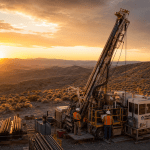
On April 29, 2026, Critical Elements released the much-anticipated results from its Phase 1 Winter 2026 drill program. The campaign, which kicked off in early February, saw 10,000 meters of systematic drilling focused on the Rose West Discovery and its surrounding targets within the 100-kilometer Nemaska Belt land position.

The program was designed to follow up on staggering surface results from the previous summer, where grab samples yielded values as high as 5.7% copper, 0.82% nickel, and 0.17% cobalt. For a company primarily known for spodumene, these numbers were a wake-up call to the market.
“The Nemaska Belt has always been undervalued for its base metal potential,” says one senior mining analyst familiar with the James Bay region. “We’ve seen the Nisk deposit nearby show what’s possible. What Critical Elements is proving is that the structure hosting those minerals extends much further than previously mapped.”
More Read

The winter drilling focused on anomalies identified by a high-resolution VTEM (Very Low Frequency Time-Domain Electromagnetic) survey completed in 2025. These electromagnetic “conductors” often signal the presence of massive sulfides: the primary host for nickel and copper. By drilling during the winter months, the company was able to access marshy and remote sections of the 540 km² property that are nearly impossible to reach during the summer thaw.

Geology of a Multi-Mineral Giant
The Nemaska Belt properties span 10 property blocks and cover over 100 kilometers of the Nisk structure. This geological setting is unique because it features a “best of both worlds” scenario.
- Lithium Pegmatites: The belt is famously home to the Rose West discovery, where spodumene-bearing dykes are being delineated to expand the existing resource base of the main Rose Lithium project.
- Ultramafic Base Metals: The same belt contains large volumes of ultramafic rocks. These are the deep-seated, magnesium-rich rocks that, when combined with sulfur in the Earth’s crust, create “magmatic sulfide” deposits: the holy grail for nickel and copper explorers.
The 2025 and 2026 programs have identified mineralization dominated by pyrrhotite and pyrite (iron sulfides), but critically, they have found significant concentrations of chalcopyrite (copper sulfide) and pentlandite (nickel sulfide). In several zones, the addition of Platinum and Palladium (PGEs) adds a significant “precious metal kicker” to the valuation of the ore.
For investors, this diversification within the critical minerals sector is essential. While lithium prices have stabilized, the demand for nickel and copper for the energy transition is projected to outstrip supply by the end of the decade. By holding assets that cover the entire “battery stack,” Critical Elements is positioning itself as more than just a supplier to EV manufacturers: it is becoming a strategic partner for the entire supply chain.
Strategic Implications for Quebec Mining
Quebec’s Plan for Critical and Strategic Minerals has been a major tailwind for companies operating in the James Bay and Nemaska regions. The provincial government has been aggressive in funding infrastructure, including the extension of all-season roads and high-voltage power lines, which are essential for turning an exploration success into an operating mine.
Critical Elements’ success in the Nemaska Belt reinforces Quebec’s status as a top-tier global mining jurisdiction. Unlike projects in more volatile regions, the Nemaska Belt offers a clear regulatory path, established ESG frameworks, and a workforce skilled in remote operations and mining tech.
The company’s transition to a multi-metal explorer also changes the M&A (mergers and acquisitions) landscape. A pure-play lithium junior is an attractive target for a battery manufacturer or a dedicated lithium producer. However, a company with significant copper and nickel assets attracts the “Big Diversifieds”: the global giants who need copper to fuel the electrical grid and nickel to feed the high-performance battery market.

What to Expect in Late 2026
With the winter drill results now being integrated into 3D models, the focus for Critical Elements shifts to the summer 2026 program. The company has indicated that it will use the data from the 10,000-meter campaign to refine “Phase 2” targets, which will likely include deeper drilling to test the vertical continuity of the massive sulfide zones discovered at Rose West.
Furthermore, the “assays pending” list from the tail end of the winter program remains a key catalyst. Historically, the lag time between the end of a drill program and the full release of results is when the most significant discoveries are validated by the laboratory.
The transition from “Lithium Developer” to “Critical Minerals Leader” is rarely a straight line. For Critical Elements, the path through the Nemaska Belt is paved with high-grade copper and nickel that suggests the company is just beginning to scratch the surface of its northern Quebec empire.
The Bottom Line for Decision-Makers
For operators and investors, the “Base Metals Pulse” in the Nemaska Belt is a signal to broaden their scope. The James Bay region is maturing. It is no longer just a “lithium play”; it is a complex mineral province comparable to the great mining camps of Ontario or Western Australia.
As Critical Elements moves toward its next phase of development, the market will be watching closely to see if the nickel and copper results can match the scale of the Rose Lithium project. If they do, the company’s valuation may soon be decoupled from the price of lithium alone, reflecting a more diversified and resilient resource base.
For more breaking mining news and in-depth market analysis, stay tuned to Skillings Mining Intelligence as we track the 2026 exploration season across Canada’s northern frontiers.