By Charles Pitts
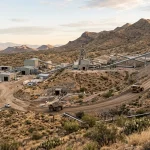
The domestic landscape for nuclear fuel production is undergoing a significant expansion as Eagle Nuclear Energy (NASDAQ: NUCL) officially commenced environmental baseline studies at its Aurora Uranium Project. Located along the Oregon–Nevada border, the project represents a critical pillar in the United States’ effort to secure a stable, domestic supply of uranium as global demand for carbon-free baseload power accelerates.
The initiation of these studies is a prerequisite for a substantial 27,000-foot Pre-Feasibility Study (PFS) drilling program scheduled for later this year. As the largest conventional measured and indicated uranium deposit in the United States, the Aurora Project is increasingly viewed by analysts and policymakers as a cornerstone for national energy security.
The Aurora Project: A Domestic Giant
The Aurora deposit is situated in the McDermitt Caldera, a region increasingly recognized for its significant mineral endowment. According to the SK-1300 Mineral Resource Estimate completed in August 2025 by BBA USA Inc., the Aurora project hosts an Indicated resource of 32.75 million pounds (Mlbs) of uranium (U3O8) and an additional 4.98 Mlbs in the Inferred category.
More Read

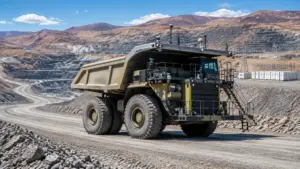
What distinguishes Aurora from other domestic prospects is its scale and geological profile. It is a shallow, near-surface volcanic-hosted deposit, which allows for conventional open-pit mining methods. In an industry where domestic production has historically struggled to meet a fraction of demand, the presence of over 32 million pounds of indicated resource provides a rare opportunity for a high-capacity, long-life mining operation on American soil.


Baseline Studies: The Path to Permitting
The environmental baseline studies launched this week are comprehensive in scope, designed to collect the multi-year data required for rigorous state and federal permitting processes. These studies are not merely regulatory hurdles; they are foundational to the project’s design and environmental stewardship strategy.
More Read

The scope of the current work includes:
- Hydrology and Hydrogeology: Mapping groundwater flow and surface water quality to ensure zero-discharge operations.
- Meteorology: Installation of advanced monitoring stations to track local air quality and weather patterns over a multi-seasonal cycle.
- Flora and Fauna: Detailed surveys of local ecosystems, including wetlands delineation and habitat mapping.
- Geochemistry: Analyzing the rock and soil chemistry to optimize waste management and reclamation planning.
- Cultural Heritage: Archaeological and cultural assessments conducted in coordination with local stakeholders and indigenous communities.
“The commencement of baseline data collection is a milestone that transitions Aurora from a resource on paper to a tangible development project,” stated a company spokesperson. “By integrating environmental data early in the PFS phase, we can optimize mine design to minimize footprint while maximizing resource recovery.”
Drilling the PFS: Technical Specifications
The upcoming 27,000-foot drilling program is specifically designed to support the Pre-Feasibility Study. Unlike early-stage exploration drilling, which seeks to find new mineralization, this program focuses on “in-fill” drilling: increasing the density of data points to upgrade resource confidence and provide the technical data needed for mine engineering.

The program will consist of approximately 47 drill holes. These cores will undergo geotechnical testing and metallurgical sampling to refine the processing flowsheets. The goal is to establish a clear economic case for the project, detailing everything from capital expenditure (CAPEX) to operational costs (OPEX) and long-term reclamation liabilities.
This technical rigor is essential for the uranium forecast 2026-2030, which predicts a tightening market where only projects with verified economics and clear permitting paths will reach the finish line.
Market Dynamics: The 32-Million-Pound Deficit
The urgency surrounding the Aurora project is driven by a stark reality in the energy markets. The United States is currently the world’s largest consumer of uranium, requiring approximately 32 million pounds annually to fuel its existing reactor fleet. However, domestic production has hovered at near-zero levels for years, leaving the country heavily reliant on imports from Kazakhstan, Uzbekistan, and Russia.
Recent geopolitical shifts and the U.S. ban on Russian uranium imports have accelerated the search for local alternatives. While companies like Uranium Energy Corp have started production at sites like Burke Hollow, the scale of the deficit requires large-scale conventional mines like Aurora to bridge the gap.
As the energy transition continues to place pressure on the grid, nuclear power is being embraced as the only proven technology capable of providing carbon-free, 24/7 baseload power. This has led to a “uranium surge” in pricing and investment, with the spot price of U3O8 maintaining a steady bull case through 2026.

Strategic Integration: From Mine to SMR
Eagle Nuclear Energy is not viewing the Aurora project in isolation. The company’s long-term strategy involves an integrated nuclear energy platform that pairs its domestic uranium resources with advanced Small Modular Reactor (SMR) technology.
SMRs represent the next generation of nuclear power: smaller, safer, and more flexible than traditional large-scale reactors. By controlling the fuel source, Eagle aims to offer a “vertical” solution to utilities and industrial partners seeking reliable energy. The Aurora project provides the “feedstock” for this vision, ensuring that the next generation of American reactors is powered by American minerals.
Operational Outlook
While the baseline studies are a multi-year endeavor, the momentum at the Oregon-Nevada border is undeniable. Eagle Nuclear expects cultural and archaeological studies to wrap up in late 2026, with air quality and aquatic resource data collection continuing into 2027.
For the mining industry, Aurora serves as a high-stakes test of the United States’ ability to permit and develop major critical mineral projects. The successful advancement of the largest conventional uranium deposit in the country would signal a significant shift in domestic industrial policy and a major step toward energy independence.