By Charles Pitts
The global mining sector has reached a critical inflection point in 2026, where the “S” and “E” of ESG are no longer just sections of an annual sustainability report but core drivers of financial valuation. As regulatory frameworks like the International Sustainability Standards Board (ISSB) S1 and S2 and the European Union’s Corporate Sustainability Reporting Directive (CSRD) move into full enforcement, the industry is transitioning from a “trust me” era of voluntary disclosure to a “show me” era of rigorous, third-party performance audits.
For mining executives and investors, the stakes are quantifiable. Performance audits have become the new gatekeepers to capital, dictating everything from interest rates on sustainability-linked loans to the net present value (NPV) calculations used in feasibility studies. As the 2026 reporting cycle begins, the ability to provide assured, granular data on carbon intensity, water management, and social license is distinguishing the market leaders from those facing a mounting cost of capital.
The regulatory shift: From disclosure to assurance
For over a decade, ESG reporting in mining was characterized by a patchwork of frameworks: GRI, SASB, and TCFD: that allowed companies to select the metrics that best suited their narrative. That era ended in 2025. By early 2026, the convergence of global standards has forced a standardization of data that was previously impossible.
More Read

Under the CSRD and ISSB regimes, large-scale mining operations are now required to provide “limited assurance” on their sustainability data, with a clear roadmap toward “reasonable assurance”: the same level of scrutiny applied to financial statements. This means that a mine’s reported greenhouse gas (GHG) emissions or its tailings dam safety metrics must be backed by a verifiable audit trail.

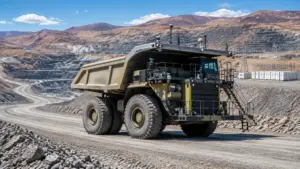
“We are seeing a total professionalization of ESG data,” says one senior mining analyst. “In 2026, an auditor isn’t just looking at a spreadsheet; they are looking at the digital twin of the mine, the telemetry from the haul trucks, and the real-time sensors in the processing plant. If the data doesn’t reconcile, the capital doesn’t flow.”

More Read

AISC trends: The rise of ESG-adjusted costs
The most visible impact of these mining ESG reporting trends is found in the All-In Sustaining Cost (AISC) metrics of gold and base metal producers. Traditionally, AISC focused on the direct costs of keeping a mine operational. In 2026, however, AISC is being structurally redefined to include the “sustaining” costs of environmental and social compliance.
Several factors are pushing AISC higher across the board:
- Decarbonization Capex: The transition from diesel-powered fleets to battery-electric vehicles (BEV) and trolley-assist systems often requires significant upfront sustaining capital, which is now being integrated into AISC reporting.
- Enhanced Tailings Standards: Following the widespread adoption of the Global Industry Standard on Tailings Management (GISTM), the costs associated with dry-stacking and continuous monitoring have become permanent fixtures on the balance sheet.
- Water Scarcity Management: In regions like the Atacama or Western Australia, the cost of desalination and complex water recycling systems is no longer a “growth” project but a baseline requirement for staying in operation.
Data from the first half of 2026 suggests that while technological efficiencies in automation are driving down some labor costs, the “ESG tax”: the cost of maintaining a high-performance social and environmental profile: is adding between $50 and $100 per ounce to the AISC of major gold producers. Investors are increasingly looking at “ESG-adjusted AISC” to understand which companies are truly low-cost after accounting for their long-term liabilities.
The financial gatekeeper: Cost of capital in 2026
The most immediate impact of performance audits is found in the debt markets. Sustainability-linked loans (SLLs) have become the primary vehicle for mining finance in 2026. These loans feature interest rate “ratchets” tied directly to audited ESG performance.
A miner that meets its audited targets for carbon reduction or indigenous procurement may see a margin reduction of 15 to 25 basis points. Conversely, failing an ESG audit or missing a key performance indicator (KPI) can trigger a penalty, effectively raising the cost of debt. This creates a direct feedback loop between operational site performance and the corporate treasury.
For equity investors, the focus has shifted toward “transition risk.” Companies with high carbon intensity and no audited pathway to reduction are being assigned higher discount rates by major institutional funds. This is particularly relevant in the critical minerals sector, where Western OEMs (Original Equipment Manufacturers) are demanding “clean” ore to meet their own Scope 3 requirements.

Snapshot: ESG Audit Maturity vs. Capital Access (2026)
| Audit Maturity Level | Primary Requirement | Impact on Cost of Capital | Investor Sentiment |
|---|---|---|---|
| Level 1: Basic Disclosure | Unaudited annual sustainability report; selective TCFD alignment. | High Premium: 150-200 bps above benchmark; limited access to ESG funds. | Skeptical; high “greenwashing” risk. |
| Level 2: Limited Assurance | Third-party verification of Scope 1 & 2 emissions; basic tailings data. | Neutral: Benchmark rates; access to standard institutional capital. | Standard; seen as a “passable” operator. |
| Level 3: Reasonable Assurance | Financial-grade auditing of all ESG KPIs; Scope 3 transparency. | Discount: 25-50 bps reduction via SLLs; priority for green bonds. | High; preferred “Blue Chip” status. |
| Level 4: Integrated Performance | Real-time audited data integrated with financial ERP systems. | Strategic Advantage: Lowest available rates; premium valuation multiples. | Industry leader; “Safe Haven” for ESG capital. |
Mining stocks to watch in 2026: The transparency leaders
As the market begins to differentiate based on audit quality, certain companies are emerging as “transparency premiums.” Those that have embraced the Initiative for Responsible Mining Assurance (IRMA) or early ICMM (International Council on Mining and Metals) performance requirements are seeing a clearer path to permitting and financing.
- The Gold Majors: Companies like Newmont and Agnico Eagle continue to lead in integrating AISC with ESG performance, providing detailed breakdowns of how decarbonization spend is affecting their long-run cost curves.
- Copper & Critical Minerals: Producers in the Copper Mark framework are finding it easier to secure off-take agreements with European and North American automakers who require audited proof of “responsible” sourcing.
- The Lithium Movers: As the 2026 lithium market stabilizes after a period of oversupply, investors are gravitating toward brine producers who can provide audited water-intensity metrics, a key differentiator in the “Green Lithium” trade.
The “S” in ESG: Quantifying Social License
While environmental metrics are easier to quantify and audit, 2026 has seen a surge in “Social Performance Audits.” Investors are no longer satisfied with anecdotes about community donations. They are demanding audited data on grievance resolution times, local procurement percentages, and evidence of Free, Prior, and Informed Consent (FPIC) for new projects.
The failure to pass a social audit is now recognized as a primary operational risk. In jurisdictions across Latin America and Africa, a “Level 3” social audit: which involves independent interviews with community stakeholders: is becoming a prerequisite for M&A activity. Buyers are unwilling to inherit “legacy social debt” that could lead to blockades or permit revocations.

2026 Outlook: The end of the “ESG Silo”
The most significant trend for the remainder of 2026 is the dissolution of the “ESG department” as a standalone entity. Performance audits are forcing ESG responsibility into the hands of mine managers, engineers, and CFOs. When a site manager’s bonus is tied to an audited carbon intensity metric, and the CFO’s interest rates are tied to a social performance score, ESG becomes a core operational discipline.
For the mining industry, the message of 2026 is clear: Transparency is no longer a choice; it is a license to operate. The companies that thrive will be those that view performance audits not as a regulatory burden, but as a strategic tool to lower their cost of capital and secure their place in the global energy transition.
Featured Lead: ESG Performance as a M&A Catalyst
In the first half of 2026, we have observed a trend where “clean” assets: those with high-grade performance audits: are fetching a 15-20% valuation premium in M&A transactions. Major mining houses are increasingly divestment-focused on assets that cannot meet the “Reasonable Assurance” threshold, preferring to buy projects with a pre-existing “audit trail.” This is effectively creating a two-tier market in the mining sector: those who can be audited, and those who will be sold.