By Charle Pitts

As we move through 2026, the mining industry is no longer debating if electrification is feasible, but rather how quickly it can be scaled to meet tightening ESG mandates and aggressive AISC reduction targets. The transition from diesel-mechanical fleets to electrified systems: comprising Battery Electric Vehicles (BEVs) and trolley-assist infrastructure: is fundamentally restructuring the operational expense (OPEX) profile of modern mine sites.
Driven by volatile fuel prices and the decreasing cost of high-density battery storage, the business case for mine electrification in 2026 rests on two pillars: the displacement of expensive diesel fuel and the radical simplification of equipment maintenance.
The Economic Drivers: Displacing Diesel
In 2026, energy remains the largest controllable cost for most operators. A standard 150-tonne diesel haul truck typically consumes over US$850,000 in fuel annually. By transitioning to a fully electric equivalent, operators are seeing energy cost reductions of approximately 65%. This shift is powered by the superior efficiency of electric drivetrains: boasting ~95% efficiency compared to the 35–45% seen in traditional internal combustion engines.
The integration of regenerative braking further tips the scales. On downhill hauls, electric trucks act as generators, feeding energy back into the battery or the grid. In deep open-pit operations, this can reduce net energy consumption by an additional 15-20%, effectively turning gravity into a fuel source.
More Read

Key Data Points: Energy and Maintenance 2026
| Metric | Diesel-Mechanical | Battery-Electric (BEV) | Trolley-Assist |
|---|---|---|---|
| Annual Energy Cost (per 150t truck) | ~$850,000 | ~$300,000 | ~$150,000 (on-ramp) |
| Maintenance Cost Reduction | Baseline | 30% – 40% Lower | 15% – 20% Lower |
| Drivetrain Efficiency | 35% – 45% | ~95% | ~95% |
| Productivity (Grade Climbing) | Baseline | +25% Speed | +30% Speed |
Technical Paradigms: Battery vs. Trolley Assist
The 2026 technological landscape is divided into two primary electrification pathways, often used in tandem depending on the pit geometry and mine life.

Battery Electric Vehicles (BEVs)
BEVs offer the highest degree of fleet flexibility. Unlike fixed infrastructure, BEVs can navigate any haul road provided they have access to charging hubs. For operators focusing on lithium supply chains or greenfield projects, BEVs are the preferred choice. The primary benefit is the total elimination of tailpipe emissions and the reduction of site noise, which significantly improves the social license to operate.

More Read

Trolley Assist Systems
For large-scale open-pit mines with stable, long-term ramps, trolley-assist systems are delivering the most dramatic fuel savings. By connecting to overhead DC power lines on steep uphill segments, trucks can bypass their onboard engines or batteries entirely. Research indicates that diesel consumption can be reduced by up to 91% on electrified ramp segments.
Furthermore, trolley systems allow for higher speeds on grade. While a diesel truck might struggle at 12–14 km/h on a 10% incline, a trolley-connected truck can maintain 20–25 km/h, directly increasing the number of cycles per shift and lowering the unit cost per tonne moved.
Maintenance and Reliability: The “Fewer Parts” Profit
One of the most overlooked mine electrification benefits in 2026 is the impact on maintenance OPEX. A diesel engine is a complex assembly of thousands of moving parts, all operating under extreme heat and pressure. In contrast, an electric motor is relatively simple.
The elimination of engine oil systems, fuel injection components, and complex transmissions leads to a 30% to 40% reduction in scheduled maintenance costs. Moreover, because electric motors provide retardation (braking) through electromagnetism, the wear on mechanical brake pads and discs is nearly eliminated. This results in longer component life and higher equipment availability: a critical metric for maintaining daily mining intelligence benchmarks.

Underground Advantages: The Ventilation Variable
In underground mining, the benefits of electrification are even more pronounced due to the “ventilation variable.” Traditionally, 30% to 50% of an underground mine’s total energy expenditure is dedicated to ventilation systems designed to dilute diesel particulate matter (DPM) and remove heat.
By 2026, regulations have tightened globally, requiring roughly 100 cubic feet per minute (CFM) of airflow for every brake horsepower of diesel equipment. BEVs require zero DPM ventilation. Implementing an all-electric fleet can cut ventilation requirements by 60% to 75%.
A 3,000 tonne-per-day underground operation can realize OPEX savings of US$3M to US$5M annually just from reduced fan power and heating requirements. Furthermore, avoiding the capital expenditure of a new ventilation raise: which can exceed US$200M in deep mines: often makes the BEV fleet the more economical choice regardless of the higher upfront vehicle cost.

Operational Efficiency and Real-Time Monitoring
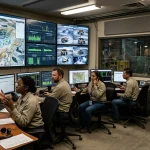
The shift to electric fleets is also accelerating the adoption of advanced telemetry. Because electric vehicles are inherently “digital,” they integrate seamlessly with mine-wide IoT networks. In 2026, control rooms are monitoring state-of-charge (SoC), charging speeds, and thermal health in real-time, allowing for dynamic dispatching that maximizes battery life and minimizes queuing at charging stations.
This data-driven approach allows operators to optimize the “energy-to-ore” ratio, a metric that is becoming as important as traditional recovery rates. High-fidelity data from electric fleets is also used to validate carbon credits and ESG reporting, providing a transparent audit trail for investors concerned with mining M&A activity and sustainability.

The 2026 Outlook: Future-Proofing Assets
As we look toward 2030, the “first-mover” advantage in electrification is becoming clear. Projects like the Tiris Uranium Project and major copper developments in South America are increasingly factoring in electrification from the feasibility stage.
The primary risks: infrastructure CAPEX and battery replacement costs: are being mitigated by new “Battery-as-a-Service” (BaaS) models and standardized charging protocols. For the 2026 operator, electrification is no longer a luxury or an experiment; it is a strategic requirement to combat the rising costs of diesel, acid, and labor while meeting the stringent decarbonization targets set by global markets.
In summary, the transition to electric mining equipment offers a rare “win-win”: a significant reduction in the environmental footprint coupled with a double-digit decrease in operational expenses. As the technology matures and the charging infrastructure becomes ubiquitous, the roar of the diesel engine is being replaced by the hum of high-torque electric motors: a sound that, for the savvy investor and operator, represents the sound of efficiency.