By Charles Pitts

The global mining industry has reached a decisive tipping point in 2026. What were once ambitious pilot programs for Autonomous Haulage Systems (AHS) have now become the baseline requirement for Tier 1 and Tier 2 mining operations. As commodity price volatility continues to squeeze margins, the narrative has shifted from “if” to “how fast” a fleet can be automated.
The primary driver is no longer just safety: though that remains a paramount benefit: but a cold, hard focus on operational expenditure (OPEX). In 2026, data from major deployments across the Pilbara, the Atacama, and the Canadian Shield show that autonomous haul trucks are delivering a 15% to 30% reduction in load-and-haul costs per tonne. This deep dive examines the specific levers behind these savings and how the integration of electrification is further compounding the financial advantages.
Quantifying the Direct Cost Levers
The financial impact of AHS is multifaceted, touching everything from labor and fuel to the physical longevity of the machine itself. In the current 2026 landscape, three primary levers are driving the majority of OPEX reductions.
1. Labor Optimization and Displacement
Labor remains one of the largest line items in traditional mining OPEX. In manual operations, the cost of housing, transporting, and paying operators: especially in remote “fly-in, fly-out” (FIFO) sites: adds a significant premium to every tonne moved. By 2026, mature autonomous sites have successfully reduced in-cab operator hours by 60% to 80% on primary haul routes.
More Read

While these operations require a new class of highly skilled control room technicians and site marshals, the net headcount reduction in high-risk, high-cost roles has led to a sustained 10% to 20% reduction in total haulage OPEX at brownfield sites. For greenfield projects designed from the ground up for autonomy, the savings are even more pronounced.

2. Fuel Efficiency and Energy Consumption
Autonomous trucks don’t suffer from “heavy-footed” driving. Software-driven acceleration and braking patterns ensure that every truck operates at its most efficient torque curve. Recent benchmarks for 2026 indicate that autonomous fleets are achieving roughly 11% better fuel economy than their human-driven counterparts. By minimizing non-productive moves and optimizing routing in real-time, the energy cost per tonne moved is seeing its most significant decline since the introduction of high-efficiency diesel engines.

More Read
3. Maintenance and Tire Longevity
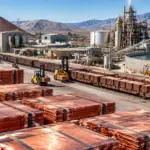
Tires are a critical cost center in open-pit mining. Human error: such as sharp cornering, harsh braking, or hitting debris: can lead to premature tire failure. In 2026, autonomous systems equipped with high-precision Lidar and path-planning algorithms (as seen in recent autonomous haulage productivity benchmarks) have extended tire life by as much as 15%. Furthermore, the consistency of autonomous driving reduces shock loads on the chassis and drivetrain, lengthening the intervals between major overhauls and lowering the cost per operating hour ($/hr).
Productivity: The 24/7 Advantage
Beyond direct cost savings, the impact on mine-site productivity is a force multiplier for OPEX efficiency. Autonomous trucks do not require shift changes, lunch breaks, or bathroom stops. In 2026, operations utilizing AHS are reporting a 10% to 20% increase in effective utilization.
| Metric | Manual Operations | Autonomous (2026) | % Change |
|---|---|---|---|
| Shift Change Delays | 45–60 mins/day | 0 mins/day | -100% |
| Tonnes per Truck/Hour | Base | +15% | +15% |
| Fuel Consumption | 100% | 89% | -11% |
| Tire Life (Hours) | 4,500 | 5,200+ | +15.5% |
| Load-and-Haul OPEX | $X.XX/t | $0.75–0.85X/t | -15% to -25% |
Data based on 2025/2026 industry benchmarks and vendor-reported performance from Tier 1 assets.
The elimination of shift-change gaps alone can add hundreds of thousands of tonnes to an annual production profile without adding a single truck to the fleet. This allows operators to achieve the same production targets with a smaller, more efficient fleet, further reducing the capital intensity and associated maintenance costs.
The Control Room: A Strategic Shift
The transition to autonomy hasn’t eliminated human involvement; it has relocated it. In 2026, the traditional “pit boss” has been replaced by a Fleet Controller operating in a centralized, climate-controlled environment.

This shift has a subtle but important impact on OPEX: site safety and incident costs. Autonomous driving is inherently more predictable, leading to fewer collisions and near-misses. In 2026, insurance premiums for autonomous-heavy sites are beginning to decouple from traditional mining benchmarks, reflecting the lower risk profile of a site where humans and 400-tonne machines are physically separated.
Mine Electrification Benefits 2026: The Autonomy-Electric Synergy
The real “revolution” in 2026 is the convergence of autonomy and electrification. While AHS solves the labor and productivity puzzle, electrification addresses the volatile cost of diesel and the rising pressure of carbon taxes.
Electric drivetrains are inherently simpler, with fewer moving parts than internal combustion engines. This translates to a lower maintenance cost per hour. However, the true benefit lies in the synergy between the two technologies. Autonomous systems are uniquely suited to manage the complexities of electric charging and trolley-assist systems.

In 2026, autonomous controllers are now dynamically scheduling trucks for charging based on battery state-of-charge, haul cycle demands, and peak-shaving energy pricing. This prevents the “bottleneck” effect often seen at manual charging stations. For mines connected to a renewable-heavy grid, the energy cost savings compared to diesel can exceed 40%, particularly as AISC trends in gold mining show energy costs becoming the primary differentiator for low-cost producers.
Underground Implications: Ventilation and Health
While much of the focus is on ultra-class surface trucks, autonomous and electric loaders (LHDs) are transforming underground economics. The removal of diesel particulate matter (DPM) significantly reduces the demand for ventilation. In deep mines, where ventilation energy can account for 50% of total site power, the shift to electric, autonomous fleets has slashed ventilation OPEX by 30% to 50% in 2026. This also allows for deeper mining than was previously economically feasible, extending the life of mine for aging assets.
The 2026 Outlook: Scaling to the Mid-Tier
As we move through 2026, the technology is no longer the exclusive playground of companies like Rio Tinto or BHP. Retrofit kits and “Autonomy-as-a-Service” (AaaS) models have made AHS accessible to mid-tier operators.

The barrier to entry has lowered, but the stakes have never been higher. As shown in our analysis of the AI-energy nexus, the integration of sophisticated data processing at the mine site is becoming a core competency. Those who fail to adopt autonomous haulage risk being structurally higher on the cost curve, making them vulnerable in a low-price environment.
For decision-makers, the data from the 2025–2026 deployment cycle is clear: autonomous haul trucks are no longer a luxury for the future; they are the essential engine of modern mine OPEX reduction.