Byline: Penny Langford

Mining project finance is becoming less forgiving. Higher capital costs, construction uncertainty, stricter ESG reviews and volatile commodity assumptions are changing how lenders assess a mine before committing debt.
The headline interest rate remains important, but it is no longer the only: or necessarily the most revealing: indicator of financing risk. Lenders are increasingly repricing the underlying project model through five operational metrics: debt-service coverage, capital-cost certainty, commodity-price assumptions, schedule risk and operating resilience.
The shift matters most for greenfield copper, lithium, nickel, gold and other critical-minerals projects. A project can show a strong internal rate of return and still struggle to secure competitive debt if its downside coverage is weak, its contingency is thin or its permitting path is uncertain.
Recent analysis from Cassels describes a market with higher pricing, tighter financial covenants, enhanced completion requirements and reduced tolerance for execution risk. BDO’s analysis of mining-transition finance similarly highlights the growing importance of project finance, reserve-based lending, royalties, streams and hybrid structures.
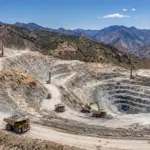
The following framework identifies five metrics that increasingly determine whether a project receives bank debt, pays a risk premium or must turn to more expensive forms of capital.

The repricing dashboard
The ranges below are indicative market markers, not universal lending rules. Actual terms depend on jurisdiction, sponsor strength, commodity, offtake quality, reserve confidence, permitting status and the level of government or export-credit support.
| Project metric | Indicative lender marker | What is being repriced | Practical consequence |
|---|---|---|---|
| Minimum DSCR | Approximately 1.5x–1.7x in downside cases | Cash-flow headroom | Lower debt capacity or more equity |
| Senior debt pricing | Roughly 150–350 basis points over benchmark for bankable projects; higher for riskier assets | Country, construction and completion risk | Higher interest expense and tighter covenants |
| Senior debt share | Commonly 40%–60% of total funding | Leverage against project cash flow | More sponsor equity, ECA or hybrid capital |
| Cost-overrun support | Often US$20 million–US$50 million for project facilities, depending on scale | Construction and commissioning risk | Completion guarantees, standby equity or reserve facilities |
| Commodity price deck | Conservative base case plus downside case | Revenue and debt-service volatility | Lower borrowing base and stronger hedging or offtake |
| Schedule sensitivity | One- to two-year delay tested explicitly | Permit, construction and ramp-up risk | Capitalized interest, revised maturity and contingency |
1. Debt-service coverage: the first repricing lever
The debt-service coverage ratio, or DSCR, remains the central measure of whether a mine can repay its lenders.
It is calculated as:
DSCR = cash flow available for debt service ÷ scheduled principal and interest
A project generating US$240 million of annual cash flow against US$150 million of debt service has a DSCR of 1.6x. If costs rise or realized prices fall and cash flow declines to US$195 million, coverage falls to 1.3x.
That difference can determine whether a project remains financeable.
Traditional mining project-finance structures have often referenced minimum DSCR levels around 1.2x to 1.4x. Recent market commentary and project-finance studies point to lenders seeking more headroom, with 1.5x to 1.7x increasingly relevant in downside cases.
The change affects debt sizing directly. If a lender requires a 1.6x DSCR and the project produces US$240 million of sustainable cash flow, allowable annual debt service is approximately US$150 million. At a 1.3x threshold, the same project could theoretically support about US$185 million of annual debt service.
That does not mean lenders simply maximize debt against the ratio. They also assess the loan-life coverage ratio, reserve life, ramp-up performance and the timing of cash flows. Indicative greenfield benchmarks cited in project-finance practice include LLCR of roughly 1.7x to 2.0x and a project-life coverage ratio above 2.0x.
Implications for mining companies
Sponsors should show that the project remains above the lender’s minimum threshold after testing:
- A 15%–25% commodity-price decline.
- A one-year production delay.
- A 10%–20% increase in operating costs.
- Higher interest rates during construction.
- Lower head grades or slower ramp-up.
- Additional sustaining capital.
A base case that barely reaches 1.4x may still support equity financing, but it is less likely to support competitively priced, non-recourse debt.
2. Capital cost and contingency: lenders are pricing what the feasibility study leaves out
Mining lenders have become more focused on the difference between headline capital expenditure and the amount required to reach steady production.
Cassels identifies enhanced contingency requirements and completion support as central features of the current market. BDO also notes that project finance involves extensive due diligence, strict covenants and ongoing approval requirements because repayment depends on the project rather than the sponsor’s broader balance sheet.
For a US$1 billion mine, a 10% capital overrun represents another US$100 million. A 30% overrun represents US$300 million: an amount large enough to change ownership, leverage and project timing.
That sensitivity is why lenders increasingly examine:
- Engineering maturity and procurement status.
- Fixed-price or wrapped EPC arrangements.
- Long-lead equipment orders.
- Contractor balance sheets and performance guarantees.
- Contingency by work package rather than as a single percentage.
- Independent engineer estimates.
- Funding for commissioning, ramp-up and working capital.
- A cost-overrun facility or committed sponsor support.
Some project-finance guidance cites cost-overrun facilities of approximately US$20 million to US$50 million for mining projects, although larger developments may require substantially more.
The issue is not only whether the sponsor has a contingency line. It is whether the contingency is available when the project needs it and whether the financing documents allow lenders to control further drawdowns.

A lender’s view of capex risk extends from the processing plant to every road, pump, power line and contractor interface.
3. Commodity-price assumptions: the model is being tested below the sponsor case
Commodity prices determine both project value and debt capacity. Lenders therefore tend to size debt against a conservative price deck rather than the sponsor’s upside case.
The World Bank’s October 2025 Commodity Markets Outlook provides a useful external reference. It forecasts average 2026 prices of:
| Commodity | 2025 forecast | 2026 forecast | Change |
|---|---|---|---|
| Copper | US$9,700 per metric ton | US$9,800 per metric ton | +1.0% |
| Nickel | US$15,300 per metric ton | US$15,500 per metric ton | +1.3% |
| Gold | US$3,400 per troy ounce | US$3,575 per troy ounce | +5.1% |
| Silver | US$38 per troy ounce | US$41 per troy ounce | +7.9% |
These are external market forecasts, not lender-approved assumptions. A bank may apply a haircut, use a different long-term price or transition toward a lower real price after the explicit forecast period.
The distinction is especially important for gold and lithium projects. A high near-term price can improve the base case, but lenders are unlikely to treat a short period of elevated pricing as permanent support for long-tenor debt. For lithium, the model must also account for supply growth, chemistry changes, processing recoveries and offtake terms.
A robust model should include:
- A lender base case anchored to independent market data.
- A downside case below the base price deck.
- A long-term price assumption that does not simply extend current spot prices.
- Sensitivity to treatment charges, payability and by-product credits.
- Foreign-exchange and inflation consistency between revenue and costs.
The Skillings copper price analysis and lithium market coverage provide additional context for how price scenarios affect project economics.
4. Permitting and schedule: time has become a financing metric
A delay does not merely move the production start date. It increases capitalized interest, contractor costs, insurance, overheads and the period before revenue begins.
Consider a project expected to generate US$200 million in annual cash flow, discounted at 8%. Delaying that cash flow by one year reduces its present value by approximately US$14.8 million. A two-year delay reduces the present value by roughly US$27.4 million, before adding construction inflation or additional financing costs.
Lenders are therefore examining schedule risk through measurable milestones:
- Completion of environmental and mining permits.
- Water, land-access and Indigenous or community agreements.
- Grid connection and transport infrastructure.
- Final investment decision.
- EPC or EPCM execution.
- Long-lead equipment delivery.
- Commissioning and performance testing.
- Ramp-up to nameplate capacity.
The EU Critical Raw Materials Act, for example, provides maximum permit-granting periods for designated Strategic Projects: 27 months for extraction and 15 months for processing or recycling. Those limits do not guarantee approval and exclude the time needed to prepare an environmental impact assessment, but they illustrate how policy can create a more defined administrative timetable for qualifying projects.
For other jurisdictions, lenders may require longer construction periods, additional interest reserves or completion guarantees. A project with a technically strong resource can still attract a higher margin if the approval pathway is uncertain.

Permitting certainty affects the timing of debt drawdowns, interest capitalization and the start of repayment.
5. Operating resilience: lenders are looking beyond headline IRR
The final metric is the project’s ability to operate near its feasibility-study assumptions.
Lenders are increasingly testing the gap between nameplate capacity and sustainable production. That includes:
- Recovery rates.
- Head-grade variability.
- Strip ratio or underground development requirements.
- Equipment availability.
- Labor and maintenance assumptions.
- Power and water reliability.
- Treatment charges and concentrate penalties.
- Ramp-up duration.
- Sustaining capital per tonne or ounce.
This is where autonomous technology and digital operating systems can influence financeability. Skillings’ coverage of autonomous mining shows how fleet utilization, maintenance data and dispatch reliability are becoming measurable operating variables. However, lenders will generally give greater weight to demonstrated performance than to projected technology benefits.
For a copper project, a 10% recovery shortfall can reduce payable metal without changing the mine plan. For a gold project, a lower-than-expected head grade can affect both revenue and the cost curve. For a lithium project, impurity levels and processing recovery may matter as much as resource size.
The practical test is simple: Can the project maintain debt service if production reaches only 85%–90% of nameplate capacity during the first years of operation?
If not, lenders may require:
- A longer principal grace period.
- Back-ended or sculpted amortization.
- A larger debt-service reserve account.
- Completion tests before distributions.
- Cash sweeps during stronger price periods.
- Additional equity or subordinated capital.
What sponsors should prepare before approaching lenders
Mining companies seeking project finance should build the lender case around downside resilience rather than headline returns.
A strong financing package should include:
- A DSCR comfortably above the minimum in the base case.
- Downside coverage that remains acceptable after price and schedule shocks.
- A bottom-up capital estimate with credible contingency.
- Committed funding for cost overruns and commissioning.
- Independent technical, legal and environmental diligence.
- A price deck linked to named external sources.
- Evidence that permits, water rights and community agreements are advancing.
- An operating plan that separates nameplate capacity from achievable ramp-up production.
- A clear strategy for senior debt, equity, offtake, royalties or streaming capital.
Alternative financing can help close the funding gap. As Skillings’ analysis of royalty and streaming structures explains, those instruments may reduce near-term debt-service pressure but create long-term claims on revenue or production. Sponsors should model them alongside senior debt rather than treating them as cost-free substitutes.
Conclusion
Mining lenders are not simply charging more for capital. They are changing the definition of a financeable project.
The five metrics being repriced: DSCR, capex certainty, commodity-price assumptions, schedule risk and operating resilience: are closely connected. A construction delay reduces coverage. A weak price deck reduces debt capacity. A thin contingency increases the chance of another financing round. An unreliable ramp-up can turn a strong feasibility study into a restructuring risk.
For operators, the practical response is to make the project easier to underwrite: document assumptions, quantify downside cases and fund the risks that cannot be transferred to lenders.
For lenders, the objective is not to eliminate mining risk. It is to ensure that the project retains enough cash-flow and execution headroom to repay debt when prices, schedules and operating conditions do not follow the base case.
That is the central change in mining finance: resilience is now being priced as carefully as reserves.
LinkedIn snippet
Mining project finance is being repriced through five operating metrics; not just the headline interest rate. This analysis examines DSCR thresholds, capex contingencies, commodity-price decks, permitting schedules and ramp-up resilience, with concrete benchmarks for copper, nickel, gold and critical-minerals projects. #MiningFinance #Copper #CriticalMinerals #ProjectFinance
X snippet
Mining lenders are repricing five project metrics: DSCR, capex certainty, commodity-price assumptions, permitting schedules and operating resilience. The result is tighter debt capacity, stronger completion support and greater scrutiny of downside cases. #MiningFinance #CriticalMinerals #Copper