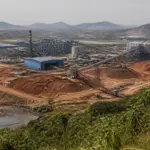
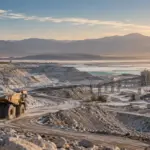
Battery-electric haulage is moving from pilot projects to large-scale autonomous deployment, with EACON reporting more than 1,500 electric mining trucks using its autonomous solution.

The scale of EACON’s battery-electric deployment signals a shift in how mining companies are evaluating autonomy. The question is no longer whether an autonomous truck can complete a controlled demonstration. It is whether the mine can provide the charging infrastructure, communications network, road design and operating discipline needed to run hundreds of autonomous vehicles productively.
EACON says its autonomous solution has been deployed on more than 1,500 battery-electric mining trucks, representing approximately 42% of its autonomous fleet. The company’s broader materials say its systems have been deployed on more than 3,500 haulage trucks globally as of September 2026, across battery-electric, hybrid-electric and conventional platforms.
The figures point to two overlapping trends: the rapid electrification of heavy mine haulage in China and the growing use of software-defined control systems to manage mixed equipment fleets.
Why EACON’s electric fleet matters
Battery-electric trucks offer potential benefits in fuel displacement, local emissions and energy efficiency. But electrification also introduces operating constraints that diesel fleets can often absorb more easily, including charging queues, grid capacity, battery state-of-charge management and the effect of haul-road gradients on energy consumption.

Autonomy changes the operating model again. A driverless truck can be dispatched continuously, follow repeatable routes and coordinate its movements with loading and dumping equipment. That consistency can make energy use more predictable, but only if the fleet management system has reliable information about traffic, payload, road conditions and battery status.

EACON’s ORCASTRA autonomous haulage solution is designed for both factory-fitted and retrofit deployments. According to the company, it combines three principal layers:
- CONDUCTOR, the fleet and production management platform;
- PILOT, the autonomous driving kit installed on the truck; and
- CREW, a collaboration system for manually operated vehicles and equipment entering the autonomous operating zone.
The architecture is significant for mine operators because it does not require every machine on site to be autonomous at the same time. Manual light vehicles, excavators, graders and service equipment can operate alongside autonomous trucks if they are integrated into the site’s traffic and safety controls.

EACON describes the system as using LiDAR, radar, cameras, inertial measurement units and satellite positioning. It also uses vehicle-to-vehicle and vehicle-to-everything communications to share position, speed and task information.
That combination moves autonomy beyond lane following. The truck must interpret road geometry, identify berms and obstacles, negotiate intersections, respond to changing traffic and complete loading and dumping sequences.
Read more about critical-minerals supply-chain risks and operating dependencies.
The AT150 shows where the hardware is heading
One of the more important developments in China is the deployment of the AT150, a cabless, bidirectional battery-electric mining truck developed by Inner Mongolia North Hauler and State Power Investment Corporation, with autonomous technology supplied by EACON.
The vehicle is commonly described as a 100-ton-class truck, although reported specifications put its payload at approximately 136 tonnes. Its bidirectional design allows it to travel in either direction without turning, which can simplify traffic flows and reduce the space required at loading, dumping and reversing areas.
The AT150 is operating at an SPIC mine in northern China. Its importance extends beyond the individual truck. A cabless design creates a closer integration between the vehicle platform, the autonomy system and the mine’s traffic-control architecture.
For operators, the design raises several practical questions:
- Can the mine’s loading and dumping areas support bidirectional traffic?
- Are charging points located where the truck can access them without disrupting the haul cycle?
- How will maintenance teams isolate and service a high-voltage autonomous vehicle?
- Are manual vehicles and pedestrians excluded from the truck’s operating envelope?
- Can the communications network maintain coverage throughout the route?
These questions are as important as payload capacity. A larger electric truck does not automatically deliver lower operating costs if charging downtime, road congestion or network interruptions reduce productive availability.
Epiroc extends autonomy from underground to surface
EACON’s deployment is concentrated largely in surface haulage. Epiroc is addressing a different transition: enabling autonomous underground mining trucks to continue operating after they leave the mine portal.
Epiroc’s Deep Automation system uses 3D LiDAR-based localisation and perception to support autonomous travel on surface haul roads without relying solely on GPS. The objective is a continuous cycle from underground loading areas to surface tipping points, without requiring an operator to take control at the portal.

3D LiDAR can support continuous localisation as autonomous trucks move between underground and surface environments.
That matters because portals are operational transition zones. They may combine steep gradients, changing light levels, pedestrian movements, service vehicles, fixed infrastructure and inconsistent satellite coverage. A handover between underground and surface systems can create an additional point of failure. Keeping the truck within one control framework may reduce that complexity.
Epiroc says 3D LiDAR provides a dense point-cloud reference for mapping and positioning. The system can identify and respond to berms, vehicles, personnel and loose rock. In a demonstration described by Epiroc, an autonomous battery-electric truck detected obstacles on the surface and stopped automatically.
The technology does not remove the need for mine design controls. Surface roads still require consistent geometry, suitable berms, clear exclusion zones and traffic rules that limit unpredictable interactions between autonomous and manually operated equipment.
For underground mines, the development could make automation more useful across the entire haul cycle. Rather than automating only the production area or only the ramp, operators can assess whether the complete route from stope to surface can be managed as one system.
Operational KPI table: what mines need to measure
The public announcements describe technology capabilities, but mine owners will judge deployment on operating performance. The following framework separates reported benchmarks from site-specific requirements.
| KPI area | Reported or demonstrated capability | Mine-level requirement and decision test |
|---|---|---|
| Safety | Multi-sensor perception, emergency braking, geofencing, remote stop functions and controlled autonomous operating zones | Track near misses, emergency stops, intervention frequency, unauthorized-entry events and interactions with manual equipment. Safety performance should be assessed by operating mode, not only fleet average. |
| Uptime | EACON cites autonomous operation of approximately 22 hours per day compared with about 20 hours for human-operated trucks, subject to site conditions | Measure autonomous availability, productive hours, cycle adherence, mean time between failures and mean time to repair. Separate truck downtime from charger, network and loading-equipment downtime. |
| Charging | Battery-electric autonomy can be coordinated through fleet dispatch and state-of-charge information | Plan charging around haul-cycle length, gradient, payload and weather. Test charger redundancy, peak electrical demand, queue time, reserve state of charge and recovery procedures during charger or grid outages. |
| Network | LTE/5G, V2V and V2X communications support coordination between trucks, equipment and control systems | Validate coverage, latency, handover performance and failover across the full route. Local decision-making and edge processing should allow a controlled response during temporary communications loss. |
| Perception | LiDAR, radar, cameras, IMUs and positioning systems provide layered environmental awareness | Establish sensor-cleaning, calibration and inspection routines for dust, mud, rain, glare and mechanical vibration. Monitor false positives, false negatives and degraded-sensor events. |
| Productivity | Automated dispatch, repeatable driving and coordinated loading and dumping can improve fleet utilisation | Measure tonnes per operating hour, cycle-time variation, payload compliance, idle time and queueing at shovels, crushers and charging stations. |
The key point is that autonomy should be measured as a mine system, not as a truck feature. A vehicle with strong perception hardware can still underperform if it waits for a charger, loses network coverage in a ramp or encounters poorly maintained haul roads.

Fleet control rooms increasingly combine production, safety, equipment and communications data.
Three deployment priorities for operators
1. Treat charging as part of fleet dispatch
For a large battery-electric fleet, charging is a production-control issue rather than a separate electrical project. Dispatch software must account for state of charge, route length, gradient, payload and expected waiting time.
A truck that reaches a charging station at the wrong point in its cycle can create a queue that affects the entire fleet. Mines should model charging demand against the production schedule before committing to fleet scale.
2. Design for mixed traffic
Most mines will operate mixed fleets during the transition to autonomy. Manual excavators, water trucks, graders, maintenance vehicles and contractor equipment will continue to share the site with autonomous trucks.
That makes operating-zone design, vehicle identification and traffic rules central to safety. EACON’s CREW concept and Epiroc’s traffic-control capabilities reflect the same underlying requirement: every participant must be visible to the autonomous system and subject to clear access rules.
3. Measure infrastructure resilience
Autonomous fleets depend on more than onboard sensors. They require reliable network coverage, positioning references, control-room systems, charging equipment and maintenance support.
A practical readiness assessment should ask:
- Where are the network black spots?
- What happens when a truck loses communications?
- How quickly can a failed sensor or charger be replaced?
- Can the fleet continue at reduced capacity during a power interruption?
- Are road geometry and berm standards consistent enough for machine perception?
- Does the mine have technicians trained in high-voltage and autonomous systems?

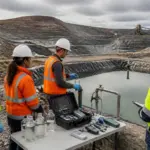
Sensor protection, calibration and maintenance are essential to reliable perception in mine conditions.
What the deployment means for mining technology
EACON’s reported electric-truck deployment and Epiroc’s underground-to-surface work show that autonomy is becoming less about isolated pilot projects and more about integrating entire material-movement systems.
The immediate opportunity is greatest where mines have repeatable haul routes, controlled access, strong communications and sufficient production scale to justify new infrastructure. Large copper, iron ore, coal, gold and critical-minerals operations are likely to remain the main adoption markets.
The risks are equally clear. Capital spending can shift from diesel fuel systems to electrical distribution, charging equipment, sensors, network infrastructure and specialist maintenance. Mine plans may need to change to accommodate charging areas, autonomous operating zones and more disciplined traffic separation.
For investors and policymakers, the technology also reinforces the link between mining equipment and the energy transition. Battery-electric trucks increase demand for electricity, charging hardware, power electronics, copper, lithium, nickel and other critical minerals. The value chain is therefore broader than the truck itself.
EACON’s scale suggests that autonomous battery-electric haulage is already moving into industrial deployment. Epiroc’s 3D LiDAR work points to the next stage: making autonomy continuous across different mine environments. The operators most likely to benefit will be those that treat the transition as an integrated operational redesign rather than a software installation.
Sources and further reading
- International Mining: EACON autonomous solution deployed on more than 1,500 battery-electric mining trucks
- International Mining: Epiroc enables underground mining truck surface operation with 3D LiDAR technology
- EACON Mining Technology: retrofit and factory-fit autonomous haulage solutions
- Epiroc Deep Automation
- Skillings: Critical minerals supply-chain outlook
- Skillings: Lithium price forecast and project risk
Social snippets
LinkedIn:
Autonomous haulage is moving beyond pilot projects. EACON reports more than 1,500 battery-electric mining trucks using its autonomous solution, while Epiroc is extending underground truck autonomy onto surface haul roads with 3D LiDAR. The next challenge is operational: charging, network resilience, mixed-traffic control and uptime will determine whether mines capture the value of automation.
X:
EACON reports >1,500 battery-electric mining trucks using its autonomous solution. Epiroc is extending autonomous underground trucks onto surface roads with 3D LiDAR. The next test is mine-wide execution: charging, network coverage, safety controls and uptime.