LONDON/DUBAI : Aluminum prices on the London Metal Exchange (LME) surged 2% on Saturday following reports that Emirates Global Aluminium (EGA) has suspended operations at its Al Taweelah smelter. The halt, triggered by Iranian-related strikes targeting industrial infrastructure in the United Arab Emirates, has ignited fears of a 3.5 million tonne global supply gap in 2026.

The disruption marks the most significant threat to the global aluminum supply chain since the energy crisis of 2022. As the Middle East accounts for approximately 9% of global primary aluminum production, the sudden removal of EGA’s capacity: compounded by reports of reduced output at neighboring facilities: has sent shockwaves through the commodities markets.
The Al Taweelah Shutdown: A Geopolitical Catalyst
Late Friday evening, reports surfaced of multiple missile and drone strikes targeting the Al Taweelah industrial zone, located between Abu Dhabi and Dubai. While UAE defense systems intercepted several projectiles, secondary damage to power infrastructure forced an emergency shutdown of the EGA potlines.
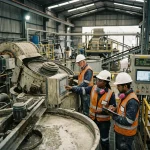
Unlike other industrial processes, an uncontrolled shutdown of an aluminum smelter is a catastrophic operational event. Aluminum smelting requires a constant, massive flow of electricity to keep the bath of molten metal in a liquid state. When power is lost for more than a few hours, the metal begins to solidify within the pots. Industry analysts suggest that EGA’s Al Taweelah facility, which produced 1.6 million tonnes of aluminum in 2025, may face months of "re-lining" and repair work if the "freeze" is as widespread as early reports indicate.
The EGA strike has already impacted the broader regional output. In Bahrain, Aluminum Bahrain (Alba) reported "precautionary operational adjustments," while Qatar’s Qatalum smelter is reportedly operating at reduced capacity due to redirected energy priorities. Together, these disruptions could remove up to 3.5 million tonnes of annual capacity from the market: roughly half of the Middle East’s total output.
More Read



Aluminum Price Forecast 2026: Market Reaction and Volatility
Following news of the EGA halt, LME aluminum futures jumped 2%, briefly touching levels above $3,500 per tonne. The market has shifted into deep backwardation, a condition where spot prices trade significantly higher than futures, indicating an acute shortage of physical metal available for immediate delivery.
Investors are now recalibrating their aluminum price forecast 2026 models to account for a sustained deficit. The loss of 3.5 million tonnes of supply represents nearly 5% of global demand at a time when stockpiles are already at historic lows.
More Read

"The EGA strike is a 'black swan' event for the base metals complex," noted one senior commodities strategist. "We are moving from a balanced market to a structural deficit overnight. If Al Taweelah stays offline for more than one quarter, we could see prices test $4,000 per tonne by mid-year."
The ripple effects are visible in equity markets as well. Shares of rival producers, including Alcoa Corp. and Century Aluminum, rallied more than 7% in Friday’s after-hours trading, as investors bet on these firms filling the supply void. However, the ability of Western smelters to ramp up production is limited by high energy costs and the long lead times required to restart idled capacity.
The 3.5 Million Tonne Supply Gap: A Calculated Risk
The potential 3.5 million tonne shortfall is not merely a result of the EGA halt. The geopolitical situation in the Persian Gulf has created a dual-threat to the global aluminum supply.
- Direct Production Loss: The physical damage at Al Taweelah and the precautionary slowdowns at Alba and Qatalum.
- Logistical Paralysis: The closure of the Strait of Hormuz, or its effective blockage due to insurance premium spikes, prevents the arrival of alumina: the critical raw material for aluminum production.
Middle Eastern smelters are heavily dependent on alumina imports from Australia and Brazil. If these shipments cannot reach the smelters, production will cease even at facilities that were not directly hit by the strikes. This logistical bottleneck is a primary driver in the 2026 Critical Minerals Scoreboard, which identifies the Middle East as a high-risk zone for industrial mineral processing.
| Producer | 2025 Output (Est.) | Current Status | Estimated Annual Impact |
|---|---|---|---|
| EGA (Al Taweelah) | 1.6M Tonnes | Total Halt | -1.6M Tonnes |
| EGA (Jebel Ali) | 1.0M Tonnes | Operational (Reduced) | -0.4M Tonnes |
| Alba (Bahrain) | 1.6M Tonnes | Precautionary Slowdown | -0.8M Tonnes |
| Qatalum (Qatar) | 0.6M Tonnes | Energy Curtailment | -0.3M Tonnes |
| Total Impact | 4.8M Tonnes | : | -3.1M to -3.5M Tonnes |
Downstream Shockwaves: Automotive and Aerospace
The aluminum supply shock arrives at a sensitive time for global manufacturing. Aluminum is a critical component in the "lightweighting" of electric vehicles (EVs) and is essential for aerospace airframes.
The automotive sector, which has been shifting toward aluminum-intensive architectures to extend battery range, now faces a massive cost increase. This supply-side pressure coincides with the Lithium AI demand surge, creating a "perfect storm" for EV manufacturers who are seeing costs rise across their entire bill of materials.
Aerospace giants like Boeing and Airbus are also vulnerable. These companies rely on high-grade aluminum alloys, much of which is processed in the Middle East. A prolonged EGA strike will likely lead to force majeure declarations, delaying delivery schedules for commercial aircraft throughout the second half of 2026.
"Manufacturers can't just switch to steel," says a procurement director at a major European automaker. "The engineering is baked in. If we can't get the aluminum, the assembly lines stop. We are looking at a repeat of the 2021 semiconductor crisis, but for raw materials."
Strategic Shifts: Is Africa the Answer?
As the Middle East faces unprecedented volatility, mining majors and state actors are looking toward more stable jurisdictions to anchor the global aluminum supply.
Recent investments in the Lobito Corridor and African mineral infrastructure are taking on new urgency. While Africa has historically focused on bauxite (the raw ore for aluminum), there is a growing push to develop smelting and refining capacity on the continent to hedge against Middle Eastern and Eurasian geopolitical risks.
However, building new smelters takes years and billions of dollars. In the short term, the market remains at the mercy of the situation in the UAE.
Resource Nationalism and Safety Havens
The EGA incident highlights the growing trend of resource nationalism in 2026. As countries weaponize mineral supply chains, companies that have secured supply in "safe haven" jurisdictions like Canada or Australia are seeing their valuations skyrocket.
For example, Seabridge Gold’s recent moves to raise $100M for B.C. projects reflect a broader investor appetite for North American assets that are insulated from the missile ranges of the Middle East.
"Investors are no longer just looking at the grade of the ore or the cost of the electricity," says Salini Krishnan, lead analyst at Skillings Mining Intelligence. "They are looking at the flight path of drones. Geopolitics is now a primary factor in the cost of capital for mining and smelting operations."
Conclusion: A Long Road to Recovery
The EGA strike and the subsequent LME jump are the opening salvos of a difficult year for the aluminum market. Even if the conflict in the region de-escalates immediately, the physical damage to the Al Taweelah smelter cannot be undone overnight. The process of chipping out solidified aluminum and restarting potlines is labor-intensive and technically challenging.
As the market prepares for a 3.5 million tonne gap, the focus shifts to how the remaining producers will respond. With energy prices fluctuating and the global economy still recovering from inflationary pressures, the 2026 aluminum outlook is one of extreme volatility.
For a deeper look into how these disruptions affect the broader mining landscape, including the latest on copper and gold, read our Skillings Mining Intelligence April 2nd update.
Social Media Snippet (LinkedIn/X):
? Market Alert: Aluminum prices jump 2% on the LME as EGA halts Al Taweelah smelter operations following regional strikes. Analysts warn of a massive 3.5M tonne global supply gap. Is this the start of a multi-year deficit? #Aluminum #MiningNews #EGA #LME #Commodities #SupplyChain2026
For more industry-leading analysis and the latest on critical mineral supply chains, visit Skillings Mining Review.