By Penny Langford

The high-altitude deserts of Argentina’s San Juan province are currently home to what could become one of the most significant industrial shifts in South American history. Long overshadowed by its copper-rich neighbors, Chile and Peru, Argentina is positioning itself for a major resurgence in the base metals sector. At the heart of this movement is the Vicuña district: a massive copper-gold-silver endowment that is rapidly moving toward a critical investment milestone.
As the global energy transition accelerates, the demand for copper is projected to outstrip supply, creating a "copper gap" that analysts warn could derail electrification goals. Argentina, traditionally reliant on agricultural exports and hydrocarbon production, is now leveraging its vast mineral potential to fill this void. The convergence of a pro-investment regulatory shift and a landmark partnership between two of the world's largest mining entities has set the stage for a transformative 2026.
The Vicuña District: A Geologic Giant
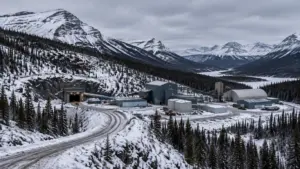
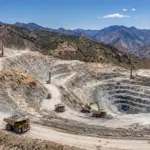
The Vicuña district is not a single mine, but a sprawling mineral belt straddling the border of Argentina and Chile. The primary focus of development is on the Argentine side, specifically the Filo del Sol and Josemaría projects. These sites, located approximately 10 kilometers apart, represent some of the largest undeveloped copper resources in the world.
Collectively, the district hosts an estimated 13 million tonnes of measured and indicated copper, with another 25 million tonnes in the inferred category. This scale places Vicuña in the top tier of global copper projects, comparable to some of the largest producing mines in the Chilean Andes. The integration of these projects into a single development plan aims to utilize shared infrastructure, centralized processing, and staged expansions to optimize capital efficiency.


The Lundin-BHP Joint Venture
The path toward production was significantly clarified in late 2024 and throughout 2025 by the formation of Vicuña Corp, a 50/50 joint venture between Lundin Mining and BHP. This partnership combined Lundin’s deep operational experience in the region with BHP’s massive balance sheet and technical expertise in district-scale mining.
For Lundin Mining, the Vicuña project is a company-making asset. Internal forecasts suggest the project could eventually rank among the top five copper-gold-silver producers globally. Meanwhile, for BHP, the venture represents a strategic move to secure future-facing commodities. The joint venture is currently advancing the integrated project through detailed engineering, with the goal of reaching a final investment decision (FID) by the end of 2026.
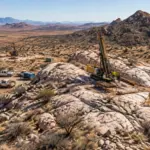
According to recent capital markets disclosures, the partners expect to double their investment in the district to approximately US$800 million in 2026. This capital is earmarked for advancing engineering to a Class 2 estimate, finalized provincial agreements in San Juan, and progressing the regulatory framework required for a multi-billion-dollar build.
The RIGI Framework: A Policy Pivot
While geology and capital are essential, the "Argentina Copper Comeback" would likely remain a theoretical exercise without the Large Investment Incentive Regime (RIGI). Introduced under the administration of President Javier Milei, RIGI is a legislative framework designed to provide tax, customs, and currency stability for large-scale export projects.
For mining companies, the RIGI offers several critical advantages:
- Fiscal Stability: 30 years of tax and legal certainty.
- Currency Flexibility: Gradual exemptions from mandatory repatriation of export proceeds.
- Reduced Tariffs: Exemptions from import duties on capital goods and spare parts.
- Income Tax Adjustments: A reduced corporate tax rate for qualifying investments.
Vicuña Corp has officially applied to join the RIGI framework. While management has indicated that RIGI approval is not a strict legal pre-condition for sanctioning the project, it remains a "key lever" for project economics. In an environment where the total investment for the integrated district could range from US$11 billion to as high as US$15 billion, the fiscal protections provided by RIGI are essential for securing long-dated project financing and offtake agreements.

2026 Outlook: Milestones and Market Impact
The year 2026 is poised to be the most active in the district's history. The transition from exploration and feasibility into pre-construction and sanctioning requires a series of interlocking achievements.
The following table outlines the projected milestones for the Vicuña District through the 2026 calendar year:
| Milestone | Expected Timing | Description |
|---|---|---|
| Integrated PEA/Technical Report | Q1 2026 | First formal technical disclosure of the combined Filo del Sol + Josemaría operation. |
| Provincial Agreements | H1 2026 | Finalizing royalties, infrastructure access, and water rights with San Juan province. |
| Capex Doubling | Full Year 2026 | Increase in spending to ~$800m for advanced engineering and early works. |
| RIGI Approval | Expected 2026 | Formal confirmation of the project's inclusion in the federal incentive regime. |
| Final Investment Decision (FID) | Q4 2026 | The board-level decision to sanction full-scale construction. |
Once sanctioned, the project is expected to target first production around 2030. At its peak, the integrated district is forecast to produce an average of 395,000 tonnes of copper in concentrate per year over its first 25 years. This volume would significantly impact the global market, particularly as older mines in Chile face declining grades and rising operational costs.
Operational Challenges and Geopolitical Context
Despite the momentum, the "Copper Comeback" faces significant hurdles. The Vicuña district is located at high altitudes in the Andes, presenting logistical challenges ranging from winter weather interruptions to the need for extensive water management systems. Furthermore, Argentina's macroeconomic environment: characterized by high inflation and a history of sovereign debt defaults: remains a concern for conservative investors.
However, the global context provides a strong tailwind. The copper supply deficit is no longer a distant prediction but a current reality for many refiners. With copper demand driven by AI data centers and electric vehicle infrastructure, the pressure to bring Tier-1 deposits online has never been higher.

Conclusion: Transforming the Nation
If the Vicuña project reaches FID in late 2026, it will represent the largest private investment in Argentina's history. It would signal to the global mining community that Argentina has transitioned from a high-risk frontier to a viable hub for long-term capital.
The implications extend beyond the mining sector. A successful "Copper Comeback" could provide the Argentine government with a stable stream of foreign currency and tax revenue, potentially anchoring the nation's broader economic recovery. For the global mining industry, Vicuña is more than just a mine; it is a test case for whether policy reform and corporate partnership can unlock the next generation of critical mineral supply in one of the world's last great copper frontiers.
Social Media Snippet (LinkedIn/X):
Argentina is making a bold bid for copper dominance. With the Vicuña district moving toward an FID by end-2026, Lundin Mining and BHP are paving the way for one of the world's largest copper operations. Backed by the RIGI incentive regime, could this be the spark for Argentina's "Copper Comeback"? Read our deep dive into the projects, the policy, and the 2026 outlook. #Mining #Copper #Argentina #EnergyTransition #LundinMining #BHP