By Penny Langford

The narrative of the Andean mining sector is undergoing a fundamental shift. For decades, the primary hurdles for copper and lithium projects in Chile, Peru, and Argentina were geological uncertainty, infrastructure deficits, and volatile commodity prices. As the industry enters 2026, those factors have been superseded by a more complex and localized challenge: water governance.
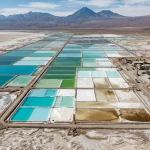
With copper prices consistently trading above $6/lb in early 2026 due to unprecedented demand from AI data centers and the global energy transition, the pressure to bring new supply online has never been higher. Simultaneously, the "Lithium Triangle": spanning the high-altitude salt flats of Chile, Argentina, and Bolivia: is facing a production ramp-up to meet the needs of a maturing EV battery market. However, in these hyper-arid and ecologically sensitive basins, water is no longer just an operational input; it is a political, social, and legal determinant of a project's existence.
The 2026 Market Context: High Stakes and Scarce Resources
The global supply-demand imbalance in critical minerals has elevated the Andean region's strategic importance. Chile alone is tracking 13 major copper projects worth an estimated US$14.8 billion reaching key milestones this year. Seven of these are expected to commence or significantly scale operations by the end of 2026, potentially adding 500,000 tonnes of annual capacity to the global market.
In the lithium sector, the restructuring of Chile’s Salar de Atacama under the state-led "NovaAndino Litio" venture has consolidated control, but it has also heightened scrutiny over the hydrological impact of brine extraction. As the state takes a larger share of the margins: up to 85% on new production: it also assumes the primary responsibility for managing the water-energy nexus. This shift from private to public-private governance means that environmental compliance is now directly tied to national economic stability.
Chile: Desalination and the Death of Continental Water Use
In Chile, the era of drawing freshwater from Andean aquifers for large-scale mining is effectively over. Regulatory pressure and community resistance have made desalination and water reuse the non-negotiable standards for new permits.

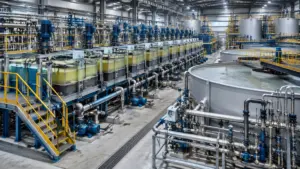
The 2026 outlook for Chilean mining is dominated by the integration of large-scale desalination plants and "dry-stack" tailings technology. By dewatering tailings to a solid state, operators are reducing water consumption by as much as 50% while simultaneously lowering the risk of dam failures: a major concern for downstream communities.

The incoming administration under José Antonio Kast has signaled a commitment to streamlining environmental permits to maintain Chile’s competitiveness. However, "streamlining" does not mean "relaxing." Instead, the focus is on a "Permit Premium": the market valuation boost given to companies that have secured multi-decade water rights through desalination and have successfully negotiated community-led water monitoring programs. For investors, the ability to operate without relying on local groundwater is now a primary indicator of long-term project viability.
Argentina: The 2026 Glacier Law Pivot
While Chile moves toward technical engineering solutions, Argentina is experimenting with a radical decentralization of water governance. A landmark 2026 amendment to the National Glacier Law has shifted the authority to define and protect glacial areas from the federal government to individual provinces.
This decentralization is a double-edged sword for the industry. On one hand, it facilitates access to high-altitude copper and silver deposits in pro-mining provinces like San Juan and Catamarca, where regional governments are eager to unlock the "copper revolution" promoted by President Javier Milei’s administration. On the other hand, it creates a patchwork of regulatory standards.

Environmental litigation has already intensified in response to these changes. Critics argue that provincial authorities lack the technical capacity to monitor the "periglacial" environments: the frozen ground and small ice bodies that act as natural reservoirs for mountain communities. In 2026, the success of Argentina’s mining pipeline depends less on federal tax incentives (like the RIGI scheme) and more on whether provincial water agencies can build credible, transparent monitoring systems that survive legal challenges in the Supreme Court.
Peru: Bridging the Basin-Level Divide
In Peru, the 2026 challenge is centered on basin-level cumulative impacts. Unlike the lithium-heavy salt flats of the south, Peruvian copper projects often sit in the headwaters of valleys where agriculture is the primary livelihood.
The Peruvian Water Resources Authority (ANA) is increasingly demanding that mines demonstrate "Water Neutrality." This involves not only minimizing mine-site consumption but also investing in regional irrigation infrastructure and mountain reforestation to ensure the total water balance of the basin remains stable. Projects that fail to account for these "social water" costs face a high probability of community-led blockades, regardless of their legal permit status.
Linkable Asset: 2026 Water Governance Risk Matrix
To assist operators and investors in assessing regional risk, we have compiled a matrix of the primary water governance drivers currently impacting project NPV in the Andes.
| Region | Primary Water Challenge | 2026 Policy Shift | Impact on Project Valuation |
|---|---|---|---|
| Chile (Copper) | Aquifer depletion / Community opposition | Mandatory desalination for large projects | Higher Capex; lower "Social License" risk |
| Chile (Lithium) | Brine-freshwater interface | State-led NovaAndino joint venture | State capture of margins; standardized ESG |
| Argentina (Andes) | Glacier and permafrost protection | Provincial decentralization of Glacier Law | Faster permitting; higher litigation risk |
| Peru (Central) | Basin-level agricultural competition | Water Neutrality & cumulative impact audits | Increased Opex for community water infra |
Technical Solutions: Beyond the Status Quo
As water scarcity intensifies, the industry is pivoting toward technologies that were considered "niche" just five years ago.
- Direct Lithium Extraction (DLE): In the lithium sector, DLE is being framed as the "water-friendly" alternative to traditional evaporation ponds. By reinjecting brine back into the salar, DLE promises to minimize the impact on surrounding groundwater levels. However, the energy intensity of these systems remains a trade-off that companies must navigate.
- Dry-Stack Tailings: This is becoming the default for copper projects in water-stressed regions. Removing the water from tailings not only saves a valuable resource but also creates a more stable landform that is easier to rehabilitate.
- Cross-Sector Partnerships: We are seeing more "water swaps," where mining companies treat municipal wastewater for use in processing, providing clean water to cities in exchange for industrial supply.

2026 Outlook: The "Hydrological Social License"
The 2026 outlook for Andean mining is defined by the emergence of the "Hydrological Social License." It is no longer enough to have a permit from a central ministry. Success in this decade requires a project to be hydrologically invisible to the local ecosystem: either by sourcing its water from the sea, recycling it in a closed loop, or providing a net-positive contribution to the local water basin.
For investors, the 2026 Lithium Power Map and copper forecasts must be read through the lens of water security. A project with top-tier grades but no desalination pipeline is increasingly seen as a stranded asset. Conversely, companies that lead in water governance are securing their place as the "future-ready" suppliers for the global energy transition.
The message for 2026 is clear: In the high Andes, water is the new permit.
Social Media Snippet (LinkedIn/X):
Water governance is the new "permit premium" in the Andes. As copper pushes $6/lb and lithium production enters a state-led expansion in Chile, the battle for aquifers and glaciers is redefining project viability. Our latest deep-dive explores how desalination, Glacier Law reforms, and community-led monitoring are shaping the 2026 outlook for mining majors and investors alike. Read the full analysis at Skillings Mining Intelligence. #Mining #Copper #Lithium #ESG #WaterGovernance #Sustainability