Here's the thing nobody wants to admit: the biggest challenge with autonomous haulage isn't the technology. It's everything else.

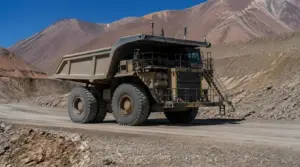
The mining industry has spent the past five years obsessing over payload optimization, GPS accuracy, and collision avoidance algorithms. All critical. All necessary. But the real lessons from early autonomous deployments? They came from places the brochures don't mention: shift supervisors struggling to redefine their roles, maintenance crews discovering their old playbooks were useless, and operations teams realizing that "lights-out mining" still needs plenty of people.
The first 1,000 hours of autonomous haulage operation reveal an uncomfortable truth. This technology works. But making it work in a production environment is a different animal entirely.
The Efficiency Promise vs. Reality
The pitch is compelling. Autonomous trucks eliminate operator fatigue, run consistent cycle times, and operate 24/7 without shift changes. Early projections suggested 15-30% productivity gains, 10-15% reduction in fuel consumption, and dramatic improvements in safety metrics.
After 1,000 hours, most operations hit 8-12% productivity gains. Not bad. Not transformational either.
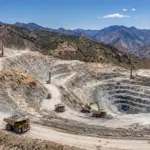


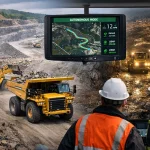
The gap isn't a technology failure. It's an integration problem. Autonomous trucks don't operate in isolation: they interact with manned equipment, pit infrastructure, and a workforce still learning how to support them. Every interface point introduces friction. Traffic management becomes exponentially more complex when you're mixing autonomous and conventional haul trucks in the same pit. Ancillary equipment: dozers, graders, water trucks: all create decision points that slow autonomous operations.
One operation logged their first 1,000 hours and found autonomous trucks spent 22% of their time in "wait states": sitting idle while human-operated equipment completed tasks in their path. That's not a software problem. That's an operational design problem.
Maintenance: The Paradigm Nobody Saw Coming
Here's where it gets interesting. Autonomous trucks require 30-40% less maintenance in some categories. Smoother driving profiles reduce brake wear. Consistent operating patterns extend component life. Predictive maintenance algorithms catch failures before they cascade.
But other maintenance requirements increased. Dramatically.
Sensor maintenance became its own discipline. GNSS antennas, LiDAR units, radar systems, and dozens of cameras require constant calibration and cleaning. In dusty pit environments, sensor degradation happens fast. One site reported cleaning cycles every 8-12 hours during high-dust periods. Miss a cleaning window and positioning accuracy suffers, triggering safety stops.

The skillset shift caught most operations off guard. Traditional heavy equipment mechanics excel at hydraulics, powertrains, and structural repairs. Autonomous systems require IT specialists, electrical engineers, and technicians who can diagnose software conflicts. The overlap between these skill sets is minimal.
Early adopters restructured entire maintenance departments. One operation created a dedicated "autonomous systems" team separate from conventional fleet maintenance. Within six months, that team grew from four technicians to twelve. The knowledge transfer between old-school mechanics and new-school tech specialists? Still a work in progress.
The Workforce Transition That Wasn't Ready
The industry assumed displaced operators would transition into new roles. Some did. Many didn't.
The first 1,000 hours exposed a brutal reality: autonomous operations don't eliminate jobs, they transform them. But the new jobs require different skills, often at different pay grades, sometimes in different locations. A haul truck operator with 15 years of pit experience doesn't automatically translate into a fleet management center controller monitoring six autonomous trucks from a climate-controlled room.
One operation reported 40% turnover among operators during their autonomous transition. Not because people were fired: because they chose to leave rather than retrain. The cultural resistance wasn't about technology fear. It was about identity. These were operators who prided themselves on efficiency, equipment handling, and pit knowledge. Asking them to become computer monitors felt like a demotion, even when pay stayed flat.

The operations that handled this best made two critical moves: they involved operators early in deployment planning, and they created new roles that leveraged existing knowledge. "Autonomous coordinators" who understood pit operations could troubleshoot edge cases that software couldn't handle. "Fleet optimization specialists" who knew haulage cycles could refine autonomous routing in real-time.
But here's the catch: training takes time. Most operations underestimated by 2-3x. Budget six months of intensive training? Plan for twelve to eighteen. And that's just to reach basic operational readiness.
The Technical Realities
GNSS signal loss remains the primary technical challenge. It's not occasional: it's routine in deep pits, near high walls, and in areas with heavy equipment traffic that blocks satellite signals.
When an autonomous truck loses positioning data, safety protocols trigger an immediate stop. Full stop. Right there. In the middle of the haul road if necessary. Early deployments experienced 8-15 stops per truck per shift due to GNSS degradation. That's 8-15 times productivity flatlines until signal returns or a technician intervenes.
The solution: inertial navigation systems that maintain positioning during signal loss: helps but doesn't eliminate the problem. INS drift over time requires periodic recalibration using GNSS signals. In pits with consistent signal issues, autonomous trucks spend significant time in reduced-confidence positioning modes, which limits speed and capability.

Weather impacts matter more than anticipated. Heavy rain, fog, and dust all degrade sensor performance. Some operations run autonomous systems at reduced capacity during adverse conditions. Others pause operations entirely until visibility improves. That flexibility: the ability to dial autonomy up and down based on conditions: becomes operationally critical.
Integration with mine planning systems proved more complex than expected. Autonomous systems need accurate, real-time pit models to navigate safely. But pit conditions change constantly: new benches, modified ramps, temporary stockpiles. The data handoff between survey, mine planning, and autonomous operations requires discipline most operations didn't have on day one.
What the First 1,000 Hours Actually Teach
The operations that succeeded approached autonomous deployment as a staged transformation, not a technology installation. They established clear KPIs for each phase: initial deployment, capability expansion, fleet scaling. They demanded steady-state performance at each stage before advancing.
Change management mattered more than technical readiness. Senior leadership support wasn't optional: it was foundational. Operations that treated autonomous deployment as a maintenance project struggled. Operations that treated it as a business transformation with CEO-level visibility succeeded.
The most successful deployments also accepted a fundamental truth: you can't optimize what you don't understand. The first 1,000 hours aren't about maximum productivity. They're about learning the system's boundaries, identifying process gaps, and building organizational capability.

One metric consistently predicted long-term success: the number of cross-functional meetings held during deployment. Operations that brought together mine planning, operations, maintenance, safety, and HR teams weekly or biweekly navigated challenges faster. Siloed deployments: where technology teams worked independently: hit more obstacles and took longer to resolve them.
The 2026 Reality
Autonomous haulage works. But "works" means different things in controlled test environments versus full-scale production with mixed fleets, aging infrastructure, and workforce transitions.
The technology will continue improving. Sensor reliability, AI decision-making, and system integration all advance steadily. But the operational challenges: change management, workforce development, maintenance paradigm shifts: those don't get solved with software updates.
Mining operations planning autonomous deployments in 2026 should assume 18-24 months to reach stable production performance. Budget 40-50% more for training than vendor estimates suggest. Plan for maintenance team restructuring, not just retraining. And accept that the first 1,000 hours will reveal problems nobody anticipated, because every operation is unique.
The industry now has enough operational data to separate hype from reality. Autonomous haulage delivers value. Just not in the ways, or on the timeline, the early marketing suggested.
The operations that thrive will be those that treat autonomy as a catalyst for operational transformation, not a replacement for good mining practice. Because in the end, autonomous trucks are just tools. How you deploy them, support them, and integrate them into existing operations( that's where the real lessons live.)