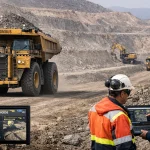
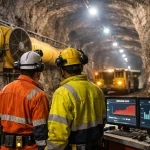
Here's the thing nobody in the autonomy space wants to admit: a 100-ton quarry truck and a 400-ton ultra-class hauler have nothing in common except wheels and a cab. The physics are different. The economics are different. The operational environments are completely different.

Pronto gets it.
The autonomous haulage company just unveiled a tiered AHS portfolio that finally acknowledges what operators have known for years: autonomy isn't one-size-fits-all. The new architecture, branded Pronto Editions, splits into three distinct tiers, each engineered for specific operational realities. Vision-only systems for cost-sensitive quarries. Multi-sensor arrays for deep-pit hard rock operations in blizzard conditions. And a 360-degree safety edition for sites that can't tolerate any compromise.
This isn't marketing fluff. It's physics meeting unit economics.
The Vision Edition: Quarry-First Economics
Pronto AHS Vision is the entry point, and it's designed with one goal: get autonomous trucks running in aggregate and quarry operations without bankrupting the P&L. No LiDAR. No radar. Just HDR cameras and an AI-first perception stack that prioritizes affordability and rapid deployment.

The pitch is simple: lowest total cost of ownership in the industry.


And they've got proof. Heidelberg Materials' Lake Bridgeport quarry in Texas went live with the Vision system and autonomously hauled over two million tons of limestone in under eight months. That's not a pilot project. That's production-scale validation. For operators running 50-to-100-ton haul trucks in relatively controlled environments: predictable routes, consistent weather, limited external traffic: the Vision edition delivers exactly what they need without paying for sensors they don't.

The economics matter here. Quarries operate on thin margins. Capital intensity is a killer. If you're hauling aggregate in Texas, you don't need the same sensor suite as a copper mine in the Atacama dealing with zero-visibility dust storms at 4,000 meters elevation. Pronto's making that choice explicit.
VLR and VLR 360: Deep-Pit Realities
Then there's the other end of the spectrum. Ultra-class mining operations. 400-ton haulers. Chilean blizzards. Dust storms that turn daylight into total blackout. Routes with 12% grades and three-kilometer haul distances. These environments don't care about your budget optimization.
Enter Pronto AHS VLR (Vision + LiDAR + Radar) and VLR 360.
These editions stack all three sensor modalities: cameras for visual perception, LiDAR for precise 3D mapping, radar for all-weather penetration. It's the full suite, engineered for the harshest operational design domains in global mining. CEO Anthony Levandowski put it plainly: stopping a 100-ton truck is fundamentally different from stopping a 400-ton behemoth. The braking physics, the momentum calculations, the margin for error: all different.
The VLR editions are built for guaranteed uptime in zero-visibility conditions. When you're running 24/7 operations at a Tier-1 copper or iron ore mine, downtime due to weather isn't acceptable. You need active sensing. You need redundancy. You need radar punching through dust and snow when cameras and LiDAR can't see two meters ahead.

VLR 360 takes it further with full perimeter coverage: eliminating blind spots entirely. It's overkill for most operations. But for sites with complex mixed-fleet interactions, pedestrian traffic in haul roads, or regulatory requirements that demand belt-and-suspenders safety systems, it's the only viable option.
The Physics Argument
Here's where Pronto's approach diverges from the autonomy-for-everything crowd. They're not pretending a single sensor stack works everywhere. They're not selling a universal platform that "adapts" to different sites. They're building three distinct products for three distinct use cases.
That matters because physics doesn't negotiate.
A 100-ton quarry truck traveling at 40 km/h on flat terrain has a stopping distance measured in tens of meters. A 400-ton ultra-class hauler descending a 10% grade at the same speed needs hundreds of meters and active braking management to avoid thermal runaway. The perception system has to see farther, react faster, and account for exponentially higher kinetic energy.
Cameras alone can handle the quarry scenario. Deep-pit hard rock mining? You need radar for long-range detection and LiDAR for precise localization. The sensor fusion isn't optional: it's required by the operational physics.

And cost structure follows physics. A Vision-only system might run $200K-$300K per truck in total deployment cost. VLR editions with full sensor stacks and ruggedized hardware for extreme environments? You're looking at multiples of that. But if you're hauling copper ore worth $3-$4 per pound and can't afford weather-related downtime, the math works. If you're hauling $15-per-ton limestone in West Texas, it doesn't.
Pronto's letting operators choose based on their actual operating environment and unit economics instead of forcing a one-size-fits-none compromise.
What This Means for Operators
The tiered approach solves a real adoption problem. Autonomy has been stuck in a weird catch-22: systems engineered for ultra-class mining are too expensive for smaller operations, but systems built for quarries don't have the capability for large-scale hard rock mining. The result? Slow uptake outside a handful of tier-one copper and iron ore mines.
Pronto Editions breaks that deadlock.
Aggregate producers and regional quarry operators now have an entry point that actually fits their business model. They're not paying for perception capabilities designed for Chilean snowstorms when they're operating in Arizona. They get vision-based autonomy that's been proven in production: two million tons at Bridgeport isn't theoretical.
Meanwhile, deep-pit operations get the multi-sensor architecture they actually need without compromises. The VLR editions are purpose-built for the environments where autonomous haul trucks deliver the biggest ROI: remote locations, harsh weather, long haul cycles, and massive tonnage targets.

The strategic calculus here isn't subtle. Pronto's targeting both ends of the market simultaneously. Land the high-margin ultra-class mining contracts with VLR editions while scaling volume through affordable Vision deployments in the aggregate sector. It's a two-front strategy that mirrors how the broader autonomy market is likely to evolve: premium solutions for premium problems, cost-optimized solutions for everyone else.
The AI-First Philosophy
What's consistent across all three editions is Pronto's AI-first architecture. Instead of relying on pre-mapped routes and rigid rules-based systems, the platform uses continuous learning and adaptive perception. Trucks learn site-specific behaviors. They optimize routes based on real-time conditions. They share learnings across the fleet.
That's important because mining environments change. New benches open. Haul roads shift. Weather patterns vary seasonally. A system that requires constant re-mapping and manual intervention every time something changes is a system that doesn't scale. Pronto's betting that AI-driven adaptability is the only way to make autonomy work across hundreds of sites with different geology, equipment, and operational constraints.
The Lake Bridgeport deployment validates that thesis. Heidelberg Materials didn't spend six months mapping the site and tuning parameters. They brought in the Vision system, let it learn the routes, and started hauling tonnage. That's the deployment velocity operators need if autonomy is going to move beyond niche applications.
The Competitive Landscape
Pronto's positioning itself against two incumbent approaches. On one side, you've got the heavy-equipment OEMs: Caterpillar, Komatsu, Hitachi: who bundle autonomy as part of a total fleet package. On the other side, you've got pure-play autonomy providers offering universal platforms that claim to work on any truck, any site, any condition.

Pronto's carving out a middle path: OEM-agnostic like the pure-plays, but with product segmentation that acknowledges operational realities like the OEMs understand. It's a compelling position if they can execute. Operators get choice without lock-in, but they also get purpose-built solutions instead of trying to make a generic platform work for their specific use case.
The proof will be in deployment velocity and uptime metrics over the next 12-18 months. Vision needs to show it can scale beyond Bridgeport into dozens of quarries. VLR needs to land contracts at Tier-1 hard rock operations and prove it can run 24/7 in extreme conditions without constant babysitting.
What Happens Next
The mining industry is entering a phase where autonomy shifts from "experimental" to "expected." Labor shortages aren't going away. Safety regulations are tightening. ESG pressure is mounting. Autonomous haul trucks are becoming table stakes for competitive operations.
But not all operations are the same. A limestone quarry in Texas and a copper mine in Chile have different physics, different economics, and different operational requirements. Pronto's betting that acknowledging those differences: and building distinct products for distinct markets: is the path to mass adoption.
The Lake Bridgeport results suggest they're onto something. Two million tons in eight months isn't a science experiment. It's production mining with autonomous trucks doing real work in real conditions.
Now they need to prove the VLR editions can deliver the same reliability in the harshest environments on the planet. If they can, the tiered approach could become the template for how autonomy scales across the entire mining sector. If they can't, they'll join the long list of companies that underestimated the gap between "works in ideal conditions" and "works everywhere, all the time."
The clock's already ticking. Operators are watching.