By Sonny Rollins

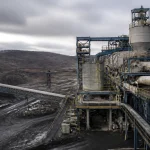
VICTORIA, B.C. : British Columbia’s provincial ministers have formally approved a significant expansion to the tailings storage facility (TSF) at the Mount Polley copper-gold mine, clearing a major regulatory hurdle for the operation to extend its productive life into the next decade.
The decision, announced late Friday by the Ministry of Environment and Climate Change Strategy and the Ministry of Energy, Mines and Low Carbon Innovation, allows for a 13-meter increase in the height of the main tailings dam. This elevation raise: taking the structure from its current 64 meters to a total of 77 meters: is specifically designed to accommodate the additional waste material generated by the expansion of the Springer Pit.
This approval follows a rigorous seven-month review by the B.C. Environmental Assessment Office (EAO), which concluded that the proposed modifications were unlikely to result in significant new environmental or safety impacts, provided strict permit conditions are maintained.
Securing the Springer Pit Extension to 2033
The Mount Polley mine, located near Likely and Williams Lake in the Cariboo region, is a staple of the province’s mineral output. Operated by Mount Polley Mining Corporation (MPMC), a subsidiary of Imperial Metals, the site has been undergoing phased redevelopment to tap deeper reserves within its existing footprint.
More Read

The 13-meter dam raise is the final planned structural alteration associated with the Springer Pit expansion, which was initially greenlit in August 2025. By deepening the Springer Pit, the company expects to maintain operations until at least 2033, securing a critical supply of copper and gold during a period of heightened global demand for energy transition metals.

The provincial government emphasized that this extension is a cornerstone for regional economic stability. The expansion is projected to protect approximately 430 direct mining jobs and support an additional 700 indirect positions in the surrounding communities. Furthermore, the project represents roughly $130 million in new capital investment into the B.C. mining sector.

More Read

A Legacy of Oversight: From 2014 to the Consent Order
The approval comes under intense scrutiny due to Mount Polley’s history. In 2014, the mine was the site of one of the most significant environmental incidents in Canadian mining history when a breach in the tailings dam released millions of cubic meters of water and slurry into Polley Lake and Quesnel Lake.
Since that event, the site has become a focal point for evolving tailings management standards. The Independent Expert Panel commissioned after the breach recommended that the industry move toward "Best Available Technologies" (BAT), including dry-stacking tailings or underground disposal, to minimize the risks associated with conventional water-covered impoundments.
While Mount Polley has integrated some dry-stacking: notably removing and stacking materials from the Springer Pit on the South East rock storage area starting in 2023: the main TSF remains a conventional wet facility. The EAO and the Major Mines Office technical experts focused their assessment on whether the new 13-meter raise could be implemented safely without repeating past failures.
The ministers’ reasons for the decision noted that the dam raise will be governed by a "material alteration" consent order. This order includes specific conditions intended to manage environmental effects and ensure dam safety throughout the construction and operational phases.
Technical Specifications and Operational Context
The expansion is not merely a height increase but a complex re-engineering of the facility’s footprint. The 13-meter raise follows a smaller, 4-meter interim raise approved in April 2025, which served as a bridge while the long-term Springer Pit plans were finalized.
| Feature | Pre-Expansion (Current) | Post-Expansion (2033 Target) |
|---|---|---|
| Tailings Dam Height | 64 Meters | 77 Meters |
| Target Pit | Springer Pit (Standard Depth) | Springer Pit (Deepened) |
| Mine Life Extension | 2025 | 2033 |
| Capital Investment | N/A | $130 Million |
| Direct Workforce | ~400 | 430 |
The Springer Pit expansion is central to B.C.'s broader strategy of maintaining its status as a premier copper producer. As the industry watches projects like the Minto Phase 2 expansion in the Yukon or high-grade gold developments like the Goldboro project, Mount Polley remains a bellwether for how the province balances historical remediation with future production.

Next Steps: Permit Amendments and Construction
While the environmental consent order has been issued, the Mount Polley Mining Corporation cannot begin work on the dam raise immediately. The company must still secure specific permit amendments under the B.C. Mines Act. These permits will detail the granular engineering requirements, including seepage control, geotechnical monitoring, and the exact material specifications for the dam’s crest.
Industry analysts suggest that the approval signals a pragmatic approach from B.C. regulators. By allowing expansion within the existing project footprint rather than greenlighting entirely new "greenfield" sites, the province can leverage existing infrastructure while enforcing modern safety standards.
"This decision reflects the reality that for B.C. to meet its critical minerals goals, it must find ways to safely extend the life of proven assets," said one Victoria-based mining policy consultant. "The emphasis here is on 'safely.' After 2014, there is no margin for error in the tailings management at Mount Polley."
The project also aligns with the province's focus on the "energy nexus," where copper and gold mining support the broader transition to renewable energy infrastructure. Copper, in particular, remains a strategic mineral of interest for Western supply chains seeking to reduce dependence on offshore processing.
Environmental Monitoring and Indigenous Engagement
The EAO review included participation from local Indigenous communities and technical working groups. Conditions of the approval likely involve ongoing water quality monitoring in the Quesnel Lake watershed and collaborative oversight mechanisms that have been established since the restart of the mine.
As construction begins, the focus will shift to the real-time telemetry and geotechnical instrumentation that now lines the Mount Polley dam: a stark contrast to the monitoring regimes in place over a decade ago.

Looking Ahead
With the 13-meter expansion now moving toward the permitting phase, Mount Polley is positioned to remain a significant contributor to the Canadian mining landscape for the next eight years. The success of the Springer Pit expansion will depend on the company’s ability to execute this final dam raise within the strict parameters set by the provincial ministers, ensuring that economic growth does not come at the expense of environmental security.
For investors and operators, the Mount Polley expansion serves as a case study in regulatory resilience: demonstrating how a legacy site can transition into a modern, regulated operation capable of supporting long-term employment and critical metal production in a Tier-1 jurisdiction.
LinkedIn/X Snippet:
B.C. government has approved a 13-meter tailings dam expansion at the Mount Polley copper-gold mine. The move extends mine life to 2033, secures 1,100+ jobs, and unlocks $130M in new investment. A major milestone for B.C. mining policy and critical minerals supply. #MiningNews #Copper #Gold #BritishColumbia #TailingsManagement #SkillingsMining