By Mo Shine & Salini Krishnan

Geology is the one thing a multi-billion-dollar balance sheet can’t fix.
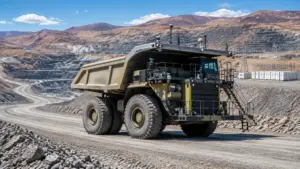
For decades, Escondida has been the crown jewel of the global copper industry, a massive Chilean operation that single-handedly dictates market sentiment. But the world’s largest copper mine is facing a fundamental, biological reality: it is getting older, and its ore is getting leaner.
On March 17, 2026, BHP officially fired the next shot in its war against entropy. The mining giant submitted environmental permitting documents for a new $5 billion concentrator facility aimed at sustaining production as ore grades continue their inevitable slide.
This isn’t an expansion in the traditional sense. It’s a defensive maneuver. BHP is spending billions just to keep the status quo from crumbling.
More Read

The $5 Billion Red Queen Race
In Lewis Carroll’s Through the Looking-Glass, the Red Queen tells Alice, “It takes all the running you can do, to keep in the same place.”

This is the current state of Escondida.
The new project, estimated to cost between $4.4 billion and $5.9 billion, is designed to replace the aging Los Colorados concentrator. Los Colorados has been the workhorse of the site, but it is approaching the end of its operational life. Without a replacement, Escondida’s output would fall off a cliff.
More Read

The strategic calculus here isn’t subtle: BHP needs to maintain a processing rate of 460,000 tonnes per day just to offset the fact that every tonne of rock pulled from the ground contains less copper than it did five years ago.
Per facility. That’s not a typo.
The new plant is expected to produce between 220,000 and 260,000 tonnes of copper per annum. On paper, that sounds like growth. In reality, it’s a high-stakes replacement strategy. If BHP doesn’t build this, the global copper deficit doesn’t just grow: it explodes.

The Timeline: A Decade of Construction
Mining at this scale does not move fast. The timeline submitted to Chile’s Environmental Assessment System (SEA) suggests a long, grueling road ahead.
- Permitting Phase: BHP is utilizing an Environmental Impact Declaration (DIA) rather than a full Environmental Impact Study (EIA). This is a calculated risk. A DIA is theoretically faster, but in the current Chilean political climate, “fast” is a relative term.
- Construction Start: Targeted for early 2027.
- First Production: Scheduled for the 2031–2032 window.
That’s a six-to-seven-year construction cycle.
During the peak of this build, BHP expects to employ upwards of 6,000 people. On average, 2,500 workers will be on-site monthly. This represents a massive influx of capital and labor into the Antofagasta region, further cementing Chile’s role as the epicenter of the copper world.
But here is where it gets uncomfortable: the market needs this copper now. By the time this concentrator reaches nameplate capacity in 2032, the “green energy transition” will have been hammering the supply chain for a decade. The gap between project sanctioning and actual metal-in-concentrate is widening, and Escondida is no exception.
Fighting the Brutal Numbers of Grade Decline
Let’s talk about the ore.
Mining engineers are currently staring at some grim spreadsheets. As mines age, they move from high-grade “sweet spots” to lower-grade halos. To get the same amount of copper out of the gate, you have to move more rock, use more water, and consume more energy.
This $5 billion investment is essentially a bet on efficiency. By upgrading to modern processing technology, BHP can maintain its 460,000 tonnes-per-day throughput while staying within its currently approved environmental limits.
It’s an optimization play. They are trying to squeeze more blood from the proverbial stone.
Ironically, while BHP is doubling down on Escondida, other players are looking for growth elsewhere to diversify their risk. We’ve seen Lundin Mining expand its copper foothold in the Vicuña District, signaling that the industry knows Escondida cannot carry the world on its back forever.

Part of the $10.8 Billion Master Plan
This concentrator isn’t an isolated project. It is the cornerstone of the 10-year growth plan BHP unveiled in late 2024.
The company has earmarked $10.8 billion for its Chilean copper assets over the next decade. When you look at the total spend, nearly half of it is going into this single facility at Escondida.
Why? Because the alternative is irrelevance.
Escondida accounts for roughly 5% of the world’s total copper production. If BHP allows the grade decline to go unanswered, the global “copper gap” becomes unbridgeable. This isn’t just about BHP’s bottom line; it’s about the structural integrity of the global electrical grid.
The industry is currently in a “structural pivot.” We’ve previously analyzed how copper’s $13,000 reset is being driven by the AI infrastructure race. AI data centers and EV charging networks don’t care about BHP’s permitting hurdles: they just need the wire.
Key Risks: The “Fast-Track” Gambit
BHP’s decision to go with an Environmental Impact Declaration (DIA) is the most interesting part of this filing.
In Chile, an EIA is the standard for “large” projects with significant environmental impacts. A DIA is typically reserved for projects where the impacts are already known or mitigated. By choosing the DIA route, BHP is arguing that because they are staying within existing production limits and using a “replacement” framework, the environmental footprint isn’t fundamentally changing.
It’s a bold move.
If the Chilean regulators agree, BHP could shave 12–18 months off the approval process. If they disagree and force a full EIA, the 2031 production target starts to look like a fantasy.
There are also the “nasty” variables:
- Water Scarcity: While Escondida has moved aggressively toward desalination, the energy costs of pumping water to high altitudes remain a constant pressure.
- Labor Inflation: Finding 6,000 qualified workers in a region where every other major miner is also trying to build something is a recipe for cost overruns.
- Political Landscape: Chile is in a constant state of flux regarding mining royalties and environmental oversight. A $5 billion project is a very large target for any government looking to balance its books.
The Global Copper Supply Reality Check
We are living through a period where the “Tier 1” assets of the world are being forced to reinvent themselves.
From the top gold mining companies to the copper giants, the story is the same: the easy stuff is gone.
If the world’s most efficient mining company has to spend $5 billion just to maintain production at the world’s best mine, what does that say about the rest of the industry? It says that the cost of production is on a permanent upward trajectory.
There is a growing realization that the supply side of the copper market is incredibly brittle. We see similar trends in the lithium space, where the 2026 rebound is predicated on the same “Tier 1” dominance.

The Bottom Line
BHP’s move to permit the new Escondida concentrator is a massive, expensive, and necessary gamble. It is a admission that the era of “easy” copper at Escondida is over.
The 2027–2032 construction window will be a period of intense scrutiny. If BHP executes, they secure Escondida’s dominance for another quarter-century. If they stumble: through permitting delays, cost overruns, or technical failures: the global copper market will find itself in a stranglehold.
The “10-year growth plan” is, in reality, a 10-year survival plan.
For investors and operators, the message is clear: the capital requirements to stay in the copper game are rising exponentially. You can’t disrupt geology, and you can’t build a concentrator overnight.
The clock is already ticking.