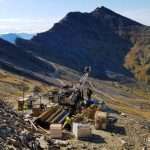
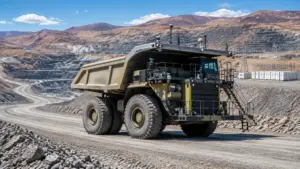
As Europe intensifies its pursuit of domestic mineral security, Blue Moon Metals is advancing its flagship Nussir copper project in northern Norway toward a production start in late 2027. The project, located at a brownfield site in the Repparfjord district, represents a strategic pivot toward low-risk, high-infrastructure mining in Tier-1 jurisdictions.
The recently finalized feasibility study outlines a 13-year underground operation designed to produce an average of 19,000 tonnes of copper equivalent (CuEq) annually. By leveraging over $150 million in sunk infrastructure and historical data from the 1970s, Blue Moon Metals is positioning Nussir as a model for modern brownfield redevelopment in the Arctic Circle.
The economics of the Nussir feasibility study
The feasibility study for the Nussir project confirms a robust economic profile, even amid the inflationary pressures that have impacted the global mining sector over the last 24 months. At an 8% discount rate, the project carries an after-tax net present value (NPV) of $235 million and an internal rate of return (IRR) of 19%.
These figures are predicated on base-case price assumptions of $4.78 per pound for copper, $3,515 per ounce for gold, and $45.26 per ounce for silver. While these price targets reflect the current 2026 market environment, the project’s sensitivity analysis suggests it remains viable even under more conservative commodity cycles.
More Read

The initial capital expenditure (capex) is estimated at $184 million, a figure relatively low for a project of this scale, primarily due to the site’s status as a brownfield operation. This capital efficiency is a cornerstone of the company’s strategy to minimize dilution and maintain a manageable debt profile as it moves toward construction.

Production profile and mineral reserves
The mine plan focuses on the extraction of 25 million tonnes of proven and probable reserves at an average grade of 0.99% CuEq. When factoring in the broader resource base, the feasibility study is supported by 28.72 million tonnes of measured and indicated resources grading 1.2% CuEq.
The production mix is heavily weighted toward copper, which accounts for 77% of the payable metal value. Specifically, the mine is expected to deliver approximately 65 million pounds of copper, 5,000 ounces of gold, and 700,000 ounces of silver per year.
More Read


One of the most significant upsides noted in the feasibility study is the potential for mine life extension. The deposit remains open both to the west and at depth. Blue Moon Metals has indicated that converting just 50% of current inferred resources could potentially extend the mine life by an additional five years, which would increase the project’s NPV by an estimated 52%.
The brownfield advantage in Northern Norway
The decision to develop the Nussir project on a brownfield site provides a logistical and environmental headstart that many greenfield projects lack. Located at the Øyen industrial site, the project sits adjacent to a year-round, ice-free port, ensuring consistent access to global markets and reducing the need for costly terrestrial transport infrastructure.
The site was previously mined in the 1970s via four open pits. The legacy of these operations left behind essential infrastructure that Blue Moon is now refurbishing. This strategy aligns with a broader industry trend where operators are looking to existing footprints to navigate increasingly stringent environmental regulations and social license hurdles.
According to analysis on the brownfield advantage, the margins for 2026 favor revamping old pits over new discoveries due to the reduced lead times for permitting and the availability of pre-existing geological data. In the case of Nussir, the brownfield status has allowed the company to bypass the decade-long discovery-to-development lag often seen in virgin mineral districts.
Strategic alignment with the European copper supercycle
The timing of the Nussir project’s development coincides with a tightening global copper market. Analysts have long warned of a supply gap as the energy transition accelerates, requiring vast amounts of copper for grid expansion, electric vehicles, and renewable energy infrastructure.
Recent reports on the copper supercycle through 2030 suggest that the market could face a 30% deficit by the end of the decade. For a project like Nussir, which is located within the European Economic Area, the proximity to European smelters and the European battery supply chain provides a significant geopolitical premium.

Norway’s mining-friendly policies and its commitment to high environmental, social, and governance (ESG) standards make it an attractive hub for critical mineral production. The Nussir project plans to utilize fully electric underground fleets where possible, aiming to become one of the lowest-emission copper producers globally.
Timeline and upcoming milestones
Blue Moon Metals acquired the project in late 2024 and has moved rapidly through the technical validation stages. Construction on the exploration decline commenced in June 2025, providing the necessary access for further geotechnical drilling and underground mapping.
The current development timeline targets:
- Q3 2027: Hot commissioning of the process plant.
- December 2027: First commercial production and initial concentrate shipment.
The transition from developer to producer is often the highest-risk phase for a mining company. However, the use of established underground mining methods and the presence of historical operational data from the 1970s mitigate many of the typical “first-year” technical hurdles.
Risk factors and operational considerations
Despite the favorable economics, the Nussir project faces several risks common to Arctic mining operations. Operating in northern Norway requires managing seasonal logistics, although the ice-free port at Øyen significantly reduces the impact of winter conditions compared to landlocked sites in Northern Canada or Russia.
The project’s IRR of 19% is respectable but leaves a moderate margin for error regarding capex overruns. In the current global economy, the cost of specialized labor and mining equipment continues to fluctuate. Blue Moon Metals will need to secure long-lead items and EPC (Engineering, Procurement, and Construction) contracts within the next six months to lock in the feasibility study’s cost estimates.
Furthermore, while the project is brownfield, environmental scrutiny remains high in Norway, particularly regarding tailings management. The company has proposed a comprehensive plan that meets modern European standards, but any changes in local environmental regulations could impact the operational timeline.
Comparative context in the critical minerals market
As Blue Moon Metals advances Nussir, it joins a list of innovators looking to secure the supply chains required for the digital and green economy. This trend is visible across various jurisdictions and commodities. For instance, the top 10 mining innovators powering the AI grid are increasingly focusing on projects that offer high transparency and low carbon footprints: two boxes that the Nussir project aims to check.
The focus on Norway also highlights a regional shift. While traditional mining regions in South America and Africa remain the primary sources of copper, the development of projects in Northern Europe and the Athabasca Basin (as seen in uranium acquisitions) suggests a desire among Western investors to prioritize jurisdictional security.
Conclusion: A catalyst for Norwegian mining
The Nussir project stands as a significant test case for the revitalization of Norway’s historical mining districts. By combining a 13-year mine life with robust copper grades and significant gold and silver credits, Blue Moon Metals has presented a compelling case for the brownfield redevelopment model.
If the company meets its late 2027 production target, it will not only provide a critical source of copper for the European market but also demonstrate that Arctic mining can be both economically viable and environmentally responsible in a modern regulatory framework.
2026 Lithium Power Map: Early Access Open ($59)
Stay ahead of the critical minerals market with the latest data on global lithium projects and supply chains. Secure your copy of the 2026 Lithium Power Map here: https://skillings.short.gy/LithiumPreSale