Most mining services contracts make headlines when they’re awarded. This one matters because it locks in half a decade of revenue visibility in an industry where quarterly guidance is often aspirational fiction.

BUMA Internasional Grup Tbk (ticker: DOID) has secured a contract extension with Adaro Indonesia that runs through December 31, 2030. The scope: 239 million bank cubic meters of overburden removal and 44 million tons of coal production at the South Tutupan Mine in Tanjung Tabalong, South Kalimantan. Contract value wasn’t disclosed, but the volume commitments tell you everything about scale.
This isn’t a new relationship. BUMA and Adaro have worked together for more than two decades. What changed is the formalization of operational commitments through the end of the decade, effective April 1, 2026.
The Numbers That Actually Matter
Break down the volumes and you get average annual commitments of 50.5 million bcm of overburden and 9.3 million tons of coal. That’s not project optionality. That’s contracted operational intensity.
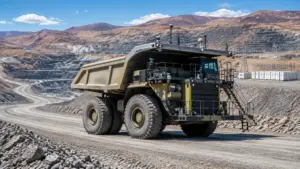
For context, moving 50.5 million bcm annually requires dedicated haul fleets, blasting schedules coordinated months in advance, and waste dump sequencing that doesn’t leave room for improvisation. The coal production target of 9.3 million tons per year sits on top of that overburden program, which means BUMA’s operational tempo at South Tutupan is essentially fixed through 2030.
More Read



Ronald Sutardja, BUMA’s Chief Executive, framed it clearly: “This contract reinforces visibility of our revenue while affirming BUMA’s position as a trusted mining services partner in Indonesia.” The language is corporate, but the subtext is blunt. Revenue visibility through 2030 means earnings predictability that most mining services firms don’t have past the next fiscal year.
Sutardja also highlighted what actually wins these extensions: “the consistency of BUMA’s operational performance and our capability in managing technically complex mining operations with high safety and reliability standards.” Translation: Adaro isn’t experimenting with new contractors when current operations are hitting targets.
More Read

Why This Contract Structure Matters for BUMA
Mining services companies live and die on contract duration and renewal certainty. Short-term contracts create earnings volatility. Long-term agreements with defined volumes create the operational stability that justifies capital deployment in equipment and workforce development.
BUMA’s management noted the agreement is expected to have a positive impact on business continuity, financial performance, and operational results. That’s standard disclosure language, but it underscores something more strategic: contracted revenue through 2030 gives BUMA the baseline to pursue growth opportunities without gambling on core earnings.
South Tutupan sits in South Kalimantan, one of Indonesia’s primary coal-producing regions. The site geology and logistical infrastructure are established, which reduces operational risk compared to greenfield projects. BUMA knows the ground conditions, the haul routes, the regulatory environment, and the workforce dynamics. That institutional knowledge compounds over 20-year partnerships.

The contract also anchors BUMA’s position in Indonesia’s thermal coal sector at a time when international mining services firms are pulling back from coal-adjacent projects due to ESG pressure. That creates strategic space for regional players like BUMA who understand the realpolitik of Indonesia’s energy transition timeline.
Indonesia isn’t phasing out coal production on a schedule that aligns with European capital markets expectations. The country’s electricity demand is growing, and coal remains the backbone of power generation. Contracts like this one reflect operational reality, not decarbonization press releases.
Operational Complexity at South Tutupan
Moving 239 million bcm of overburden over four years and nine months isn’t a matter of showing up with trucks. It requires integrated mine planning that sequences waste removal ahead of coal extraction, manages geotechnical stability across multiple benches, and maintains haulage productivity in tropical conditions with seasonal monsoon impacts.
South Tutupan’s location in Tanjung Tabalong means operations occur in terrain with variable ground conditions and significant rainfall. Overburden handling in these environments demands drainage management, slope monitoring, and equipment maintenance protocols that prevent unplanned downtime.
BUMA’s capability statement emphasizes high safety and reliability standards, which is corporate speak for “we don’t have incidents that shut down production.” In mining services, reliability translates directly to client retention. Adaro’s willingness to extend this contract through 2030 signals BUMA has cleared that operational threshold consistently.
Community Programs and Regional Impact in Tabalong
Large-scale mining operations in Indonesia carry explicit expectations around community development and regional economic participation. BUMA’s presence in Tabalong extends beyond the mine gate, with community impact programs designed to address local employment, infrastructure development, and social investment.
The Tabalong Regency has built significant economic dependence on coal sector employment and tax revenues. Mining services contractors like BUMA function as major regional employers, with hiring preferences for local workers where skills allow. Training programs, vocational partnerships, and health services often extend into surrounding communities as part of operational licensing requirements.

BUMA’s community engagement in the region includes educational support, healthcare access improvements, and infrastructure co-investments that serve both operational needs and public benefit. These aren’t optional CSR initiatives in Indonesia’s regulatory context. They’re operational prerequisites for maintaining social license and avoiding the community friction that can halt production.
The South Tutupan contract extension ensures continued regional employment and economic activity through 2030, providing stability for local supply chains, service providers, and municipal budgets that rely on mining sector contributions. That matters in regions where alternative economic bases don’t exist at comparable scale.
What This Means for Mining Services Consolidation
The mining services sector is consolidating. Smaller operators struggle to access capital for equipment upgrades. Larger firms are divesting non-core assets and focusing on long-term client relationships that generate predictable cash flow.
BUMA’s ability to secure five-year contract extensions positions it favorably in this environment. The company’s contract-based revenue model reduces exposure to commodity price volatility that hammers pure-play miners. When coal prices collapse, BUMA still gets paid for moving dirt and tons under contracted rates.
This operational model creates valuation stability that equity markets reward, particularly in emerging market contexts where investors demand proof of earnings durability. BUMA’s ticker (DOID) gains defensive characteristics from contracts like Adaro’s that extend well beyond typical analyst forecast windows.
The strategic question for BUMA becomes how to deploy the cash flow certainty from South Tutupan into growth opportunities elsewhere in Indonesia’s resource sector. With coal services locked in, does management pursue expansion into nickel, copper, or other minerals where Indonesia is ramping production to serve battery supply chains?
The Broader Context Nobody’s Discussing
Indonesia is simultaneously trying to maintain coal export revenues while positioning as a critical mineral supplier for the energy transition. That creates operational demand for mining services firms that can work across commodity types and handle the technical complexity of both legacy fossil fuel operations and emerging battery metal projects.
BUMA’s long-term partnership with Adaro demonstrates the kind of operational consistency that nickel and copper developers will need as they scale production to meet EV demand. The skills aren’t identical, but the core capabilities: moving material safely at scale in challenging environments: transfer directly.
The South Tutupan contract doesn’t just anchor BUMA’s earnings through 2030. It provides proof of operational delivery that matters when pitching services to mining companies developing Indonesia’s next generation of resource projects. Track record compounds in industries where execution risk can sink billion-dollar investments.
For Adaro Indonesia, this contract locks in a proven operator at a time when mining services capacity is tightening globally. Experienced contractors with available equipment and trained workforces aren’t sitting idle waiting for work. Securing BUMA’s operational commitment through 2030 removes a significant execution risk from Adaro’s production forecast.
That’s the real story. Not just a contract extension, but a strategic lock-in of operational capacity in a market where reliable mining services are becoming a scarce input. BUMA gets revenue visibility. Adaro gets execution certainty. And Tabalong gets another five years of economic activity tied to South Tutupan’s production schedule.
The contract takes effect April 1, 2026. The clock is already ticking.