By Charles Pitts

The global copper market is currently operating on a delusion. Most analysts are still staring at 2030 spreadsheets, worrying about long-term deficits while the real crisis is already hammering at the door. 2026 isn’t just another year on the calendar: it is the inflection point where the domestic supply-demand gap becomes a structural stranglehhold.
While the “green transition” architects talk about a theoretical electrified future, the reality on the ground is much grimmer. We are running out of the red metal right now. Data centers for AI, the defense industry’s insatiable appetite for munitions, and a power grid that is essentially a relic of the mid-20th century are all pulling from the same dwindling pile.
Mariana Minerals isn’t waiting for a miracle. The Silicon Valley-backed firm: powered by venture capital giant Andreessen Horowitz: has moved to secure and revive the Centennial copper mine in southeastern Utah. Rebranded as Copper One, this project represents more than just a reopened pit; it is a high-stakes bet that software can solve a geological and labor crisis that the traditional mining industry has spent decades ignoring.
The 2026 Inflection Point: Why Now?
The timing isn’t a coincidence. Copper One is scheduled to officially resume operations in April 2026. That is just weeks away. The strategic calculus here isn’t subtle: Mariana is aiming to catch a massive price tailwind as global supply chains tighten.
More Read



We are looking at a market where the primary drivers are no longer just EVs. The sudden explosion of AI infrastructure has fundamentally altered the math. Every new data center requires a massive amount of copper for power distribution and cooling systems. Simultaneously, global trade tensions have made “near-shoring” a matter of national security. As the U.S. and China exchange fresh tariffs, relying on overseas cathodes has become a liability that the Pentagon is no longer willing to accept.
Copper One: From Brownfield to Digital Bastion
Mariana Minerals acquired the Centennial site in late 2025. This wasn’t a grassroots discovery: those take 15 years to permit if you’re lucky. Instead, they took a brownfield approach. They bought a 10,000-acre land complex that already had 15 years of operational history, an existing processing plant, and a refining facility.
More Read

The plan is aggressive: scale output from a measly 2,500 tons per year to 50,000 metric tons of copper cathode annually by 2030.
But they aren’t doing it the old-fashioned way. The “MarianaOS” software stack is the heart of the operation. We’re talking about a proprietary operating system designed to run a mine like a factory. This includes:
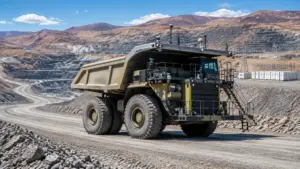
- Autonomous Haulage: Trucks that don’t need a driver who might retire next week.
- Drill Automation: High-precision rigs controlled via software loops.
- Process Control: Autonomous management of heap bioleaching, solvent extraction, and electrowinning (SX/EW).
This isn’t just about efficiency; it’s about survival. The mining industry is facing a demographic collapse.
The Labor Crisis Nobody Wants to Talk About
Here is a brutal number for you: fewer than 400 mining engineering students graduate in the U.S. annually. Meanwhile, over 200,000 current mining workers are expected to retire this decade.
That is not a rounding error. That is a crisis.
You can’t hire your way out of that hole. You have to automate. Mariana’s play in Utah is essentially a proof-of-concept for the “Mine of the Future”: a facility that can operate with a skeleton crew of highly skilled tech operators rather than a massive workforce that no longer exists. This labor shortage is a primary reason why domestic critical mineral stockpiles remain vulnerable. If you can’t extract and process the ore at home, the stockpile is just a list on a piece of paper.
Integrating the Scrap: The Circular Pivot
One of the more interesting aspects of the Centennial revival is Mariana’s plan to integrate copper scrap processing directly into the facility. Most miners treat “new” copper and “recycled” copper as two different industries. Mariana is smashing them together.
By combining geologic feedstock (ore from the ground) with recycled feedstocks, the Copper One facility aims to prove that domestic recycling can be economically viable when it is co-located with primary production. It reduces the energy intensity of the final cathode and provides a buffer against ore grade fluctuations. In a world where rare earths and green transition minerals are increasingly weaponized in trade wars, every pound of recovered domestic copper counts.

Geopolitics and the Defense Nexus
The Department of Defense isn’t just an observer in this; they are effectively the shadow customer for domestic copper. Copper is essential for everything from guidance systems in missiles to the wiring in nuclear submarines. The Biden administration (and likely any successor) has made it clear that “mineral security is national security.”
When you look at the crossroads facing industries like U.S. Steel, the pattern is clear: domestic manufacturing and resource extraction are being forced into a renaissance by geopolitical necessity. Mariana Minerals is positioning Copper One as a critical node in that new American industrial base.
Technical Credit and Project Risks
While the automation narrative is compelling, the “MarianaOS” approach carries significant technical risks.
First, there is the integration challenge. Applying cutting-edge software to a legacy brownfield site is never as clean as the PowerPoint slides suggest. Old infrastructure is temperamental. Sensors fail. The Utah desert is a harsh environment for delicate electronics.
Second, there is the scaling risk. Moving from 2,500 tons to 50,000 tons requires more than just better software: it requires massive throughput in the SX/EW circuits and consistent performance from the bioleaching heaps. If the biology in the heaps doesn’t play nice with the software’s predictions, the timeline will slip.

Third, the capital intensity. Even with Andreessen Horowitz’s deep pockets, mining is a notorious capital destroyer. The market is watching to see if Mariana can maintain its 2026 ramp-up schedule without returning to the well for more dilutive funding.
The Strategic Outlook for 2026
As we approach the April 2026 reopening, the mining industry is at a crossroads. We are seeing a move away from the massive, multi-billion-dollar “mega-projects” in unstable jurisdictions toward smaller, tech-heavy domestic revivals.
The Centennial mine is the test case. If Mariana Minerals can successfully deploy autonomous systems to revive a mothballed Utah asset, it opens the door for a dozen other abandoned domestic mines to be brought back online. If they fail, it reinforces the narrative that the U.S. has lost its ability to produce the materials it needs for its own survival.
The strategic calculus here isn’t subtle: we are in a race against a clock that is already ticking. 2026 is the year the supply deficit stops being a forecast and starts being a reality. Copper One is the first major attempt to bridge that gap.
Social Media Snippet (LinkedIn/X):
“Copper demand isn’t a future problem: it’s a 2026 crisis. Mariana Minerals is reviving Utah’s Centennial mine (Copper One) with a software-first approach to bridge the domestic supply gap. With a target of 50k tons per year and a focus on automation, this project is a direct response to the labor collapse and geopolitical instability. Is this the blueprint for the ‘Mine of the Future’? #Mining #Copper #SupplyChain #EnergyTransition #Automation”
Copper Market Supply-Demand Forecast (2025-2027)
| Year | Global Demand (Mt) | Global Supply (Mt) | Expected Deficit (kt) | U.S. Domestic Share (%) |
|---|---|---|---|---|
| 2025 | 26.8 | 26.4 | -400 | 4.2% |
| 2026 | 28.1 | 27.2 | -900 | 4.8% |
| 2027 | 29.5 | 28.0 | -1,500 | 5.5% |
Data Context: 2026 marks the inflection point where the deficit nearly doubles, driven largely by AI infrastructure and defense spending.

There’s no sugar-coating the situation. The mining industry has been under-invested for a generation, and now the chickens are coming home to roost. Whether it’s Mariana in Utah or other firms raising capital for B.C. projects, the rush to secure Tier-1 assets is on. But you can’t disrupt geology with a tweet. You have to move dirt. And in 2026, moving dirt is going to be more expensive, more technical, and more necessary than ever before.