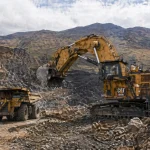
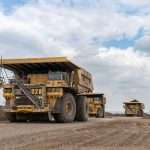
Heavy machinery prepares a mining site in a coastal desert region.

By Charles Pitts
The long-contested Dominga iron and copper project in Chile has entered a new phase of legal volatility. In a significant procedural pivot, the Antofagasta Court of Appeals recently reinstated the project’s Environmental Qualification Resolution (RCA), suspending a previous February 2026 ruling that had halted the $2.5 billion development.
The decision by the appellate court does not constitute a final green light for Andes Iron, the project’s proponent. Instead, it moves the legal battleground to the Supreme Court of Chile, which will now serve as the final arbiter for a project that has remained in regulatory limbo for over 13 years. The Dominga project, located in the Coquimbo region, is designed to produce 12 million tonnes of high-grade iron concentrate and 150,000 tonnes of copper concentrate annually.
The Procedural Reversal: Why it Matters
The reinstatement of the environmental permit follows an appeal by an independent workers’ union, which argued that the prior enforcement order to stop the project was procedurally inadmissible. The Antofagasta Court of Appeals agreed, noting that the First Environmental Court’s earlier judgment lacked the necessary enforceability to strip the project of its current standing while higher court reviews are pending.
More Read

For operators and investors, this ruling represents a temporary reprieve rather than a permanent resolution. The Dominga project has become a lightning rod for the broader debate over Chile’s mining permit backlog and its environmental standards. The project’s site is situated near the Humboldt Penguin National Reserve, a biodiversity hotspot that has fueled fierce opposition from environmental groups and led to three separate rejections by the Chilean Committee of Ministers.

Operational Overview and Project Scope
Andes Iron’s vision for Dominga involves two massive open-pit mines and a dedicated maritime terminal. The dual-commodity nature of the site makes it a strategic asset in the context of the global copper deficit expected through 2026.
Market Snapshot: The Dominga Project (2026 Data)
| Metric | Detail |
|---|---|
| Estimated Capex | $2.5 Billion |
| Annual Iron Production | 12 Million Tonnes (Concentrate) |
| Annual Copper Production | 150,000 Tonnes (Concentrate) |
| Estimated Mine Life | 26.5 Years |
| Job Creation (Estimated) | 30,000 (Construction & Ops) |
| Key Region | Coquimbo, Chile |
| Status | Reinstated (Awaiting Supreme Court) |

Engineers and site managers coordinate operational planning at an active mineral extraction site.
More Read

The project’s 26.5-year life span is expected to generate significant tax revenue for the Coquimbo region, with Andes Iron pledging to create upwards of 30,000 jobs during the peak construction and operational phases. However, the technical challenge remains the proposed port facility. Critics argue that the increased maritime traffic and the risk of spills could irreversibly damage the local marine ecosystem, particularly the penguin colonies that reside just kilometers from the proposed shipping lanes.
Timeline of the Dominga Legal Battle
The project’s history is a case study in the complexity of Chilean mining law:
- 2013: Initial submission of the Environmental Impact Assessment.
- 2017: Initial rejection by the regional environmental commission and the Committee of Ministers under the Bachelet administration.
- 2021: The First Environmental Court of Antofagasta orders a new vote, leading to a temporary approval.
- 2023: The Committee of Ministers under President Gabriel Boric unanimously rejects the project again, citing impacts on biodiversity.
- February 2026: The Antofagasta Court of Appeals rules against the project, suspending the RCA.
- March 2026: The same court reverses its suspension, reinstating the permit pending a Supreme Court review.
Geopolitical and Policy Implications
The Dominga case reflects a wider trend in global mining policy where “permitting risk” has become as significant a hurdle as geological risk. In Chile, the world’s top copper producer, the government is attempting to balance a pro-environment agenda with the economic necessity of maintaining mineral output.
The reinstatement of the permit suggests that procedural rigor is being prioritized by the courts, even as political bodies like the Committee of Ministers remain opposed. If the Supreme Court eventually rules in favor of the project, it could set a major precedent for how environmental impact assessments are weighted against local economic benefits in high-stakes mining regions.

An advanced mineral processing plant designed for high-efficiency extraction and environmental compliance.
Key Risks for 2026 and Beyond
Despite the recent legal win, several high-impact risks remain for the Dominga project:
- Supreme Court Finality: The highest court in Chile has a history of prioritizing environmental protection in cases involving critical habitats. A negative ruling here would likely be the definitive end for the current project design.
- Mitigation Costs: To appease regulators, Andes Iron may be forced to implement significantly more expensive environmental safeguards, such as a water desalination plant or a relocation of the port facility, which could alter the project’s IRR.
- Community and Social Unrest: While labor unions support the project for its job creation, local artisanal fishing communities and environmental NGOs remain staunchly opposed, raising the risk of social license challenges and site blockades.
- Regulatory Climate: Under the current Chilean administration, the executive branch has shown little appetite for large-scale projects near sensitive ecological zones, meaning even a legal victory may face administrative friction during the permitting of specific secondary licenses.
Future Outlook: The Path to Production
For the Dominga project to move toward construction in late 2026 or 2027, it requires a definitive legal victory that closes the door on further environmental appeals. Investors are watching for signals that the project might seek a compromise: such as a joint-use port facility with other nearby mining operations: to reduce the overall industrial footprint in the Coquimbo region.
The project’s high-grade iron ore (65% Fe and above) is particularly valuable in a global market that is increasingly decarbonizing, as higher-grade ores require less energy for smelting. This environmental trade-off: high-quality ore for a low-carbon future versus local habitat protection: is the central tension that the Supreme Court will have to resolve.

Operational leaders discuss safety protocols and site intelligence during a briefing.
As Chile continues to refine its mining code and environmental regulations, the Dominga project stands as a bellwether for the future of large-scale greenfield developments in the Andes.
Deep-Dive Analysis: The Technical Infrastructure
One of the more overlooked aspects of the Dominga reinstatement is the role of infrastructure development. The project includes not only the mines but also a $300 million desalination plant. This is part of a growing requirement in Chilean mining to cease the use of continental freshwater.

Modern underground infrastructure integrated within a large-scale mining development.
The integration of desalination and shared infrastructure is seen by some analysts as the only viable path forward for projects in water-stressed regions like Coquimbo. Whether this technical compliance will be enough to outweigh the biodiversity concerns remains the billion-dollar question for Andes Iron.
Stay updated on the latest mining industry developments and market intelligence with Skillings Mining Intelligence.