The coal labour shortage is the uncomfortable reality nobody wants to name in boardrooms: we’ve thrown money at it like it’s 1979, and it’s doing about as much good as pissing in the wind.

Coal mining salaries in 2026 are the highest they’ve been since the boom years. Average compensation hit $147,000 in January, up 23% year over year. Underground miners in West Virginia are clearing $165,000 base, with overtime pushing some past $200,000. Surface miners in Wyoming are starting around $142,000.
And yet, the coal labour shortage is getting worse.
The industry is still short roughly 15,000 workers, and every quarter that gap widens.
The Math Behind the Coal Labour Shortage Doesn’t Work
Let me break this down like you’re sitting across from me at a truck-stop diner.
More Read

A coal mining salary of $150k sounds impressive until you price out what it costs to actually live in coal country in 2026.

Take Gillette, Wyoming—the so-called Energy Capital of the Nation. The average home price just crossed $385,000, up 34% in two years. Rent for a livable two-bedroom runs $2,400 a month. After taxes, housing, healthcare, and the inflated cost of everything that has to be trucked in, that $150k turns into maybe $65k of real spending power.
Now compare that with a $95k job in Denver—where schools are stable, hospitals are open, and you don’t have to worry about your employer shutting down because coal analysts decided the asset class is “legacy infrastructure.”
More Read

That’s the disconnect driving the coal labour shortage. It’s not what miners make—it’s what they’re risking.
The Underground Reality of Coal Mining Salaries 2026
I spoke with three mine supervisors last week. Same story every time.
“We can’t hire fast enough, and the guys we do hire don’t stay.”
Tommy Breslin from Consol’s Pennsylvania operation put it bluntly:
“These kids aren’t stupid. You offer $160k underground, they’re thinking two years max. Save the cash. Get out before the lights go off.”
That’s the real driver of the coal labour shortage: nobody believes the jobs will last.
Coal mining salaries in 2026 aren’t being viewed as careers—they’re being treated as short-term extraction opportunities.
Deregulation Didn’t Fix the Coal Labour Shortage
The Trump administration’s deregulation push was supposed to change the narrative. Roll back Obama-era rules. Fast-track permits. Kill clean-energy subsidies.
It didn’t matter.
Deregulation can’t fix the fundamental economics, and coal miners—regardless of politics—understand economics perfectly well. That’s why higher coal mining salaries in 2026 haven’t restored confidence or slowed the labour exodus.
The China Factor Fueling the Coal Labour Shortage
Here’s what really undermines workforce confidence: China’s cost advantage.
Chinese thermal coal is landing at roughly $89 per ton. The best Powder River Basin coal costs $108 per ton just to pull out of the ground.
No amount of deregulation changes geology.
Coal miners know they’re competing against labor costs and environmental standards from 1975. That reality is baked into every career decision—and it’s a major reason the coal labour shortage persists.
Tariffs won’t fix it either. A 40% import tariff raises electricity prices at home while Chinese coal simply gets rerouted to India and Southeast Asia. U.S. miners still don’t gain long-term security.
The Real Employment Numbers
Coal employment peaked at 180,000 workers in 1985. As of August 2025, we’re down to 40,300—even as coal production rose 3.6% year over year.
We’re producing more coal with 75% fewer people.
That’s not a hiring failure. That’s structural evolution. And it’s why the coal labour shortage won’t be solved with higher wages alone.
Executives admit—after a few whiskeys—that today’s coal mining salaries are a bridge strategy, not a growth plan. They’re paying top dollar to keep existing operations alive while planning what comes next.
The Skills Migration Accelerating the Coal Labour Shortage
The best miners aren’t waiting around.
They’re leaving for:
- Underground construction ($125k average, steady growth)
- Oil and gas ($135k, volatile but longer runway)
- Mining equipment manufacturing ($110k, stable, recession-resistant)
- Renewables installation ($85k, growing 15% annually)
These aren’t desperation moves. They’re calculated exits.
Coal mining salaries in 2026 may be higher, but the career trajectory points down, and workers know it.
The Community Collapse Behind the Coal Labour Shortage
Coal towns are hollowing out—and that makes hiring even harder.
Schools close. Hospitals shut down. Young families leave. What remains is an aging population and declining services.
You can’t recruit miners to dying communities.
Welch, West Virginia fell from 100,000 residents to 2,400. Gilbert, West Virginia sits at 449 people. These aren’t data points—they’re obituaries.
Automation Is Making the Coal Labour Shortage Permanent
Automation is the industry’s response—and its accelerant.
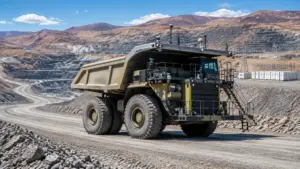
Consol’s latest longwall operations run with 40% fewer miners than in 2020. Arch Coal is expanding autonomous haul trucks across Wyoming.
Each robot replaces a miner. Each replacement makes remaining jobs less secure. Each round of automation deepens the coal labour shortage by eroding trust.
What Coal Mining Salaries 2026 Actually Buy
Let’s be honest about the value proposition:
High pay. Dangerous work. Declining industry. Fragile communities.
That’s what coal mining salaries in 2026 are offering 20-year-olds raised on climate debates and renewable mandates.
The smart workers have already moved on.
The 2026 Endgame for the Coal Labour Shortage
Here’s how this ends.
Coal mining salaries peak around $160k–$170k by mid-2026. Automation expands. Marginal mines close. Employment contracts.
The coal labour shortage doesn’t get solved—it gets absorbed by contraction.
The miners who stayed for the money will compete for fewer jobs. The ones who left will be building careers with actual futures.
That’s the $150k hole.
The coal labour shortage isn’t a hiring problem.
It’s a trust problem.
And trust—unlike salaries—can’t be fixed with a bigger number on a paycheck.