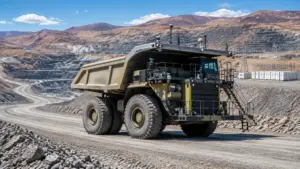
Here’s the thing nobody wants to talk about: while coal mining is getting hammered from every direction, plant closures, renewable mandates, ESG pressure, the guys still working underground are pulling down serious money. And it’s not going anywhere in 2026.

Yeah, the industry’s shrinking. We all know that. But here’s what’s weird: coal mining salaries aren’t following the same trajectory downward that everyone expected. In fact, some underground miners salary figures are holding steady or even climbing, and there’s a pretty logical reason why.
The Numbers Don’t Lie (But They’re Complicated)
Let’s cut through the noise. The average coal miner in 2025 makes about $48,361 annually, which breaks down to roughly $23.25 per hour. That’s not hitting that $64K mark everyone talks about, but stick with me: this is where it gets interesting.
The broader “coal mining” category: which includes your foremen, supervisors, and specialized roles: averages $97,771. That’s a massive jump, and it tells you everything about where the money really is in this business. A Coal Mine Foreman pulls $97,771, while a general Coal Mine Worker sits closer to $44,035.

More Read

Entry-level mining professionals land anywhere from $48,000 to $65,000 annually. But here’s where experience pays off big time: skilled positions like drill managers and supervisors hit $70,000 to $90,000. The really specialized roles: engineering, safety management, complex equipment operation: push $90,000 to $110,000 annually.

The 75th percentile for coal miners reaches $52,000, with top earners hitting $61,000. Some regions show hourly wages climbing to $28-29 per hour, well above that $23.25 national average.
Why the Money’s Still There (Despite Everything)
Here’s the counterintuitive part: the industry’s decline might actually be supporting higher wages for the workers who remain. Basic supply and demand, right? Fewer mines operating means fewer jobs available, which means employers have to compete harder for experienced workers who know what they’re doing.
More Read

Underground coal mining isn’t something you pick up from a YouTube tutorial. These guys have specialized skills that took years to develop. You need people who understand ventilation systems, explosive handling, heavy machinery operation, and safety protocols that can literally be life or death. When mines close, that institutional knowledge walks out the door. The operations still running? They’ll pay to keep those workers.

Plus, the physical demands haven’t changed. This is still dangerous, difficult work that happens miles underground in conditions most people wouldn’t last a week in. That kind of work has always commanded a wage premium, and it still does.
Geographic factors play a huge role too. Certain coal-producing regions: especially in Appalachia and parts of the Midwest: show consistently higher wages because the labor pool is smaller and more specialized. When you’ve got multiple operations competing for the same workers within driving distance, wages go up.
The Skills Gap Is Real (And Getting Worse)
Here’s something the data doesn’t fully capture: the aging workforce problem. A lot of experienced miners are hitting retirement age, and guess what? Their kids aren’t exactly lining up to follow in their footsteps. The industry’s reputation problems mean fewer young workers are entering the field, even when the money’s decent.
This creates a skills gap that drives up compensation for experienced workers. Companies are willing to pay more to retain workers who actually know what they’re doing rather than constantly train new hires who might leave for “cleaner” industries anyway.

The technical side is getting more complex too. Modern mining operations use sophisticated monitoring systems, automated equipment, and safety technologies that require training. Workers who can handle both traditional mining skills and modern tech? They’re worth their weight in whatever they’re pulling out of the ground.
What 2026 Looks Like
The coal mining salary outlook for 2026 is complicated. On one hand, more plant closures and policy pressure will continue shrinking the industry. On the other hand, the operations that survive will likely be the most efficient, profitable ones: and they’ll need skilled workers to stay that way.
Expect to see wages for specialized positions continue to hold steady or even increase. General laborers might face more pressure, but experienced operators, safety supervisors, equipment specialists, and foremen will likely maintain their earning power. The $64K+ salaries aren’t going away for skilled underground workers; they might actually become more common as competition for talent intensifies.

The geographic concentration will probably get more pronounced too. Certain coal-producing regions will see wages climb as operations consolidate and compete for a shrinking pool of experienced workers. Areas where mining is the primary economic driver will likely see the highest underground miners salary figures.
The Reality Check
Let’s be honest about what this means. Coal mining salaries aren’t “dead,” but they’re not exactly thriving either. The high-paying positions exist, but there are fewer of them every year. If you’re thinking about getting into this field for the money, you’d better be realistic about the long-term prospects.
For workers already in the industry, especially those with specialized skills and experience, the earning potential is still there. But it requires staying ahead of the technology curve, maintaining safety certifications, and being willing to relocate as operations consolidate.
The industry is shrinking, but it’s not disappearing overnight. As long as there’s demand for coal: whether domestic or international: there will be operations that need skilled workers. And those workers will continue to command decent wages because the work is specialized, dangerous, and increasingly difficult to fill.

The $64K+ underground mining salaries exist, just not for everyone and not everywhere. But for the right workers in the right locations with the right skills, the money’s still there in 2026. The question is whether that’s enough to build a career on in an industry that’s clearly in long-term decline.
That’s the reality check nobody wants to have, but it’s the one that matters most for anyone thinking about their future in coal mining. The paychecks are still solid for now, but you’d better have a backup plan.