By Charles Pitts

The global mining sector is entering a new phase of integration with the technology industry, a phenomenon increasingly described as the “Data-Metal Loop.” As hyperscale data center operators: led by Microsoft, Google, and Amazon: accelerate their 2026 infrastructure roadmaps, the demand for high-density power and the metals that facilitate it has shifted from a peripheral concern to a core strategic risk.
At the heart of this shift is a twin-engine demand surge for copper and uranium. AI-optimized data centers require up to four times the copper of legacy facilities, while the mission-critical need for “clean firm” power is driving a renaissance in nuclear energy, specifically Small Modular Reactors (SMRs). For the mining industry, this represents a structural pivot: Big Tech is no longer just a downstream consumer of services, but an upstream anchor for long-term mineral offtakes.
The Copper Intensive Nature of AI Infrastructure
The 2026 outlook for copper is increasingly defined by the power density of artificial intelligence. While traditional data centers have always been significant consumers of copper for grounding, cabling, and power distribution, AI-optimized facilities are exponentially more metal-intensive.
Research indicates that a standard 1 GW data center campus can require up to 50,000 tonnes of copper. On a more granular level, each megawatt of AI capacity requires between 30 and 47 tonnes of copper: a significant increase over the 10-15 tonnes required by older, non-AI facilities. This intensity stems from the massive electrical loads required by GPUs and the advanced liquid cooling systems necessary to manage heat, which utilize high-conductivity copper heat exchangers.
More Read

2026 Copper Deficit Projections
Market analysts are already pricing in the impact of this “digital copper” surge. According to recent market intelligence, AI data centers alone are projected to add approximately 110,000 tonnes of incremental copper demand by 2026.

| Source | 2026 Market Outlook | Projected Deficit/Surplus |
|---|---|---|
| UBS | Widening Deficit | -400,000 tonnes |
| ICSG | Refined Market Deficit | -150,000 tonnes |
| JPMorgan | Incremental AI Demand | +110,000 tonnes |
As the refined copper market moves toward a structural deficit, the competition for Tier 1 supply will likely intensify. Big Tech firms, traditionally insulated from commodity price volatility, are now facing a reality where the 2026 resource realignment could impact the speed of their server deployments.

More Read

Uranium and the SMR Renaissance
The second half of the Data-Metal Loop involves the energy required to run these copper-heavy facilities. Data centers currently consume roughly 1-2% of global electricity, a figure expected to rise toward 4% by 2030. For tech giants with strict net-zero mandates, intermittent renewables like wind and solar are insufficient for the 24/7 “five-nines” reliability required by AI.
This has led to a historic pivot toward nuclear energy. In late 2024 and early 2025, we saw the first wave of multi-decade power purchase agreements (PPAs) between tech firms and nuclear operators. Microsoft’s deal to restart a unit at Three Mile Island (Constellation Energy) and Google’s partnership with Kairos Power for SMR deployment are the primary examples.
SMR Uranium Demand 2026 and Beyond
While most SMRs are not expected to be commercially operational until the late 2020s, the 2026 window is critical for fuel procurement. Uranium supply chains are long-dated; a reactor planned for 2028 or 2029 requires fuel contracting and enrichment logistics to be secured years in advance.
The “Data-Metal Loop” is solidified here: Big Tech signs the PPA, which provides the bankable revenue stream needed for a utility to greenlight an SMR project, which in turn triggers a long-term offtake agreement with a uranium miner. This cycle is underbrushing a new bull case for uranium that is decoupled from traditional utility cycles.

Offtake Agreements: Miners as Technology Partners
We are seeing a fundamental shift in how mining projects are financed. Traditionally, a mining company would rely on bank debt or equity markets to fund development. Today, the “Big Tech Offtake” is becoming a gold standard for project de-risking.
Hyperscalers are increasingly willing to enter “virtual” or direct offtake agreements to ensure that the minerals needed for their supply chains: whether copper for the grid or uranium for the power: are available when needed. This trend is not limited to power; it extends to the very equipment used in the mines.

The Feedback Loop: AI in Mining
The loop closes when we look at how mining companies are using the very AI they are fueling to improve their own operations. Large-scale miners are utilizing machine learning to:
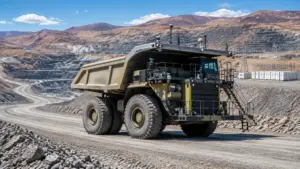
- Predictive Maintenance: Reducing downtime on ultra-class haul trucks and drill jumbos.
- Geological Modeling: Identifying high-grade copper deposits with higher accuracy, potentially bringing new supply to market faster.
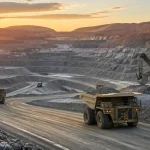
- Autonomous Haulage: Improving the efficiency of open-pit operations, which is essential as ore grades continue to decline globally.
This creates a self-reinforcing cycle: AI requires massive amounts of copper and uranium to function; that AI is then used to find and extract copper and uranium more efficiently; which in turn fuels further AI expansion.
2026 Outlook: The Strategic Implications
For operators and investors, the 2026 horizon presents several key risks and opportunities. The primary risk is the widening supply-demand gap in copper. If the projected deficits of 150,000 to 400,000 tonnes materialize, we could see significant upward pressure on prices, potentially slowing the pace of data center construction or forcing a shift toward aluminum substitution where possible: though aluminum remains a sub-optimal conductor for high-density AI applications.
On the uranium side, the 2026 period will likely be marked by intense contracting activity. As SMR designs move through the final stages of licensing, the “first-mover” advantage for tech companies securing fuel supply will be a major narrative.

The convergence of compute and commodities is no longer a theoretical concept. It is an operational reality that is reshaping the global mining landscape. Companies that can position themselves within this “Data-Metal Loop”: either as primary producers of critical minerals or as technology-forward operators: will be the primary beneficiaries of this structural realignment.
As we move toward 2026, the distinction between a “tech company” and an “industrial energy consumer” will continue to blur. In this new era, the most valuable assets are not just the data on the servers, but the copper and uranium that keep those servers running.