



Rare earth processing equipment at a US industrial mill.

By Charles Pitts
The US critical minerals supply chain is moving from broad policy commitments toward a more demanding test: can domestic and allied projects produce qualified materials at every stage from mine to magnet?
Several milestones in 2026 point to progress across that chain. The US Department of Energy has selected nine projects for up to $162 million to recover critical minerals from waste streams and unconventional feedstocks. Energy Fuels has had terbium oxide produced at its White Mesa Mill in Utah qualified by a major Japanese permanent magnet maker. American Rare Earths has signed a memorandum of understanding with Novex to advance rare earth oxide-to-metal conversion from the Halleck Creek project in Wyoming.
At the same time, Hertha Metals has produced 99.95% pure, or 3N5, magnet-grade iron at its Conroe, Texas facility, while SelectREE is reporting repeatable electrochemical responses in its effort to develop a lower-footprint rare earth separation process.

These developments address different parts of the supply chain. The main question for operators, investors and policymakers is whether they can be connected into a commercially reliable system before US defense sourcing restrictions take effect on January 1, 2027.

US critical minerals supply chain tracker
The following table tracks the main announced milestones and their current significance.
| Company or policy | Segment | Announced milestone | Current status | Supply-chain significance |
|---|---|---|---|---|
| US Department of Energy | Recovery and recycling | Up to $162 million for nine projects recovering critical minerals from waste and unconventional feedstocks | Award negotiations underway; funding is not guaranteed at the full amount | Adds potential supply without relying solely on new mines |
| Energy Fuels | Separation and oxide production | Terbium oxide from White Mesa Mill qualified by a major Japanese magnet maker | Product approved for commercial permanent-magnet production | Provides an important non-China heavy rare earth oxide route |
| American Rare Earths–Novex | Oxide-to-metal conversion | MoU to convert Halleck Creek oxides into rare earth metals and design a US metal-production facility | Non-binding MoU; definitive agreement targeted | Links a Wyoming resource with the metallization stage |
| Halleck Creek | Mining and resource base | 2.63 billion tonnes at 3,292 parts per million TREO; 8.647 million tonnes of contained TREO | Development-stage project | Offers scale, but still requires permitting, financing and construction |
| Hertha Metals | Magnet input materials | 99.95% magnet-grade iron produced at Conroe, Texas | Pilot-scale production; commercial-scale plans remain ahead | Addresses the iron component of NdFeB magnet manufacturing |
| SelectREE | Separation technology | Repeatable, element-specific electrochemical responses across four elements | Early validation; real-feed testing is the next major step | Could reduce reliance on large solvent-extraction circuits if scaled |
| DoD sourcing rules | Policy and procurement | Restrictions on covered materials produced at any stage in China, Russia, Iran or North Korea | Effective January 1, 2027, subject to policy changes and approved mitigation plans | Creates a hard qualification deadline for defense suppliers |
Source: company announcements, project disclosures, US government materials and industry reporting. “Up to” amounts, letters of interest and non-binding agreements should not be treated as committed capital.

The policy shift is moving beyond mine supply
The DOE’s nine-project program is notable because it targets the part of the resource base that is often overlooked: mine tailings, industrial byproducts, refining residues, electronic waste and other unconventional feedstocks.
According to the DOE announcement, the selected projects target materials including scandium, copper, antimony and rare earth elements. The projects are split between bench-scale and pilot-scale work, with the stated aim of moving technologies toward commercial readiness.
The program does not immediately add large volumes of refined material to the market. Instead, it funds the technical and operating risk involved in proving that waste streams can become dependable feedstock. That distinction matters. A process that recovers rare earths intermittently in a laboratory is not equivalent to a plant capable of supplying qualified oxide or metal to a magnet manufacturer.
The funding also shows how US policy is broadening. Support is no longer focused only on greenfield mining. It increasingly includes recovery, separation, recycling, processing and alternative production routes. For a supply chain exposed to permitting delays and complex metallurgy, that wider approach could become as important as the size of the underlying mineral resource.
White Mesa milestone tests the customer-qualification bottleneck
Energy Fuels’ terbium milestone addresses a different risk: product qualification.
The company said its terbium oxide, produced at the White Mesa Mill in Utah, was approved for use by a major Japan-based permanent magnet manufacturer. Energy Fuels described the customer as one of the largest rare earth magnet producers outside China.
The qualification means the oxide has met the customer’s specifications for commercial magnet production without additional validation. That is significant because rare earth supply chains are not complete when a producer reports a high-purity oxide. Magnet manufacturers must also confirm consistency, impurity levels and performance in their own process.
Terbium is used in small quantities to improve the high-temperature performance of neodymium-iron-boron magnets. It is therefore a relatively small-volume but strategically important material for electric motors, defense systems and other high-performance applications. Energy Fuels has also reported qualification progress for neodymium-praseodymium and dysprosium oxides.
The commercial question remains production scale. Qualification creates a route to market, but it does not by itself establish sustained output, long-term pricing or a complete US magnet chain. It does, however, reduce one of the barriers that can prevent new non-China material from reaching customers.
Halleck Creek and Novex connect mining to metallization
American Rare Earths’ Halleck Creek project illustrates the next step in the chain: converting separated oxides into metals suitable for alloy and magnet manufacturing.
The company’s MoU with Novex covers the metallization of neodymium-praseodymium oxide from a planned demonstration plant. The parties also intend to evaluate heavy rare earth oxides, including dysprosium, terbium and samarium, and work toward a domestic rare earth metal production facility.
The MoU is non-binding apart from provisions such as confidentiality and governing law. The companies are targeting a definitive long-term collaboration and supply agreement within 12 months. That status is important for project tracking: the announcement establishes a technical and commercial pathway, but not yet a binding construction commitment or guaranteed offtake.
Halleck Creek’s scale is substantial. The project reports a JORC mineral resource of approximately 2.627 billion tonnes grading 3,292 parts per million TREO, containing about 8.647 million tonnes of TREO. Magnet rare earth oxides account for approximately 26% of total rare earth oxide content, while heavy rare earths account for about 11%.
The first development phase, the Cowboy State Mine, is described as a 20-year operation with a planned three-million-tonne-per-year processing rate. American Rare Earths also reports a non-binding US Export-Import Bank letter of interest for up to $456 million in debt financing.
For investors, the key distinction is between resource scale and executable capacity. Halleck Creek still must advance permitting, engineering, financing, demonstration work and customer qualification. The Novex agreement improves the mine-to-metal narrative, but the downstream manufacturing stages remain to be built.
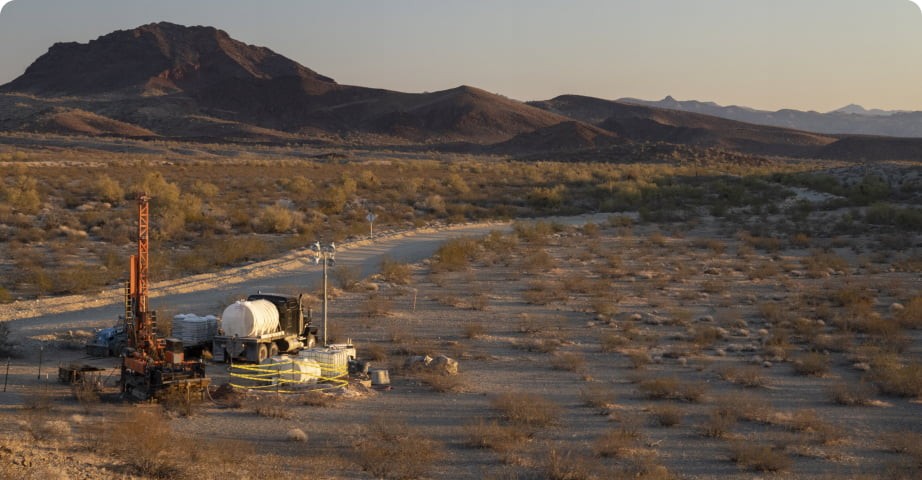
The US rare earth supply chain still requires links between resource development and metal production.
Domestic magnet inputs are broader than rare earths
Hertha Metals’ work in Texas highlights a component that can be missed in discussions focused on rare earth oxides: the iron used in NdFeB magnets.
The company says it has produced 99.95% Fe, or 3N5 iron, at its Conroe demonstration facility using domestic iron ore and natural gas. Hertha’s product page says trial quantities of high-purity iron containing more than 99.9% iron are available.
High-purity iron is a major constituent of NdFeB magnets. The company’s process, known as FLEXHERS, is intended to convert lower-grade iron ore into high-purity iron or steel in a single-step route using electric, natural gas or hydrogen-based inputs.
Hertha has reported pilot output of roughly one tonne per day and plans a larger commercial facility with capacity above 9,000 tonnes per year. Those plans remain a scale-up challenge, but the achievement is strategically relevant because a domestic rare earth oxide supply is not sufficient if magnet producers continue importing other critical inputs.
The same logic applies to boron, alloying materials, powder production, pressing, sintering and final magnet assembly. The supply chain is only as resilient as its least-developed stage.

Magnet manufacturing requires qualified inputs across metallurgy, powder production and final assembly.
SelectREE targets the separation bottleneck
SelectREE is pursuing a less conventional route through the separation stage. Its platform uses solid-state electrodes and controlled electrochemical signals to selectively capture and release rare earth ions from solution.
The company reported repeatable, element-specific electrochemical responses across four elements in laboratory testing. That is an early technical milestone rather than a commercial production result. The next test is whether the system can maintain selectivity using real feed materials from ores, tailings, magnet scrap or industrial process streams.
The potential advantage is modularity. Conventional rare earth separation can require large solvent-extraction circuits with extensive chemical handling and many sequential stages. If SelectREE’s process can operate reliably on complex feeds, smaller units could potentially be located closer to mines, recycling facilities or manufacturing sites.
That potential should be assessed carefully. Scale-up, impurity management, throughput, electrode life, energy use and recovery rates will determine whether the platform can compete with established separation technology. Still, the approach aligns with the DOE’s broader interest in extracting value from waste and unconventional materials.
The 2027 defense deadline creates urgency
The policy deadline gives these projects a defined commercial context.
Under 10 U.S.C. Section 4872 and related DFARS requirements, covered defense contracts are scheduled to restrict materials mined, refined, separated, melted, processed or produced in China, Russia, Iran or North Korea from January 1, 2027. The restrictions cover NdFeB and samarium-cobalt magnets, as well as tungsten, tantalum and molybdenum materials.
The rule applies through prime contractors and subcontractors, making traceability a supply-chain requirement rather than a paperwork exercise at the final assembly stage. Contractors will need evidence about where material originated and how it moved through processing and magnet production.
Industry has warned that available US and allied capacity may not be sufficient by the deadline. The administration has also considered policy adjustments and mitigation mechanisms, meaning the final operating environment could change. For now, the deadline remains a powerful demand signal for qualified non-China inputs.
What to watch next
The US critical minerals supply chain has produced meaningful milestones, but the tracker shows a system still under construction.
The next indicators are practical:
- DOE award negotiations converting “up to” funding into signed agreements and operating projects.
- Energy Fuels demonstrating repeatable terbium output beyond customer qualification.
- American Rare Earths and Novex moving from an MoU to binding technical and supply agreements.
- Halleck Creek advancing permitting, demonstration processing and financing.
- Hertha Metals scaling 3N5 iron production beyond pilot quantities.
- SelectREE testing real feedstocks and publishing recovery, selectivity and throughput data.
- Defense contractors documenting mine-to-magnet traceability before the 2027 sourcing deadline.
The policy-and-deal picture is becoming clearer: Washington is supporting domestic mining, waste recovery, separation, metallization and manufacturing at the same time. The harder task is integration. Until those stages operate together at commercial scale, the US critical minerals supply chain will remain a portfolio of promising milestones rather than a fully independent system.








