By Salini Krishnan

The global lithium market has entered a period of calculated stabilization. As the industry navigates the second half of 2026, battery-grade lithium carbonate spot prices have firmly established a durable floor around $18,000 per tonne. This pricing resilience marks a decisive turning point from the severe cyclical downturn of 2023–2024, reflecting structural supply rationalization, resilient energy transition demand, and disciplined capital expenditure across major producing jurisdictions.
While short-term volatility persists across exchange inventories, foundational developments at cornerstone tier-one projects: most notably Lithium Americas’ Thacker Pass in Nevada and Atlantic Lithium’s Ewoyaa project in Ghana, backed by China’s Zhejiang Huayou Cobalt: underscore a maturing global supply chain preparing for a demand surge anticipated toward 2027.
The $18,000/t Floor: Macroeconomic and Cost Curve Realities
During the prolonged price correction that bottomed out in late 2024, many high-cost marginal producers and planned operations were forced to defer capital outlays or mothball expansions. Major producers such as SQM and Albemarle repeatedly signaled that operating below $15,000 to $18,000 per tonne was economically unsustainable for hard-rock spumodumene converters and higher-cost evaporation brine assets alike.
By August 2026, this cost-curve reality has effectively locked in a floor. Marginal cash costs: factoring in inflation across mining consumables, reagents, labor, and stricter environmental compliance frameworks: mean that any drop below the mid-teens prompts immediate output curtailments. Consequently, spot prices across global markets and domestic Chinese exchanges have hovered between $18,000/t and $24,000/t, insulating solvent operators and giving project financiers the confidence required to release capital for long-term construction pipelines.


China’s Domestic Pricing and Marginal Balance
China continues to act as the primary price-setter for the global lithium complex, driven by its absolute dominance in refining capacity and cell manufacturing. Throughout mid-2026, battery-grade lithium carbonate prices on domestic Chinese exchanges have traded within the 140,000 to 165,000 yuan per ton range (approximately $19,500 to $23,000/t).
Market intelligence indicates that Chinese domestic supply growth has moderated to a sustainable year-on-year pace of roughly 10% to 12%, a stark contrast to the unchecked overproduction waves of previous cycles. Refiners are exhibiting strict inventory discipline, closely aligning run-rates with validated offtake orders from cathode manufacturers.
At the same time, demand from both electric vehicle (EV) Original Equipment Manufacturers (OEMs) and grid-scale battery energy storage systems (BESS) has absorbed incoming domestic supply, preventing the seasonal inventory gluts that previously battered market sentiment.
Project Spotlight: Thacker Pass Advances Toward 2027 Production
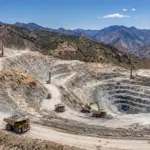
In North America, development milestones at key strategic assets are reshaping long-term supply expectations. Lithium Americas Corp.’s Thacker Pass project in Humboldt County, Nevada, represents the vanguard of domestic Western critical mineral supply.

Construction activity at Thacker Pass has intensified significantly through 2026. The site currently sustains a peak workforce of approximately 1,300 personnel, with heavy civil works, major earthmoving, and processing plant infrastructure advancing on schedule for Phase 1 completion slated for late 2027.
- Phase 1 Capacity: Designed to produce 40,000 tonnes per annum (tpa) of battery-grade lithium carbonate.
- Strategic Impact: Backed by significant federal financing, including a $2.26 billion conditional loan from the U.S. Department of Energy and a strategic equity partnership with General Motors, Thacker Pass is positioned to become a foundational pillar of the North American electric vehicle supply chain.
- Technical Integration: The project utilizes proprietary acid leaching and purification circuits designed to optimize resource recovery from the McDermitt Caldera claystone deposit, setting a technical benchmark for sedimentary lithium extraction globally.
Ewoyaa and the Huayou Partnership: Advancing African Hard-Rock Supply
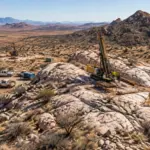
Simultaneously, the African continent is solidifying its role in the global lithium matrix. Atlantic Lithium’s Ewoyaa project in Ghana has transitioned from exploration success to advanced engineering and construction readiness, propelled by a landmark $210 million funding and development agreement with Zhejiang Huayou Cobalt.
| Project Metric / Feature | Thacker Pass (USA) | Ewoyaa (Ghana) |
|---|---|---|
| Primary Deposit Type | Sedimentary Claystone (Brine/Clay) | Spodumene Pegmatite (Hard Rock) |
| Stage (August 2026) | Active Construction (Phase 1) | Development & Infrastructure Prep |
| Target Production Window | Late 2027 | Late 2027 / Early 2028 |
| Strategic Partner / Backer | General Motors / US DOE | Zhejiang Huayou Cobalt |
| Design Capacity (Phase 1) | ~40,000 tpa LCE | ~350,000 tpa spodumene concentrate |
The Huayou partnership provides both the capital strength and technical off-take security necessary to de-risk Ewoyaa. By targeting initial production of high-grade spodumene concentrate toward late 2027, Ewoyaa will feed both international chemical converters and Huayou’s expanding global refining network, diversifying global supply away from traditional South American and Australian hubs.
The BESS Surge: Expanding Beyond the EV Narrative
While traditional market commentary has heavily focused on automotive adoption curves, the structural divergence in 2026 lies in the explosive growth of stationary battery energy storage systems (BESS).
Driven by aggressive grid decarbonization targets, data center power demands, and utility-scale solar and wind integration, BESS installations across North America, Europe, and China have surpassed prior forecasts. Energy storage applications now account for nearly 25% of total lithium consumption, providing an unyielding baseline demand vector that cushions the market against any temporary softening in passenger EV sales.
Operators and system integrators are prioritizing supply chain security, locking in multi-year offtake contracts that reinforce the stability of the $18,000/t floor.

2026–2027 Price Scenario Analysis
Market analysts evaluating the 12-to-24-month horizon generally cluster their outlooks into three distinct macroeconomic cases:
- Base Case ($18,000 – $25,000/t): Assumes steady EV and BESS demand growth (~18% annually), disciplined supply additions, and nominal project execution delays at greenfield sites like Thacker Pass and Ewoyaa. This aligns with producer guidance from majors like SQM and reflects a balanced, structurally tight market.
- Bear Case ($12,000 – $15,000/t): Driven by faster-than-expected capacity ramps in China, aggressive substitution by sodium-ion chemistries in entry-level mobility segments, and smoother-than-anticipated commissioning across global pipelines.
- Bull Case ($26,000 – $32,000+/t): Triggered by unexpected operational setbacks at major Australian or South American mines, tightening geopolitical trade barriers, or an acceleration in grid storage deployments that outstrips primary refining output before 2027 greenfields come fully onstream.
For ongoing operational insights across critical minerals and energy transition metals, explore our market intelligence reports or review our broader coverage on capital return strategies in resource markets.
Conclusion
As the industry looks past the summer of 2026, the narrative surrounding lithium has matured. The speculative mania of previous years has given way to disciplined engineering, realistic cost modeling, and strategic sovereign investment. With the $18,000/t floor holding firm and flagship projects like Thacker Pass and Ewoyaa methodically advancing toward their 2027 production windows, the global lithium sector is proving its long-term viability as an indispensable cornerstone of the energy transition.