By Salini Krishnan
The global push for electrification has placed an unprecedented strain on copper supply. With traditional deposits maturing and grades declining, the mining industry has increasingly turned to "frontier" regions and advanced technology to fill the gap. In the heart of the Zambia-DRC Copperbelt, KoBold Metals is attempting to rewrite the exploration playbook by deploying artificial intelligence (AI) to find what humans and traditional geological surveys have missed for decades.
In early May 2026, KoBold officially broke ground on the Mingomba copper project in Zambia. Representing a $2.3 billion investment, the project is not merely a new mine; it is a high-stakes test of whether Silicon Valley’s data-centric approach can succeed in the complex, high-risk world of deep-level mineral extraction. Backed by a roster of billionaire investors, including Bill Gates and Jeff Bezos, KoBold is betting that its "digital twin" mineral systems can compress a 20-year discovery cycle into less than a decade.
The Mingomba Discovery: A Mile Beneath the Surface
The Mingomba deposit, located near the border of Zambia and the Democratic Republic of Congo (DRC), has long been known to contain copper. However, the true scale and grade of the resource remained elusive until KoBold applied its proprietary AI algorithms to historical data and new geophysical surveys.
By analyzing massive datasets: ranging from satellite imagery and geochemical soil samples to historical drilling logs: KoBold’s platform identified a high-grade ore body approximately 1,700 meters (5,576 feet) underground. At this depth, the deposit is one of the deepest in the world, positioned far below the reach of conventional prospecting methods. The discovery has drawn comparisons to the massive Kamoa-Kakula mine in the DRC, currently one of the highest-grade large-scale copper operations globally.

For Zambia, Mingomba is a cornerstone of President Hakainde Hichilema’s goal to triple the country’s copper production to 3 million tonnes annually by the mid-2030s. The project is expected to produce over 300,000 tonnes of copper per year at full capacity, cementing its status as a critical asset in the global mining landscape.

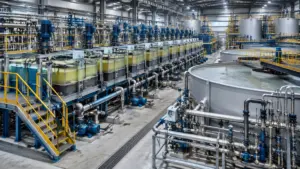
Effective data integration requires constant monitoring. This control room setup illustrates how modern mining operations coordinate real-time logistics and safety metrics.
Building a Digital Twin of the Earth’s Crust
At the core of KoBold’s strategy is the concept of a "digital twin" for mineral systems. While digital twins are common in manufacturing and aerospace, their application in exploration is revolutionary. KoBold builds a four-dimensional model of the subsurface, simulating geological processes over millions of years to predict where copper may have concentrated.
The AI does not simply "find" the ore; it quantifies uncertainty. By running thousands of simulations, the technology directs geologists to the specific coordinates where a drill hole will provide the most valuable information. This "value of information" (VOI) framework allows the company to de-risk exploration in high-cost environments. In a region like the Zambia-DRC Copperbelt, where drilling a single deep hole can cost hundreds of thousands of dollars, reducing "dry holes" is the difference between a viable project and a financial failure.
This data-heavy approach is essential as the industry shifts toward critical minerals required for the energy transition. As surface-level deposits are exhausted, the "low-hanging fruit" of the mining world is gone. The next generation of mines will be found through computation as much as through traditional field geology.
High-Stakes Geopolitics and the Silicon Valley Connection
The financial backing of KoBold Metals reads like a "who’s who" of the tech and finance elite. Through Breakthrough Energy Ventures, Bill Gates and Jeff Bezos have signaled that mining is no longer a "dirty" old-world industry but a critical infrastructure component for a green future. Other investors include Andreessen Horowitz, Michael Bloomberg, and Ray Dalio.
This influx of venture capital into the African mining sector marks a shift in the geopolitical landscape. For years, Chinese state-backed firms have dominated the Zambia-DRC Copperbelt, securing off-take agreements and infrastructure deals. KoBold’s presence represents a concerted effort by Western interests to secure supply chains for copper, lithium, and cobalt.
The Mingomba project is also a test of Zambia's revamped mining code and its attractiveness to foreign direct investment. By partnering with local entities and international majors, KoBold is navigating a complex regulatory environment that has historically seen significant volatility. The company’s success could pave the way for other tech-driven exploration firms to enter the region.

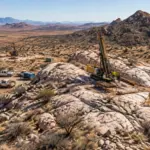
Active extraction in underground environments like those at Mingomba requires advanced drilling equipment to navigate complex geology.
Operational Realities: Depth and Water
While the AI has been successful in identifying the ore, the physical extraction poses significant engineering challenges. The Mingomba mine will operate in one of the wettest mining districts in the world. Managing groundwater at depths exceeding 1,500 meters requires a massive pumping infrastructure and sophisticated water management strategies.
Furthermore, KoBold is an exploration-first company. Moving from a data science firm to a mine operator is a transition fraught with risk. The company has already begun shaft sinking and engineering work, even before completing a full definitive feasibility study: a move intended to "fast-track" production by 2030. This strategy reflects a "move fast and break things" Silicon Valley ethos, but in mining, breaking things can result in billion-cost overruns or environmental hazards.
Industry analysts are watching closely to see if KoBold can maintain its timeline. As seen in other copper production reports, production growth is often tempered by inflationary pressures and technical bottlenecks.

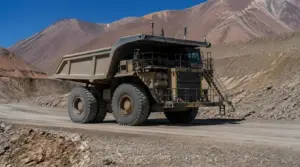
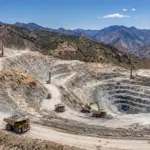
Large-scale machinery is the backbone of the Copperbelt. Modern trucks like this are increasingly equipped with telemetry to feed data back into AI models.
The 2026 Outlook: A New Standard for Exploration?
As of May 2026, KoBold Metals stands at the frontier of the "AI for Mining" movement. The Mingomba project has moved past the theoretical stage and into the capital-intensive phase of construction. If the mine achieves its production targets of 300,000 tonnes per year, it will validate the use of machine learning as the primary driver for greenfield discovery.
Beyond Zambia, KoBold is applying its technology to over 60 projects across four continents, searching for lithium in the DRC and nickel in North America. The goal is to create a "Google Maps" of the Earth’s crust, identifying the resources necessary for a carbon-neutral economy.
The success of the Zambia-DRC Copperbelt expansion will likely depend on three factors:
- Algorithmic Accuracy: Can the AI continue to predict grade and continuity as drilling progresses?
- Infrastructure Support: Will the Zambian power grid and rail networks support a mine of this magnitude?
- Commodity Pricing: Will copper prices remain high enough to justify the $2.3 billion development cost at such extreme depths?
Conclusion
The entry of frontier AI into the Copperbelt is a definitive signal that the mining industry is entering a new era. By blending the computational power of Silicon Valley with the grit of traditional geology, KoBold Metals is attempting to unlock a resource that could be vital for the global energy transition. For operators and investors, the Mingomba project is more than just a mine: it is the blueprint for the future of mineral exploration.

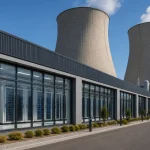
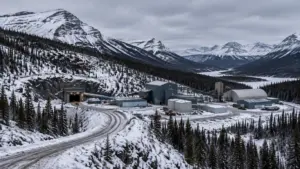
As operations move into 24/7 construction, the infrastructure at Mingomba will become a landmark of technological advancement in the Southern African mining sector.
Share this Insight
Is AI the answer to the global copper shortage? Join the conversation on LinkedIn or X (formerly Twitter) using #MiningTech #CopperBelt #KoBoldMetals #CriticalMinerals.