By Charles Pitts

The global lithium market has entered a period of structural realignment as of June 2026. After the volatility of the mid-2020s, the supply chain is no longer defined by a simple race for volume but by the strategic pursuit of margin and jurisdictional security. With lithium carbonate prices stabilizing in the mid-USD 20,000 range, the “winners” of 2026 are emerging as those who have successfully navigated the transition from rapid expansion to operational efficiency and non-Chinese midstream integration.
As of early June, battery-grade lithium carbonate spot prices in Northeast Asia are holding steady at approximately US$24,100 per ton. This represents a significant recovery from the 2025 lows, driven by a tightening supply-demand balance and a series of geopolitical export restrictions that have re-rated the risk premium for critical minerals.
Lithium price forecast 2026: Base, Bull, and Bear cases
The 2026 outlook is characterized by a shift from the surplus seen in 2025 to a projected deficit of 22,000 to 80,000 tons of lithium carbonate equivalent (LCE). This deficit is primarily the result of multi-year underinvestment in greenfield projects during the 2024 downturn and the recent suspension of raw mineral exports from key African hubs like Zimbabwe.
| Scenario | Price Forecast (LCE / ton) | Key Drivers |
|---|---|---|
| Base Case | US$18,000 – US$26,000 | Steady EV demand growth (17-20%); successful ramp-up of Tier-1 brownfield expansions. |
| Bull Case | US$28,000 – US$32,000 | Accelerated grid storage demand (up 55% YoY); significant delays in non-Chinese refining projects. |
| Bear Case | US$12,000 – US$15,000 | Oversupply from rapid Chinese lepidolite expansion; slowdown in EU/US EV adoption rates. |
Investors and operators are closely watching the rare earths supply chain in 2026 as a bellwether for lithium. The export restrictions enforced by China in late 2025 have intensified the focus on domestic “mine-to-magnet” capabilities in the West, a trend that is mirrored in the lithium sector.
More Read

Identifying the upstream winners: Margin over volume
In the upstream sector, the winners are no longer just the largest producers but those with the lowest cost-on-curve and the most secure offtake agreements. Low-cost brine operations in South America and high-grade hard-rock mines in Australia continue to dominate the margin rankings.


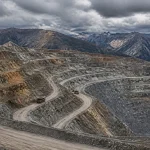
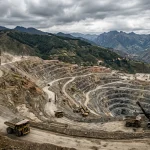
High-margin hard-rock operations in Australia and the Americas are leveraging autonomous technology to maintain profitability in a volatile price environment.
Companies that have integrated autonomous haulage systems are seeing operational cost reductions of 12-15%, allowing them to remain profitable even in a bear-case price environment. Furthermore, jurisdictions that have prioritized mineral security, such as Peru, are attracting significant capital. Peru’s strategic pivot to lithium has positioned it as a critical counterweight to the traditional “Lithium Triangle,” providing investors with a new high-growth hub.
More Read

The Upstream “Winner” Profile:
- Operating Cash Cost: Below US$6,000/t LCE (Brine) or US$600/t (6% Spodumene).
- Offtake Strategy: 70%+ committed to non-Chinese converters or Western OEMs.
- Operational Maturity: Post-commissioning with proven nameplate capacity.
Midstream: The rise of non-Chinese refining
The most significant shift in the 2026 supply chain is occurring in the midstream. For a decade, China processed nearly 75% of the world’s lithium. Today, that monopoly is eroding. The operational launch of the Tesla lithium refinery in Texas in early 2026 marks a turning point for North American supply chains.
The “winners” here are refiners that have secured long-term feedstock and are located in jurisdictions that qualify for Inflation Reduction Act (IRA) or similar EU Critical Raw Materials Act subsidies. These facilities are capturing a “security premium” from OEMs desperate to de-risk their supply chains from Chinese processing chokepoints.

Modern control rooms and data-driven management are essential for midstream converters to optimize recovery rates and chemical purity.
However, midstream players face a dual challenge: high capital expenditure and a shortage of technical expertise. Successful companies are those that have partnered with established chemical engineering firms or have acquired proprietary DLE (Direct Lithium Extraction) technologies to bypass the traditional evaporation pond timeline.
Rare earths supply chain 2026: The diversification parallel
The lithium narrative is inseparable from the broader rare earths supply chain. In 2026, the scarcity of separated rare earth oxides: specifically Neodymium (Nd) and Praseodymium (Pr): has created a blueprint for lithium’s future.
Just as the West is scrambling to build domestic separation plants, lithium refiners are realizing that the value lies in the final chemical conversion step. Integrated companies that control both the mine and the refinery are better positioned to weather the “margin squeeze” that occurs when spodumene prices rise faster than finished carbonate or hydroxide prices.
Key risks to the 2026 outlook
Despite the constructive outlook, several risks could disrupt the 2026 equilibrium:
- Technology Substitution: Rapid advancements in sodium-ion batteries for stationary storage could cap the upside for lithium demand.
- Permitting Speed: While mining permit reforms in 2026 have improved timelines in some regions, bureaucratic bottlenecks in the US and EU remain a primary threat to supply growth.
- Geopolitical Volatility: New export duties or resource nationalism in emerging markets could lead to temporary but severe supply shocks.

Technical execution remains the primary risk for junior miners attempting to transition from exploration to production.
Summary: The 2026 Winner’s Circle
As the industry looks toward the second half of 2026, the winners are those who recognized that the lithium “gold rush” has evolved into a sophisticated industrial race. The focus has shifted from merely finding lithium to processing it efficiently, cleanly, and locally.
For investors, the most resilient opportunities are found in low-cost producers with Tier-1 assets and midstream converters with strategic Western offtake. For operators, the priority is clear: lower the cost curve through automation and secure the feedstock that will fuel the gigafactories of 2030.
The lithium price forecast for the remainder of 2026 remains constructive, but the era of “easy money” in the sector has passed. Success now requires a combination of technical excellence, geopolitical savvy, and a deep understanding of the increasingly complex global supply chain.
Market Snapshot: June 7, 2026
- Lithium Carbonate (99.5% China): 163,000 CNY/t
- Spodumene Concentrate (6% CIF China): US$1,150/t
- Global EV Sales Growth (Jan-May 2026): +18.4% YoY