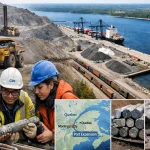
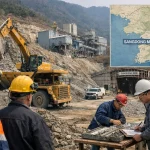
GEBENG, Malaysia : Lynas Rare Earths (ASX: LYC) has successfully produced the first batch of separated samarium oxide at its Malaysian refinery, ending a decades-long Chinese monopoly on the heavy rare earth element.

The achievement, confirmed Friday, marks a decisive shift in the global critical minerals landscape. For the first time, a commercial volume of high-purity samarium oxide has been processed outside of Chinese borders. This isn't just a technical win for Lynas; it’s a geopolitical firebreak.
Byline: Salini Krishnan
The Separation Strategy
The production at the Gebeng facility, located on the eastern coast of the Malaysian peninsula, arrived ahead of schedule. It follows a concentrated A$180 million expansion effort designed to pivot Lynas from a producer of light rare earths into a diversified heavy rare earth (HRE) powerhouse.
Samarium oxide is a critical component in samarium-cobalt (SmCo) magnets. These are the high-performance workhorses of the aerospace and defense sectors, prized for their ability to maintain magnetic strength at temperatures that would demagnetize standard neodymium-iron-boron alternatives.
More Read

"This is a significant milestone," said Lynas CEO Amanda Lacaze. It’s an understatement. Until today, every gram of separated samarium used in Western defense systems likely passed through a Chinese supply chain. That stranglehold just loosened.


Breaking the Chinese Stranglehold
China’s 2025 decision to restrict rare earth exports was the catalyst the industry needed: or perhaps the warning it couldn't ignore. The restriction sent shockwaves through the Skillings Mining Intelligence networks, forcing a rapid re-evaluation of Western "just-in-time" supply chains.
More Read

Lynas’s success in Malaysia is the direct result of that pressure. The company has spent the last year hammering out a separation process for heavy rare earths that was previously considered the exclusive domain of Chinese state-owned enterprises.
The strategic calculus here isn't subtle: separation is the bottleneck. Anyone can dig a hole in the ground, but separating 17 elements with near-identical chemical properties is a nightmare. Lynas just proved they can do it. Per facility. That’s not a typo.
The A$180 Million Bet
The A$180 million expansion at Gebeng is part of a broader phased rollout announced in late 2025. This capital injection allowed for the installation of new solvent extraction circuits specifically tuned for the heavier end of the Lanthanide series.
Beyond samarium, the plant is already scaling production of dysprosium and terbium: two other "heavy" elements essential for the AI infrastructure race.
The math for Lynas is brutal but effective. By moving up the value chain into HRE separation, they aren't just selling ore; they are selling national security.

The US Department of War Connection
The timing of the production batch coincides with a deepening partnership between Lynas and the United States government. Lynas is currently executing a major supply deal with the U.S. Department of War (the specialized defense procurement arm focused on strategic materials).
The Department of War's involvement is a clear indicator of the stakes. In the Pentagon’s view, a supply chain that relies on a geopolitical rival for missile guidance systems is a liability.
Lynas is currently building a separate HRE separation facility in Texas, but the Malaysian throughput provides the immediate volume needed to de-risk American stockpiles. The Texas facility will eventually mirror the capabilities of Gebeng, creating a dual-hemisphere shield against export bans.
Regulatory Realities in Malaysia
While the production is a triumph, it comes against a backdrop of complex local politics. The Malaysian government recently renewed Lynas’s operating license for 10 years, but the deal came with strings attached.
Lynas must transition its operations to address long-standing concerns regarding radioactive waste. The company is required to halt processes that produce radioactive residues within the next five years. To comply, Lynas is completing a permanent disposal facility (PDF) in Pahang by the end of 2026.
Critics have long pointed to the environmental footprint of rare earth processing. However, the Malaysian government appears to have weighed those concerns against the economic reality: Malaysia is now the largest commercial producer of separated rare earths outside of China. That is a massive lever in international trade negotiations.

Market Impact and the 2026 Outlook
What happens next? The market for samarium oxide is relatively small compared to neodymium, but its importance is outsized. We are looking at an inflection point.
The availability of non-Chinese samarium will likely trigger a wave of new contracts from Tier-1 aerospace manufacturers who have been desperate to scrub Chinese minerals from their balance sheets.
Here is the kicker: Lynas isn't stopping at samarium. The Gebeng expansion is designed to be modular. As the company refines its HRE circuits, we can expect a steady stream of "firsts" for other elements in the coming 18 months.
For the mining industry, the lesson is clear. The era of Chinese dominance in processing is ending not because of a lack of resources, but because of a surge in technical expertise and government-backed CAPEX elsewhere.
A Structural Pivot
This production run is more than a press release; it’s a structural pivot. For years, the narrative was that Western companies couldn't compete with Chinese rare earth costs. But as export controls tighten, the price of the mineral becomes secondary to the certainty of its arrival.
Lynas has effectively decoupled a segment of the magnet market from Beijing. That’s a move that will be felt from the boardroom in Perth to the procurement offices in Washington D.C.
The strategic minerals corridor is growing. And right now, Malaysia is the linchpin.

Social Media Snippet (LinkedIn/X):
? Breaking: Lynas Rare Earths (ASX: LYC) has produced the first-ever batch of separated samarium oxide outside of China at its Gebeng plant in Malaysia. A$180M expansion + US Department of War support = a major blow to the Chinese monopoly. This is how you de-risk a global supply chain. #Mining #RareEarths #Lynas #SupplyChainResilience #SkillingsMining
Reference Links
For further analysis on critical mineral supply chains and the evolving regulatory landscape, explore our deep dives: