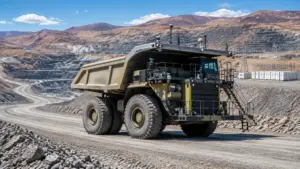
The mining industry has spent decades perfecting ways to pull metal out of rock. Now it’s being forced to reinvent the entire process.

2026 marks the inflection point where extraction isn’t just about getting more metal faster: it’s about doing it without destroying everything in the process. The pressure is coming from all sides: tightening environmental regulations, energy costs that keep climbing, and commodity markets that demand both higher purity and lower carbon intensity.
The metallurgy sector is responding with technologies that would have seemed like science fiction a decade ago. Plasma torches. AI-optimized leaching. Bacteria that eat through ore. And the results aren’t theoretical anymore: they’re showing up in full-scale operations with numbers that are hard to ignore.
The Green Chemistry Revolution
Traditional metallurgical extraction relies on a brutal chemical toolkit. Sulfuric acid. Cyanide. Solvents that require hazmat suits and create waste streams that persist for decades.
That’s changing fast.
More Read

Bio-based and ionic liquid solvents are replacing toxic chemical processes across rare earth element operations. These aren’t marginal improvements. Ionic liquids enable precise separation of REEs with minimal waste generation, and many formulations are both biodegradable and reusable. That means closed-loop processing systems that recirculate solvents instead of creating disposal problems.


The sophistication is increasing rapidly. Hybrid extraction methods now combine ionic liquids with supercritical CO₂ to enhance selectivity while slashing energy consumption. The CO₂ acts as a tunable solvent: adjust the pressure and temperature, and you can target specific metals with surgical precision.
More Read

Hydrometallurgical processes have also evolved beyond recognition. Organic acids like citric and oxalic acid are replacing traditional strong acids in metal recovery operations. The advantage isn’t just environmental: these processes operate at lower temperatures and pressures, which translates directly to reduced energy costs and simpler equipment requirements.
But the most dramatic shift is electrochemical separation. Using electric potential differences to selectively deposit rare earth ions, these systems achieve exceptional purity levels while integrating seamlessly with renewable energy sources. Solar and wind power can directly drive the separation process, enabling genuinely carbon-neutral processing.
And that integration matters. Because the mining industry’s carbon footprint isn’t primarily from diesel trucks anymore: it’s from the processing plants that turn ore into refined metal.
Energy Efficiency: The Numbers Get Real
Energy costs represent 30-40% of total operating expenses for most metallurgical operations. Which means even modest efficiency gains translate to significant margin improvements.
The breakthroughs here aren’t modest.
Plasma and microwave-assisted extraction technologies are demonstrating 40% energy savings and 25% higher yields compared to conventional thermal methods. Those aren’t projections or lab results. Those are production numbers from facilities that went operational in 2025 and are now ramping through 2026.

Plasma-assisted extraction uses ionized gases to break down ore structures at the molecular level. The process is violent and precise: temperatures reach 10,000°C in microseconds, but only where needed. The result is rapid liberation of target metals without the prolonged heating cycles that waste energy processing gangue material.
Microwave processing delivers similar advantages through a different mechanism. Microwaves provide rapid, uniform heating at the molecular level, drastically improving leaching efficiency. Conventional roasting might take hours to achieve temperature equilibrium. Microwave processing reaches target temperatures in minutes.
Electric arc furnaces are replacing blast furnaces in steel production, fundamentally changing the industry’s energy profile. EAFs melt scrap metal using electrical energy instead of burning coal, cutting carbon emissions by up to 75% per ton of steel produced. The transition accelerated sharply in 2025, and 2026 is seeing major steel producers announce EAF conversions that would have been considered radical five years ago.
Hydrogen-based reduction is emerging as the ultimate zero-emission alternative for iron ore processing. Green hydrogen produced from renewable electricity can replace carbon as the reducing agent, eliminating CO₂ emissions from the steelmaking process entirely. The technology is expensive: but the cost curve is moving fast, and European steel producers are building commercial-scale facilities now.
AI Becomes Operational
The AI integration story in metallurgy has moved beyond pilot projects and proof-of-concept studies. It’s production infrastructure now.
Machine learning algorithms analyze complex datasets from mining operations and sensor networks, identifying optimization opportunities that human operators miss. The systems process thousands of variables simultaneously: ore composition, reagent concentrations, temperature gradients, flow rates: and adjust extraction parameters in real time to maximize yield while minimizing energy use.

AI-driven process control is particularly powerful in flotation circuits, where slight variations in pH, collector dosage, or froth stability can swing recovery rates by several percentage points. Traditional control systems react to changes. AI systems anticipate them, adjusting parameters before problems manifest.
Automated monitoring systems detect early equipment wear through vibration analysis, thermal imaging, and acoustic sensors. The practical benefit is predictive maintenance that prevents unscheduled downtime. A ball mill bearing that’s beginning to fail shows subtle changes in vibration signature days or weeks before catastrophic failure. AI catches those changes and schedules replacement during planned maintenance windows.
The integration extends to electrolytic processes, where real-time monitoring ensures consistent quality and maximum efficiency. Electrolytic cells are temperamental: electrode degradation, current distribution issues, and electrolyte composition changes all affect performance. Automated systems adjust parameters dynamically, maintaining optimal conditions that would be impossible to achieve with manual control.
The economic impact is measurable. Operations implementing comprehensive AI optimization are reporting 5-8% improvements in recovery rates and 10-15% reductions in energy consumption. At scale, those numbers represent tens of millions in annual cost savings per facility.
Advanced Separation: Nanotech Arrives
Nanotechnology has introduced separation capabilities that rewrite what’s economically recoverable.
Nanostructured membranes and selective adsorbents isolate rare earth elements with remarkable precision from complex ore bodies that would have been considered waste material a decade ago. Nanoporous materials like graphene oxide and functionalized silica selectively capture rare earth ions from mixtures containing dozens of other elements, reducing solvent requirements while offering reusability that improves process economics.
The selectivity is extraordinary. Traditional separation might achieve 90-95% purity through multiple stages. Nanotech-based systems reach 99%+ purity in single-stage processing.

Innovations in electrolytic cell design have expanded the range of metals that can be extracted efficiently. Improved electrode materials and current densities now enable economic extraction of refractory metals like tantalum and niobium that previously required extreme processing conditions. The technology is opening up deposit types that couldn’t be developed profitably before.
The implications ripple through project economics. Marginal deposits become economically viable. Low-grade ores that would have gone to waste dumps now justify processing. The resource base expands without discovering a single new deposit.
The 2026 Reality Check
Full-scale implementation is the defining characteristic of 2026. Technologies that were emerging in 2024 and proving out in 2025 are now being deployed at production scale across multiple operations.
Major producers aren’t running pilots anymore. They’re building plants. Rio Tinto, BHP, and Glencore all have metallurgical facilities either operating or under construction that incorporate multiple next-generation technologies simultaneously. The investment cycle has shifted decisively from research to deployment.
But adoption isn’t universal. The capital requirements remain substantial, and many mid-tier operators face difficult decisions about retrofitting existing facilities versus greenfield investment. The technology works: the financial engineering to fund it remains challenging.
Environmental regulations are accelerating the transition whether companies are ready or not. European Union standards effective in 2026 set carbon intensity limits that are impossible to meet with conventional processing technologies. Chinese environmental enforcement has tightened dramatically, forcing domestic smelters to upgrade or shut down. The choice isn’t technology versus status quo anymore. It’s technology versus closure.
The mining industry is discovering that metallurgical efficiency isn’t just about margins: it’s becoming table stakes for operating licenses and market access. Customers increasingly demand documented sustainability performance, and metallurgical efficiency is the most visible metric.
What emerges from 2026 is an industry bifurcation. Operators that can deploy next-generation metallurgy gain cost advantages and market access that compounds over time. Those that can’t face margin compression and eventual obsolescence.
The metal still comes from rock. But how it gets from rock to refined product is changing faster than at any point in the industry’s history. And that transformation is accelerating, not plateauing.