As of May 2026, the Canadian mining landscape has reached a structural tipping point. The convergence of an aggressive federal carbon price: now sitting at $110 per tonne of CO2e: and the rapid maturation of battery-electric vehicle (BEV) technology is forcing a fundamental rethink of mine design.
For operators across the Canadian Shield and the Rockies, electrification is no longer a pilot-project curiosity or a peripheral ESG goal. It has become a core strategy for protecting margins against escalating fuel costs and securing access to institutional capital. As diesel prices in regions like British Columbia hover near $2.79 per litre, the “shadow cost” of traditional combustion is becoming too heavy to ignore.
In this deep-dive, we explore how mine electrification will redefine operational expenditure (Opex), ESG reporting trends, and the competitive standing of Canadian projects through 2026 and beyond.
The Opex Equation: Diesel vs. Electric in a High-Tax Environment
The primary driver for electrification in 2026 is the direct impact of the federal Output-Based Pricing System (OBPS). With the carbon price scheduled to rise by $15 annually until it reaches $170/t in 2030, the fiscal penalty for burning diesel is intensifying.
More Read

For a typical open-pit operation, diesel consumption can account for 15% to 25% of all-in sustaining costs (AISC). In Canada, this is further compounded by the Clean Fuel Regulations, which add approximately 7 cents per litre in 2026, on track to more than double by the end of the decade.

Underground Economics: The Ventilation Win
Underground mines are the early winners in the transition. The financial case for BEVs underground is not just about fuel; it is about the air.
- Reduced Ventilation: Diesel engines generate heat and particulate matter that require massive, energy-intensive ventilation systems. By switching to electric loaders and trucks, mines can reduce ventilation requirements by up to 50%.
- Maintenance Savings: BEV drivetrains have roughly 25% fewer moving parts than internal combustion engines. In the harsh environment of a deep-level mine, this translates to higher mechanical availability and lower long-term maintenance Opex.

A heavy-duty drill jumbo operating in an underground facility, where electrification significantly reduces ventilation costs.
More Read

Strategic Incentives: ITCs and Performance Credits
The Canadian federal government has cushioned the initial capital expenditure (Capex) of electrification through robust Investment Tax Credits (ITCs). These credits, targeted at Clean Technology Manufacturing and Adoption, allow operators to offset the “green premium” associated with purchasing electric fleets.
Furthermore, the Large Emitter Trading Systems (LETS) allow mines that outperform emissions benchmarks to generate and sell performance credits. For many mining operations in Canada, these credits have evolved from a theoretical accounting line into a tangible revenue stream that offsets electricity costs.
| Metric | Diesel-Intensive (Conventional) | Electrified (2026 Benchmark) |
|---|---|---|
| Carbon Tax Exposure | $110/t (Rising) | Near Zero (Scope 1) |
| Ventilation Opex | High (Primary cost driver) | Low (Focus on cooling/oxygen) |
| Maintenance Frequency | High (Engine/Transmission) | Low (Modular electric motors) |
| Energy Source | Global oil market volatility | Regulated/Contracted grid power |
ESG Reporting Trends: The Institutional Demand for Decarbonization
The shift toward electrification is also being driven by a transformation in how the industry reports its impact. In 2026, “mining ESG reporting trends” have moved beyond qualitative statements to granular, data-driven disclosures.
Investors and lenders, particularly those aligned with the International Sustainability Standards Board (ISSB) and IFRS S2, now demand clear pathways for Scope 1 and Scope 2 emissions. A mine’s ability to demonstrate a declining emissions-intensity curve is directly linked to its cost of capital.
Internal Carbon Pricing
Many major Canadian producers, including Agnico Eagle and Teck, now utilize an internal carbon price for project screening. Often set higher than the current government rate, this internal mechanism ensures that new projects: like the 2026 lithium developments: are resilient to future policy shifts.

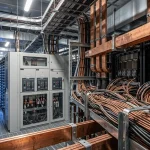
Surface infrastructure at a Canadian mine site, where integrated power grids are becoming essential for fleet charging.
Technical Realities: Charging, Grids, and the 2026 Roadmap
While the benefits are clear, the transition presents significant infrastructure challenges. Electrifying a large-scale haulage fleet requires more than just buying trucks; it requires a massive upgrade to site-wide power distribution.
- Trolley-Assist Systems: For open-pit mines with long uphill hauls, trolley-assist systems (overhead power lines) are becoming the standard. These systems allow trucks to bypass battery limitations on high-load climbs.
- Battery Swap vs. Fast Charge: In underground settings, the industry remains split. Some operators prefer battery-swapping stations to minimize downtime, while others are investing in high-power fast-charging hubs that can replenish a loader during a shift change.
- Grid Resilience: In provinces like Quebec and Ontario, low-carbon hydro and nuclear power provide a massive competitive advantage. For remote sites in jurisdictions with fossil-heavy grids, the “green” value of electrification is reduced unless paired with onsite renewables like wind or solar.

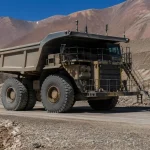
Open-pit operations must balance the logistics of charging infrastructure with the high-duty cycles of ore transport.
The 2026 Competitive Landscape
The reality for the Canadian mining sector in 2026 is that geography and policy have made electrification an economic necessity. Operations that fail to decarbonize are facing a widening “AISC gap” compared to their electrified peers.
Recent data suggests that Canadian mines using diesel-intensive fleets are seeing AISC figures $100 to $200 per ounce (for gold) higher than comparable operations in low-tax jurisdictions like Nevada. Electrification is the primary lever available to Canadian operators to close this gap and remain competitive on the global stage.
Conclusion: A Decade of Transformation
By the end of 2026, the industry will likely view the mid-2020s as the era when mining transitioned from a mechanical industry to a digital and electrical one. The combination of carbon pricing, ITCs, and investor pressure has created a permanent shift in how mines are built and operated.
For further insights into the technological shifts shaping the industry, visit the Skillings Mining Intelligence about us page or view our upcoming editorial calendar for in-depth reports on critical minerals and energy transition.

Advanced control rooms now monitor real-time energy consumption and charging status as part of daily production quotas.