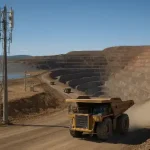
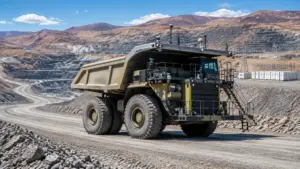
Luleå University of Technology, LKAB and Vattenfall are exploring whether Sweden’s abandoned iron mines can double as hydrogen vaults. Backed by the EU’s Just Transition Fund, the “SUV” project aims to transform mine shafts in Norrbotten into large-scale underground hydrogen storage (UHS) facilities to support fossil-free steelmaking. Across the Atlantic, the U.S. Department of Energy (DOE) and its National Energy Technology Laboratory (NETL) are running parallel feasibility studies.

The idea is straightforward but ambitious: convert redundant mine infrastructure—once drivers of coal and iron production—into banks for hydrogen, a fuel increasingly seen as critical for balancing renewable energy and decarbonizing heavy industry.
Why Underground Hydrogen Storage Matters
Hydrogen is widely regarded as a cornerstone for industrial decarbonization. According to the International Energy Agency, hydrogen demand could reach 180 million tonnes annually by 2030, largely from steel, chemicals, and transport. But storing hydrogen at scale is a bottleneck: above-ground tanks are costly and unsuitable for seasonal balancing.
That is where geology offers an edge. Salt caverns, depleted gas fields, and now disused mines provide naturally shielded, high-volume containment. Repurposing mines adds a sustainability benefit: existing shafts, tunnels, and access routes can cut civil engineering costs and extend the utility of mining legacies.
Research and Pilot Projects Gain Momentum
- Sweden’s SUV Project: Led by LTU with LKAB and Vattenfall, the project is investigating iron ore mines as storage sites for hydrogen used in green steel. The work is tied to HYBRIT, Sweden’s high-profile initiative to replace coking coal with hydrogen in steelmaking.
- HyUSPRe (EU): An EU-funded consortium analyzing porous reservoirs and mined caverns, with a focus on techno-economic models and environmental risk frameworks.
- I-WEST Region Study (U.S.): Researchers found that depleted gas reservoirs could store hydrogen at costs between US$1.30 and US$3.40 per kg, depending on cushion gas requirements and geology.
- DOE/NETL: The U.S. Hydrogen Shot program prioritizes underground storage in salt caverns and hard rock formations as part of its pathway to cutting hydrogen costs by 80% this decade.
- ERRIN Standards Initiative: Work in Europe is underway to codify safety, liner technology, and monitoring systems for mined, lined rock caverns.
Technical and Economic Challenges
While the concept is promising, significant hurdles remain:
More Read

- Capital intensity: Even retrofitting mines requires sealing, lining, and monitoring systems.
- Hydrogen losses: Leakage through fractured rock or reactions with residual minerals can reduce efficiency.
- Safety and regulation: Hydrogen embrittlement, microbial activity, and groundwater contamination risks complicate permitting.
- Policy dependency: Without carbon pricing or subsidies, commercial demand may not justify large-scale UHS investment.
The economics are highly site-specific, with geology dictating whether storage can be delivered at competitive cost.

Sweden’s Case Study: Linking Mines to Steel
Northern Sweden’s mines offer a showcase for hydrogen banking. The SUV project dovetails with LKAB’s broader ambition to become Europe’s leading supplier of fossil-free iron ore. If successful, the pilot could create a blueprint for re-using hundreds of mines across Europe. Crucially, it demonstrates a “just transition” model—transforming decommissioned industrial assets into enablers of net-zero growth.
Skillings Analysis
- Strategic repurposing: For miners, hydrogen storage offers a way to extend the value chain beyond extraction, leveraging assets that would otherwise be liabilities.
- Regional opportunity: Nordic countries are best positioned, with political support, abundant renewables, and suitable geology. North America may follow if DOE pilots succeed.
- Competitive edge: Mining firms that move early into UHS could gain advantage in future industrial hydrogen hubs, especially in steel and chemicals.
Looking Ahead
Within five to ten years, Europe is likely to see the first commercial mine-based hydrogen banks. For mining companies, this is more than a green transition story: it is a chance to redefine legacy assets as part of tomorrow’s energy infrastructure. With the EU Green Deal and U.S. Inflation Reduction Act accelerating hydrogen demand, the next quarter will show whether pilot projects attract sustained investor capital and regulatory momentum.
More Read

Mining executives should be asking not just what ore lies underground, but whether their old shafts might soon hold the fuel of the future.