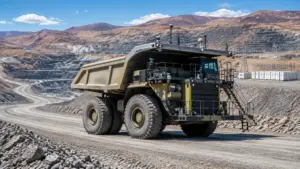
As mining-equipment demand accelerates alongside surging gold and copper prices, global OEMs like Sandvik AB, Epiroc AB, Caterpillar Inc., and Komatsu Ltd. are seeing a revival in orders not witnessed since the last commodity supercycle. Sandvik’s latest quarterly report confirmed a 16 percent organic rise in orders, with its mining segment soaring 24 percent year-on-year, underscoring how metal prices are shaping investment decisions across the sector.

Metal Prices Spark a Wave in Mining-Equipment Demand
Sandvik orders, gold and copper prices, mining capex, OEM equipment cycle, automation in miningGold trading above US $2,500 / oz and copper near US $4.20 / lb have reignited exploration, expansion, and modernization programs globally. Sandvik, which derives roughly 60 percent of its mining exposure from gold and copper, is directly benefiting from this boom in mining-equipment demand.
CEO Stefan Widing emphasized that “high prices for gold, copper, and other metals mean our customers have a great need to expand and use our products.” That expansion is materializing as miners replace aging fleets and accelerate purchases of high-efficiency, autonomous, and battery-electric equipment.
OEMs Ride the Same Upward Curve
Sandvik’s order surge is mirrored by peers such as Epiroc and Caterpillar, both reporting robust service revenues and backlogs driven by gold and copper operations.
According to Global Market Insights, the underground mining-equipment and services market is expected to grow at 6–7 percent CAGR through 2030, powered by sustained investment in electrified and automated fleets. Komatsu’s rollout of its FrontRunner AHS 2.0 in Chilean copper mines highlights this trend, reaffirming that the surge in mining-equipment demand extends across regions and commodities.
Why Metal Prices Amplify Equipment Orders
- Profit leverage: Rising gold and copper prices widen mine margins, unlocking liquidity for capital reinvestment.
- Expansion pressure: Higher prices accelerate pit expansions and brownfield extensions, all requiring new machinery.
- Fleet renewal: Mines advance equipment replacements to optimize fuel, safety, and maintenance costs.
- Exploration spillover: Elevated prices justify aggressive drilling, lifting ancillary mining-equipment demand for rigs and consumables.
Sandvik’s short order lead times make it a reliable proxy for mining capital expenditure cycles—often signaling the next 6–12 months of industry sentiment.
Skillings Analysis
- Confidence, not speculation: Sandvik’s order growth mirrors real operational expansion, not speculative buying.
- Profit squeeze ahead: Despite higher volumes, Sandvik’s EBITA slipped 6 percent year-on-year, as currency and cost inflation offset margin gains.
- Capex discipline crucial: If gold and copper prices correct, OEM order momentum could flatten by mid-2026.
Automation and the Next Wave of Mining-Equipment Demand
Data from Precedence Research shows the automated-mining-equipment market growing 9 percent annually through 2034, reaching nearly US $30 billion. Sandvik’s AutoMine™ and battery-electric drills are well-positioned to capture this expanding mining-equipment demand.
Modern procurement now extends beyond machinery: OEMs compete on digital ecosystems—data analytics, predictive maintenance, and software-based productivity solutions—that smooth earnings even as commodity prices fluctuate.
More Read

Risks and Forward Outlook
Commodity volatility remains the prime threat to mining-equipment demand. A sharp decline in gold or copper prices could trigger order deferrals. Inflation in steel, semiconductors, and logistics continues to pressure margins. Yet Sandvik’s ongoing capacity expansion in Finland and Malaysia signals confidence that the order cycle will persist.

Investment banks like Rothschild & Co. recently upgraded Sandvik to “Buy”, predicting a multi-year hard-rock equipment supercycle anchored in sustained gold and copper production.
Final Take: A Modern Gold Rush
The 2025 surge in mining-equipment demand marks more than a short-term upswing—it reflects a structural shift in how mining companies allocate capital toward productivity, safety, and sustainability.
If current metal prices hold through the Christmas-quarter procurement window, Sandvik’s Q4 and early-2026 performance could confirm what many in the industry already suspect: a full-fledged mining-equipment boom is underway, reshaping OEM priorities and redefining the economics of modern extraction.