By Charles Pitts

As of late March 2026, the mining industry has reached a definitive crossroads. The era of voluntary ESG (Environmental, Social, and Governance) reporting: once dismissed by some as a public relations exercise: has been replaced by a landscape of mandatory compliance, algorithmic scrutiny, and high-stakes geopolitical maneuvering.
While political backlash against “woke” investing continues to dominate headlines in the United States, the operational reality for global miners is vastly different. Institutional investors, now managing over $22 trillion in assets under nature-risk screens, are no longer asking for ESG narratives; they are demanding verifiable data. From the implementation of GRI 14 standards to the integration of AI-driven tailings monitors, the social license to operate is being redefined by ten critical trends.
1. The Transition from Voluntary to Mandatory Disclosure
The most significant shift in 2026 is the convergence of global reporting standards. Jurisdictions representing more than 50% of global GDP have now adopted the International Sustainability Standards Board (ISSB) IFRS S2 climate disclosure requirements. For miners, this means that emissions accounting and water management data are now treated with the same legal weight as financial statements.
The implementation of GRI 14: Mining Sector guidelines has further standardized reporting on biodiversity and community impact. This move toward “enforceable compliance” has eliminated the ambiguity that allowed for greenwashing in previous years, forcing junior and mid-tier miners to catch up with majors or risk being shut out of Western capital markets.
More Read

2. ESG as a Financial Gatekeeper
The market for ESG compliance in mining is no longer a niche service; it is a $9.55 billion industry. In 2026, ESG performance is the primary “gatekeeping mechanism” for capital. Projects that cannot demonstrate a clear path to net-zero or fail to meet stringent biodiversity hurdles are seeing their cost of capital rise by as much as 300 basis points.

Investment firms are increasingly using nature-related risk assessments to screen portfolios. Recent research indicates that nature-related risks: such as water scarcity or habitat destruction: could reduce mining earnings by up to 25% over a five-year horizon. This financial reality has neutralized much of the political debate surrounding ESG, as fiduciaries prioritize long-term asset protection over ideological leanings.
3. AI Governance and the Digital “Black Box”
The rapid deployment of Artificial Intelligence (AI) in mining has created a new ESG frontier: digital governance. While AI-driven systems are optimizing ore recovery and reducing energy consumption, they also present governance gaps.
More Read

Operators are now being audited on the “ethics of their algorithms.” Questions regarding AI bias in hiring, automated safety decisions, and the transparency of predictive maintenance are becoming standard in ESG assessments. For a deep dive into how technology is reshaping strategic operations, our analysis of Almonty Industries’ Sangdong Mine highlights the intersection of modern tech and geopolitical necessity.

4. The “Nature-Positive” Mandate and TNFD
The Taskforce on Nature-related Financial Disclosures (TNFD) has moved from a pilot phase to a core requirement for over 730 global organizations. In 2026, miners are expected to be “nature-positive,” meaning they must demonstrate that their operations contribute to an overall net gain in biodiversity.
This is particularly relevant in sensitive regions like the Amazon or the Arctic. Investors are utilizing satellite-based tracking to monitor land-use changes in real-time. Failure to maintain these standards doesn’t just result in a poor ESG score; it can trigger immediate divestment from major pension funds.
5. Geopolitical Fragmentation and Ethical Sourcing
As the world splits into competing trade blocs, the definition of “ethical sourcing” has taken on a geopolitical edge. The US-led Mineral Security Partnership (MSP) and similar alliances are prioritizing “friend-shoring.”
In 2026, the ESG profile of a mine is often synonymous with its country of origin. Projects in stable jurisdictions that adhere to Western labor and environmental standards are receiving premium valuations. For example, Norway’s Fen Project has become a benchmark for how European deposits can leverage high ESG standards to secure domestic supply chains for rare earths.
6. Tailings Safety and the Shadow of Liability
The Global Industry Standard on Tailings Management (GISTM) has become quasi-regulatory. Following landmark rulings in the UK High Court regarding the Samarco disaster, corporate boards are now held directly liable for tailings failures.
In 2026, nearly 70% of ICMM member facilities conform to GISTM, but the focus has shifted to non-member juniors. Digital twins and real-time sensor arrays are now standard for any new tailings storage facility (TSF), providing a level of transparency that was unthinkable a decade ago.

Figure 1: Comparison of Tailings Monitoring Technology Adoption (2021 vs. 2026).
7. The Social License and Indigenous Sovereignty
The “S” in ESG has evolved from simple community engagement to a model of co-ownership and sovereignty. In 2026, getting a project permitted often requires a Free, Prior, and Informed Consent (FPIC) agreement that includes equity stakes for local Indigenous groups.
Strategic pacts, such as the recent agreement between Washington and Santiago, emphasize that securing global copper and lithium supply chains is impossible without addressing the social and environmental concerns of local populations.
8. Decarbonization Investment Realities
The price tag for a net-zero mining industry is becoming clearer: an estimated $450 billion investment is required by 2030. In 2026, the industry is grappling with how to fund this transition.
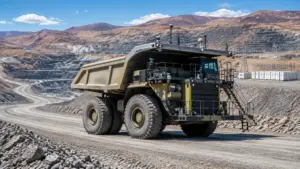
Electrification of haulage fleets and the integration of on-site renewable power are no longer “optional” for top-tier miners. We are seeing a widening gap between companies that can afford to decarbonize and those that cannot. This is driving a wave of M&A activity, as larger entities acquire junior assets to bring them under a more sustainable operational umbrella. A prime example is Lundin Mining’s strategic increase in the Vicuña District, where scale allows for more efficient ESG implementation.

9. Circularity and the “Forever Mine” Concept
The concept of a “mine life” is being replaced by the “forever mine”: a circular model where mine closure planning begins on day one of exploration. This includes planning for post-mining land use, such as renewable energy hubs or pumped-hydro storage.
In 2026, regulators are increasingly demanding that miners prove the circularity of their waste streams. Reprocessing old tailings for residual minerals has moved from a pilot concept to a significant secondary revenue stream for many operators, effectively turning environmental liabilities into assets.
10. The US Political Backlash vs. Corporate Resilience
Perhaps the most nuanced trend of 2026 is the divergence between political rhetoric in the United States and global corporate strategy. While several US states have passed “anti-ESG” legislation, most American mining companies have quietly continued to enhance their sustainability frameworks.
The reason is simple: mining is a global business. A US-based miner seeking to sell copper to a European automaker or secure financing from a global bank must still meet the highest international standards. The “backlash” has effectively forced companies to move away from vague slogans and toward “hard ESG”: data-backed, operationally integrated performance metrics that protect the bottom line.
Data Points: ESG Performance vs. Market Capitalization (2026)
| Metric | Top 25% ESG Scorers | Bottom 25% ESG Scorers |
|---|---|---|
| Average Cost of Capital | 4.2% | 7.8% |
| Regulatory Approval Time | 18 Months | 34 Months |
| Institutional Ownership | 62% | 24% |
| Revenue Growth (YoY) | +12% | +3% |
Source: SMR OPS Industry Data, March 2026.
The Path Forward
As we look toward the remainder of 2026, the message to mining executives is clear: the social license to operate is no longer a static permit; it is a dynamic, data-driven contract with global stakeholders. The “backlash” has served to trim the fat from ESG, leaving behind a leaner, more resilient framework focused on risk mitigation and long-term value creation.
Those who master the integration of AI governance, nature-positive operations, and ethical sourcing will not only survive the current geopolitical fragmentation but will thrive as the preferred partners for the energy transition.