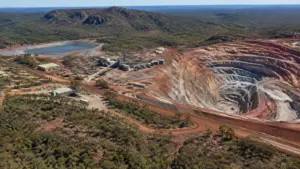
Legacy uranium mining and reclamation landscape in northwestern New Mexico.

By Penny Langford
New Mexico has barred new uranium mining leases on state trust lands, setting a state-level limit on development as the federal government moves to accelerate domestic mineral production and clarify how critical minerals can be recovered within federal coal leases.
Land Commissioner Stephanie Garcia Richard issued the order on Sept. 4, directing the New Mexico State Land Office to stop issuing new leases for uranium mining and related activities on state lands. The order also shifts the agency’s focus toward cleaning up abandoned uranium sites.
The decision does not cancel existing rights and does not apply to federal, private or Tribal lands. That jurisdictional split is central to the latest mining news: New Mexico can control the state mineral estate, but it cannot directly prevent the Bureau of Land Management from managing uranium or other mineral activity on federal land.
The order comes as Washington seeks to rebuild domestic uranium and broader critical-mineral supply chains. Yet the federal BLM’s latest interim guidance on critical mineral development associated with federal coal leases does not provide a blanket authorization for uranium development. The guidance applies mainly to critical minerals that are part of a coal resource or to locatable minerals developed under the Mining Law.

What New Mexico changed
The State Land Office said the order bans new leases for uranium mining and associated activities on state trust lands. It preserves valid existing mineral rights, meaning current leases are not automatically terminated.
According to the State Land Office announcement, New Mexico has more than 1,000 former uranium mining, milling and exploration sites. About 250 are considered abandoned because they lack a viable responsible party, while at least 50 involve state trust lands.

The state was once the largest source of U.S. uranium ore. The Grants district in northwestern New Mexico supplied more than half of U.S. uranium production during parts of the postwar period, but the state now has no operating uranium mines.
The order directs the State Land Office to prioritize cleanup and calls on the uranium industry and federal government to provide greater support for legacy remediation.
“This is not a shutdown of all uranium activity in New Mexico,” the action effectively establishes. It is a prohibition on new state-land leasing, while leaving other land categories under their existing legal frameworks.

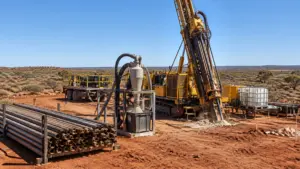
In-situ recovery infrastructure in the American Southwest.
The state-federal land divide
The New Mexico action applies only to land managed by the State Land Office. Federal mineral estates remain under federal authority, primarily through agencies such as the BLM, while private and Tribal lands are governed by their own ownership and permitting structures.
That means uranium projects located on federal land are not directly blocked by the state order. Industrial Info Resources reported that New Mexico had 10 uranium projects under consideration, with a combined potential investment value of about $1.37 billion. Four were located on federal land and therefore fell outside the state ban, according to the company’s reporting.
Those projects still face federal environmental review, state permits that may be required for water or infrastructure, technical challenges, financing constraints and community opposition. The state order may influence the political environment around federal projects, but it does not remove BLM’s authority over federal mineral leasing.
For developers, the ownership of the surface and mineral estate will therefore be an early project-screening issue. A proposal that appears geographically close to state trust land may still face a very different legal process depending on whether the uranium resource lies beneath federal, private, Tribal or state property.
What the BLM coal-lease guidance does, and does not, do
The BLM issued Instruction Memorandum IM 2026-025 and later posted Change 1, providing interim guidance for proposals to develop critical minerals associated with federal coal leases.
The guidance addresses two broad situations.
First, critical minerals embedded in the coal resource may be recovered after the coal is mined and sold, subject to the terms described in the memorandum. Once the coal has been sold and royalties paid, the material becomes the purchaser’s property, and subsequent recovery from coal or coal-derived products may not require an additional BLM mineral authorization.
Second, separate locatable minerals found in overburden or other rock units within a federal coal lease may be handled under the Mining Law and BLM’s surface-management rules at 43 CFR Subpart 3809. A coal lease alone does not necessarily give the lessee the right to mine and sell those minerals.
The distinction matters for uranium. The BLM guidance says it does not address leasable critical minerals or activities on acquired lands. Uranium is generally treated as a leasable mineral under the Mineral Leasing Act, rather than as a locatable mineral under the 1872 Mining Law.
As a result, the interim guidance should not be read as a new authorization for coal lessees to recover uranium. Uranium development associated with federal coal leases would require the applicable federal leasing and permitting pathway outside the narrow scope of IM 2026-025.
The guidance could nevertheless be relevant to projects seeking rare earth elements or other critical minerals from coal seams, overburden, coal waste or combustion products. It gives coal operators and BLM field offices a framework for determining whether existing mine plans and environmental reviews cover the proposed activity or whether additional approvals are needed.
The uranium supply gap remains large
New Mexico’s decision is unlikely to have a major immediate effect on U.S. reactor fuel supplies because the state has no active uranium mines and the order does not cancel the two existing state-land leases identified in recent reporting.
The longer-term issue is different. The United States remains heavily dependent on imported uranium and enrichment services even as domestic output increases.
| Supply-chain measure | Latest reported figure | Why it matters |
|---|---|---|
| U.S. uranium mine production, 2025 | About 2.1 million lb U₃O₈ | The highest annual output in years, but still small relative to reactor demand |
| U.S. utility uranium purchases, 2025 | 46.9 million lb U₃O₈-equivalent | Shows the scale of material required by the domestic reactor fleet |
| U.S.-origin share of 2025 deliveries | About 7% | Imports remained the primary source of delivered uranium |
| Leading foreign sources | Canada, Kazakhstan and Australia | Three countries supplied roughly three-quarters of deliveries |
| U.S. commercial enrichment capacity | About 4.3 million SWU per year at Urenco USA | Domestic enrichment remains concentrated in one commercial facility |
| New Mexico operating uranium mines | None | The state ban prevents new state-land leasing but does not remove current production |
The production and utility data are reported by the U.S. Energy Information Administration. The enrichment-capacity and fuel-cycle context is summarized by the World Nuclear Association.
U.S. mine output increased sharply in 2025, but it still represented only a small share of the uranium purchased for domestic reactors. Most delivered material came from foreign sources, led by Canada, Kazakhstan and Australia.
The enrichment picture is also constrained. Urenco USA’s New Mexico facility provides commercial enrichment capacity, but the United States does not yet have commercial-scale domestic enrichment for high-assay low-enriched uranium, or HALEU, at the scale required for a broad advanced-reactor buildout.

Industrial equipment at a civilian uranium enrichment facility.
Implications for developers and utilities
For domestic fuel-cycle developers, the New Mexico order raises the value of clear land and mineral-rights diligence. Companies pursuing uranium projects in the state will need to distinguish between state trust lands and other property categories before estimating permitting timelines or resource access.
Federal-land projects remain possible, but they will continue to depend on federal reviews, state-level permits where applicable, water access, reclamation plans and community acceptance. The state’s emphasis on legacy cleanup may also increase scrutiny of financial assurance and long-term environmental obligations.
For uranium producers, the order is more consequential as a signal than as an immediate supply shock. It shows that federal efforts to expand production may encounter state opposition rooted in unresolved environmental and public-health concerns.
Utilities face a different calculation. The ban does not change enrichment licenses, fuel contracts or nuclear-material accounting requirements. It does, however, reinforce the fact that a larger domestic mining base will not by itself deliver fuel security. Utilities also require reliable conversion, enrichment and fabrication capacity, including future HALEU supplies for advanced reactor designs.

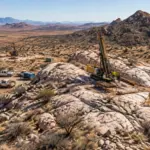
Geological sampling near coal-mine overburden benches.
The BLM guidance may help unlock some non-uranium critical-mineral opportunities associated with coal operations, but it does not eliminate the need for separate mineral rights or environmental review. For uranium, the legal path remains tied to federal leasing rules rather than the coal-lease guidance.
A policy conflict with practical limits
New Mexico’s order places the state on a different track from the federal push to increase domestic uranium production. The state is prioritizing cleanup before new leasing, while federal agencies are seeking faster development of minerals viewed as important to energy security and industrial resilience.
In practical terms, the two policies can operate at the same time. New Mexico can prohibit new uranium leases on state trust lands, while the federal government continues to process projects on federal land and evaluates critical-mineral recovery from coal-related materials under BLM guidance.
The immediate impact on U.S. uranium output is likely to be limited because New Mexico has no operating mines. The more important question is whether the state’s unresolved legacy sites, combined with a fragmented land and permitting system, will make it harder for developers to convert federal policy support into new production.
For operators, investors and utilities tracking mining news, the key takeaway is jurisdictional: the federal push has not overridden New Mexico’s state-land ban, and the BLM’s coal-lease guidance is not a substitute for uranium leasing authority. The path to a stronger U.S. fuel cycle will depend on progress across mining, cleanup, conversion, enrichment and fuel fabrication, not on any single policy change.