Hollywood loves a good mining disaster. The dramatic lighting, the claustrophobic tunnels, the heroic rescue: it makes for compelling cinema. But here’s the thing: most movies about coal miners get the actual mining part spectacularly wrong while occasionally nailing the human stories underneath all that coal dust.

If you’ve spent any time around actual coal operations, watching these films can feel like a strange exercise in frustration and nostalgia. The industry has evolved dramatically, yet filmmakers keep returning to the same visual shorthand: men with pickaxes, canaries in cages, and perpetual darkness punctuated by the occasional explosion.
Let’s break down where Hollywood earns its stripes and where it completely drops the ball.
The Ventilation Problem Nobody Talks About
Real coal mines don’t work the way movies show them. Period.
The biggest technical failure in virtually every coal mining film comes down to air. Movies love showing miners trapped in “dead zones” with no ventilation, gasping for breath while methane builds up around them. It’s visually dramatic. It’s also wildly inaccurate for any properly regulated modern operation.
More Read



Here’s the reality: coal seams naturally release methane, which becomes explosive at concentrations between 5-15%. Modern operations use sophisticated ventilation systems that keep methane levels well below 1%: with automated equipment shutdowns if concentrations rise above safe thresholds. Federal regulations require multiple escape routes and continuous air monitoring.
Those dramatic scenes of miners isolated underground without communication? Conditions that haven’t existed in properly regulated mines for decades. Modern operations use sophisticated networks to track every worker’s location and communicate with the surface in real-time.
More Read

But “sophisticated safety protocols” doesn’t sell movie tickets, apparently.
The Coal Dust Myth
You’ve seen it a hundred times: miners laboring in thick clouds of coal dust, their faces blackened, the air itself looking heavy and dangerous. It’s visually striking. It’s also a workplace violation that would trigger immediate shutdowns.
Coal dust isn’t just a respiratory hazard causing black lung disease. It can explode with devastating force. Real mining operations use water sprays, chemical suppressants, and continuous ventilation to maintain safe airborne particle levels. The thick, smoky atmosphere Hollywood loves would get a real operation shut down faster than you can say “MSHA inspection.”
The romanticization of dangerous conditions does the industry a disservice. Mining today is a sophisticated industrial operation with rigorous safety protocols and advanced technology: not the primitive, inherently deadly work that films often portray.
Where Hollywood Actually Delivers
It’s not all criticism. Some filmmakers have put in the work to capture authentic stories about coal mining communities, even if the technical details get fuzzy.

Matewan (1987) stands out as one of the most historically accurate portrayals of coal mining’s human dimension. Based on actual events from a 1920s West Virginia coal mine strike, the film captures the harsh working conditions and the brutal challenges of unionizing against armed company opposition. Director John Sayles did his homework: the major historical events depicted are extremely accurate, and the film understands that mining stories are really labor stories at their core.
How Green Was My Valley (1941) might be over 80 years old, but it contains some of the most realistic underground mine environment footage ever filmed. The fact that they achieved this level of authenticity in 1941: before CGI, before modern filming techniques: remains remarkable. It beat Citizen Kane for Best Picture, and while that decision remains controversial for other reasons, the mining sequences hold up.
Then there’s Harlan County, U.S.A., Barbara Kopple’s Oscar-winning documentary from 1976. This isn’t a Hollywood dramatization: it’s vérité footage of an actual prolonged strike in a Kentucky mining town. The focus on women who organized and risked violence on picket lines gives it a power that scripted films struggle to match.
The Persistence of the Primitive Stereotype
Here’s what frustrates industry insiders: by ignoring the engineering systems that prevent disasters and focusing only on catastrophes, movies reinforce outdated stereotypes about what mining actually looks like in 2026.

The mining sector has transformed dramatically. Automation, remote operation, advanced monitoring systems: these aren’t future concepts, they’re current practice. Yet the public perception remains stuck somewhere around 1920, fed by films that prioritize visual drama over technical accuracy.
This matters beyond just industry pride. Public perception shapes policy discussions, investment decisions, and workforce recruitment. When young people think coal mining means pickaxes and canaries, they’re not considering careers in what’s actually become a high-tech industrial sector.
Global coal demand hit record levels in 2024, yet the cultural narrative around the industry remains frozen in time.
Films Worth Your Time
If you’re looking for movies about coal miners that balance entertainment with some degree of authenticity, here’s a quick rundown:
For Historical Accuracy: Matewan remains the gold standard. It won’t teach you much about modern mining technology, but it captures the social and economic realities of mining communities with genuine respect.
For Visual Atmosphere: How Green Was My Valley delivers period-appropriate underground footage that still impresses. Just don’t expect it to reflect current safety standards: it predates most of them.
For Raw Authenticity: Harlan County, U.S.A. isn’t comfortable viewing, but it’s real. Documentary footage of actual miners and their families facing actual consequences carries weight that dramatizations can’t match.
For Entertainment Value: Films like October Sky (1999) touch on coal mining culture without being strictly “about” mining. Sometimes the best coal mining films are really about escaping coal mining.
The Disconnect Matters
The gap between Hollywood coal mining and real coal mining isn’t just a trivia concern for industry pedants. It shapes how people understand one of the world’s most essential extractive industries.

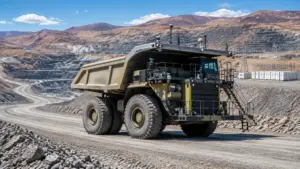
Mining operations today look nothing like what most films depict. The industry has invested billions in safety technology, environmental controls, and workforce training. Modern mines are engineering marvels, not primitive holes in the ground.
Yet every time another mining disaster film hits theaters with the same tired visual language: the flickering headlamps, the collapsing tunnels, the isolated miners without communication: we reinforce a narrative that no longer matches reality.
Hollywood gets the human stories right more often than the technical ones. The labor struggles, the community bonds, the economic precarity of mining-dependent towns: these translate well to screen because they’re fundamentally about people, not processes.
But maybe it’s time for filmmakers to visit an actual modern mining operation before the next script gets greenlit. The real technology is actually pretty impressive. And it might make for a more interesting film than another candlelit collapse sequence.
The mining industry continues evolving faster than its cultural representations. For current industry analysis and news, visit Skillings Mining Review.