By Charles Pitts
The economics of copper mining in 2026 have shifted from a hunt for the largest “virgin” deposits to a race for the most logistically viable ones. As the global energy transition accelerates, the demand for copper is hitting record highs, yet the time required to bring a greenfield project from discovery to production remains a decade-long hurdle. In South Australia’s Curnamona Province, a new partnership between Hillgrove Resources (ASX:HGO) and Havilah Resources (ASX:HAV) is demonstrating a blueprint for bypassing these traditional barriers: the infrastructure-led exploration play.
By prioritizing proximity to the Transcontinental Railway and utilizing existing processing capacity at the Kanmantoo copper plant, the Mutooroo project is transitioning from a stranded resource into a near-term production candidate. This “hub-and-spoke” model is not just a technical solution; it is a strategic response to the rising capital intensity and execution risks facing mid-tier miners today.
The Strategic Pivot to Infrastructure-Led Growth
For decades, the mining industry operated on a “build it and they will come” philosophy, often spending billions on standalone processing plants and dedicated rail spurs for remote assets. However, the 2026 shift toward execution over speculation has forced operators to rethink this approach. Capital is increasingly flowing toward projects that can “piggyback” on existing industrial footprints.
More Read


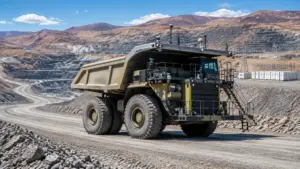
High-capacity haulage and extraction logistics are central to the hub-and-spoke model.

The Mutooroo Copper-Cobalt-Gold project is a prime example. Located approximately 60 kilometers southwest of Broken Hill, the asset sits within 8 to 16 kilometers of the Transcontinental Railway: a heavy-duty corridor connecting the interior to major ports on the Spencer Gulf. In a sector where logistics can account for up to 30% of operating costs, this proximity is a transformative economic driver.
The Hillgrove-Havilah Farm-In: De-risking the Mutooroo Asset
In early 2025, Hillgrove Resources and Havilah Resources entered into a binding farm-in agreement that essentially “outsources” the development risk of Mutooroo to an established operator with spare capacity. Hillgrove, the operator of the Kanmantoo copper mine, has the right to earn up to an 80% interest in Mutooroo by funding technical studies and exploration.
More Read

The deal structure is meticulously phased to de-risk the asset before a Final Investment Decision (FID) is made:
- Upfront Consideration: Hillgrove issued roughly A$5 million in shares to Havilah.
- Phase 1 Earn-In: A$2 million budget focused on rail logistics studies and metallurgical testwork to ensure Mutooroo ore is compatible with the Kanmantoo flowsheet.
- Phase 2 Earn-In: Completion of a Pre-Feasibility Study (PFS) within 24 months, with total spending reaching A$10 million.
- The Stage 2 Trigger: Upon a positive FID, Hillgrove can elect to pay A$35 million (a mix of cash and shares) to secure its 80% stake.
This partnership allows Havilah to realize value from its massive 192,000-tonne copper resource without the multi-hundred-million-dollar capex burden of building a standalone mill.
Data Snapshot: The Mutooroo Mineral Resource
The scale of the Mutooroo deposit is significant, particularly given its high-grade sulfide core. Below is the current JORC-compliant resource estimate which forms the basis of the 2026 technical studies.
| Classification | Tonnes (Mt) | Copper (%) | Cobalt (%) | Gold (g/t) | Contained Cu (t) |
|---|---|---|---|---|---|
| Measured | 1.15 | 1.62 | 0.16 | 0.19 | 18,600 |
| Indicated | 4.85 | 1.54 | 0.16 | 0.21 | 74,700 |
| Inferred | 6.50 | 1.51 | 0.16 | 0.20 | 98,100 |
| Total Sulphide | 12.50 | 1.53 | 0.16 | 0.20 | 192,000 |
Source: Havilah Resources / Invest SA. Figures rounded for clarity.
The Hub-and-Spoke Model: Kanmantoo as the Central Processor
The technical heart of this play is the “hub-and-spoke” model. Hillgrove’s Kanmantoo processing facility acts as the “hub.” It is a fully permitted, operating concentrator with existing tailings storage, power, and water infrastructure. Currently, Kanmantoo is processing ore from its own underground operations, but it has the capacity to handle significantly higher throughput.

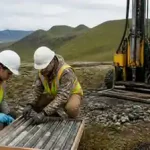
Underground drilling operations at Mutooroo will target higher-grade extensions to feed the Kanmantoo hub.
Mutooroo serves as the “spoke.” The plan involves mining and crushing the ore at the Mutooroo site, then transporting it via a short-haul road to a rail siding on the Transcontinental corridor. From there, the ore travels by rail to a point near Kanmantoo, where it is trucked the final distance to the plant. This avoids the environmental footprint and capital cost of a new 1 million tonne per annum (Mtpa) processing facility in a remote area.
Proximity as a Catalyst: The Transcontinental Corridor
The Transcontinental Railway is the “conveyor belt” that makes the Mutooroo deal viable. In many remote mining jurisdictions, building a railway from scratch can cost upwards of $5 million per kilometer. By being within 16 kilometers of an existing heavy-haul line, Hillgrove and Havilah have essentially “inherited” hundreds of millions of dollars in infrastructure value.
The 2025–2026 logistics studies are currently evaluating whether to transport “run-of-mine” (ROM) ore or to utilize ore sorting technology to create a pre-concentrate at the mine site. Pre-concentration would reduce the volume of material moved by rail, further lowering freight costs and maximizing the value of every ton shipped. This focus on freight efficiency is a key theme in modern mining ROI discussions.

Integrated logistics require real-time monitoring to synchronize rail schedules with plant throughput.
Scaling Up: The Road to 20,000 Tonnes Per Annum
The ultimate goal of this logistics-first strategy is to scale Hillgrove’s aggregate copper production to over 20,000 tonnes per annum (tpa). By blending Mutooroo’s high-grade sulfide ore with Kanmantoo’s existing feed, the joint venture can optimize the mill’s performance and extend the mine life of the entire South Australian operation to over 13 years.
Investors tracking copper stock data are increasingly looking for this type of synergy. The ability to increase production without a corresponding “step-change” in capital expenditure is a rare find in the current market.

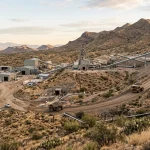
Existing infrastructure at Kanmantoo provides the backbone for Mutooroo’s rapid development path.
Shared Infrastructure: The Future of Australian Mining?
The Mutooroo project is representative of a broader trend across the Australian resources sector: the rise of the “logistics-first” junior. With labor costs rising and environmental regulations tightening, the barrier to entry for standalone greenfield projects is higher than ever.
By leveraging regional rail corridors and underutilized processing hubs, companies can bypass the “valley of death” between discovery and cash flow. For South Australia, this model could unlock dozens of smaller, high-grade deposits in the Curnamona Province that were previously considered “stranded.”
2026 Outlook: Execution Milestones
As we move through 2026, the industry will be watching for several key milestones from the Mutooroo partnership:
- Metallurgical Confirmation: Final results showing the recovery rates of Mutooroo ore through the Kanmantoo circuit.
- Rail Access Contracts: Finalization of haulage agreements with regional rail providers.
- Resource Upgrades: Results from the 5,000-meter drilling program aimed at converting Inferred resources into the Indicated category.
The Mutooroo project proves that in the modern mining era, the “best” copper project isn’t necessarily the largest one in the ground: it’s the one with the shortest, most cost-effective path to the mill.