By Penny Langford
Namibia is currently reinforcing its position as a global uranium cornerstone. As of May 2026, the nation’s mining sector is undergoing a massive operational expansion, driven by high spot prices and a global scramble for carbon-free baseload energy. With long-standing producers ramping up and flagship development projects crossing critical engineering milestones, Namibia is on track to significantly close the global supply gap.
The "Namibian Uranium Renaissance" is no longer a forecast: it is an operational reality. This month’s progress reports from Deep Yellow, Bannerman Energy, and Paladin Energy highlight a synchronized move toward peak production. From technical engineering completions to major foreign direct investment (FDI) inflows, the infrastructure in the Erongo region is transforming to support the next decade of nuclear fuel demand.
Paladin Energy: Langer Heinrich Surges Past Expectations
Leading the charge in the current production cycle is Paladin Energy’s Langer Heinrich Mine (LHM). After its successful restart in 2024, the operation has moved into a high-performance phase. In the quarter ending March 2026, Paladin reported a production surge to 1.29 million pounds of U₃O₈: a 5% increase over the previous quarter.
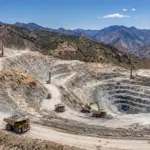
Operational efficiencies at Langer Heinrich have surpassed initial restart projections. Recovery rates have stabilized at approximately 92%, a figure that has prompted management to raise the full-year FY2026 guidance to between 4.5 million and 4.8 million pounds. For investors and market analysts, the most compelling data point remains the margin; Paladin is currently maintaining cash margins of roughly US$30/lb, even as inflationary pressures impact global mining equipment costs.


Deep Yellow: Tumas Project Technical Deep-Dive
While Paladin handles current supply, Deep Yellow is rapidly building the future. The Tumas Project, located just south of the historic Husab and Rössing mines, has reached 68% detailed engineering completion as of May 2026. This represents a critical "de-risking" phase for the project.
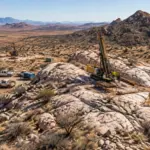
According to recent technical disclosures, bulk earthworks are effectively finished at 91% completion. Deep Yellow has also secured 79% of its major processing-plant equipment packages, a move that shields the project from the supply chain volatility that has plagued other global developments.
The Tumas Project is unique due to its palaeochannel-hosted mineralisation. Unlike the hard-rock deposits typical of the region, Tumas allows for shallower, lower-cost extraction. With a 20-year mining license in hand and a power supply agreement executed earlier this year, Tumas is positioned to become Namibia’s fourth major uranium mine. Exploration at the nearby Tinkas Prospect suggests that the current reserve of 79.5 Mlb U₃O₈ could see significant satellite-feed extensions, potentially pushing the mine life well beyond the 2040s.
Bannerman Energy: Etango-8 Secured by $321M FID
Perhaps the most significant financial development this month is Bannerman Energy’s Final Investment Decision (FID) for the Etango-8 project. Following months of speculation regarding the funding structure for the US$321 million initial capex, Bannerman has confirmed a financing package backed by Chinese strategic interests.
The Etango-8 project is a streamlined, "capital-efficient" version of the original world-class Etango deposit. By focusing on an initial 8 million tonnes per annum (Mtpa) throughput, Bannerman has lowered the barrier to entry while maintaining the ability to scale up.
The $321M backing: a combination of debt and strategic equity: underscores the geopolitical importance of Namibian uranium. China’s aggressive nuclear expansion requires a massive, reliable feedstock, and Etango-8 provides a long-term solution. Front-end engineering and design (FEED) are already being converted into construction contracts, with first ore-to-pad expected by late 2027.
2026 Project Comparison: Namibia Uranium Sector
The following table outlines the current operational status and scale of the three primary movers in the Namibian uranium sector as of Q2 2026.
| Project | Company | Status (May 2026) | Annual Target Production | Key Milestone |
|---|---|---|---|---|
| Langer Heinrich | Paladin Energy | Operational (Ramping) | 4.5M – 4.8M lbs | 1.29M lbs produced in Q3 FY26 |
| Tumas | Deep Yellow | Construction Preparation | 3.6M lbs | 68% Engineering Completion |
| Etango-8 | Bannerman Energy | FID / Early Works | 3.5M lbs | $321M Financing Secured |
Geopolitical Context and China’s Strategic Footprint
The involvement of Chinese capital in Bannerman’s Etango project is consistent with broader trends in the region. Namibia already hosts two of the world’s largest uranium mines: Husab and Rössing: both of which have significant Chinese ownership. This "Frontier Focus" on Namibia is part of a broader China critical minerals strategy aimed at securing long-term supply chains for the energy transition.
For western utilities, the increasing Chinese footprint in Namibia creates a complex procurement landscape. While Namibia remains a stable, mining-friendly jurisdiction, the competition for offtake agreements is intensifying. As we noted in our recent lithium price forecast 2026, the "security of supply" narrative is now the primary driver for mineral investments, superseding pure cost considerations.

Infrastructure and Energy Hurdles
Despite the progress, the "renaissance" faces logistical bottlenecks. The Erongo region’s water scarcity remains a perennial challenge. All three projects rely heavily on desalinated water from the coast. While the Namibian government has cleared the path for a second large-scale desalination plant, the timing of its completion will be critical for Deep Yellow and Bannerman as they move into water-intensive processing phases.
Power is the second major variable. Namibia’s grid is becoming increasingly integrated with South Africa’s, yet the demand from these massive mining operations requires dedicated solutions. Deep Yellow’s recently executed power supply agreement is a step in the right direction, but the broader industry is watching for further progress on regional renewable energy integrations to lower the carbon footprint of "green" nuclear fuel.
Looking Ahead: The 2026-2028 Outlook
The next 24 months will define Namibia’s ranking in the global uranium hierarchy. If Deep Yellow maintains its construction schedule and Bannerman breaks ground as planned, Namibia could realistically challenge Kazakhstan for the top spots in global production by the end of the decade.
The convergence of high-grade technical engineering, strategic geopolitical financing, and a proven production track record makes Namibia the most significant uranium jurisdiction to watch in 2026.
Social Media Snippet:
Namibia is cementing its role as a uranium powerhouse. With Deep Yellow’s Tumas project nearing 70% completion and Bannerman securing a $321M FID with Chinese backing, the 2026 outlook is transformative. Explore our latest operational deep-dive into the projects leading the global nuclear fuel charge. #Uranium #MiningNews #Namibia #EnergyTransition #NuclearEnergy
References & Internal Links: