BUENOS AIRES : In a move that underscores the rapid transformation of Argentina’s extractive sector, the Evaluation Committee for the Large Investment Incentive Regime (RIGI) has formally cleared Lithium Argentina’s (TSX: LAR; NYSE: LAR) Stage 2 expansion at the Cauchari-Olaroz project. The approval marks a critical milestone for the $1.24 billion project, signaling a significant shift in the country's approach to foreign direct investment and sovereign risk management.
The expansion, a joint venture with Chinese giant Ganfeng Lithium, aims to add 45,000 tonnes per annum (tpa) of lithium carbonate equivalent (LCE) to the operation's existing capacity. When combined with the currently producing Stage 1, the site is projected to reach a total output of approximately 85,000 tpa LCE, positioning it as a Tier-1 global lithium asset.
The RIGI Framework: De-risking the "Argentina Premium"
The approval is being hailed as a flagship success for President Javier Milei’s pro-market agenda. Historically, mining projects in Argentina have struggled with "country risk" premiums: volatile tax regimes, aggressive foreign exchange (FX) controls, and unpredictable export duties.
RIGI was designed specifically to neutralize these hurdles for large-scale projects exceeding a $200 million investment threshold. For Lithium Argentina, the benefits of the 30-year stability agreement are substantial:
- Tax Incentives: A reduction in corporate income tax to 25%, down from the standard 35%.
- FX Flexibility: The ability to retain export proceeds offshore and maintain unrestricted access to hard currency for debt service and dividend distributions.
- Customs Exemptions: Duty-free import of capital goods essential for construction and the waiving of export duties after three years of operation.
By securing these terms, Lithium Argentina materially improves the project's Net Present Value (NPV) and Internal Rate of Return (IRR). This fiscal predictability is expected to simplify future financing rounds and strengthen the company’s position amidst a shifting lithium price forecast 2026.


Project Specifics: Expanding Cauchari-Olaroz
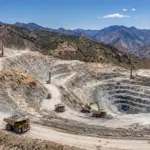
The Cauchari-Olaroz operation, located in the Jujuy province, is already a significant contributor to global supply. Stage 1 is currently operating at a nameplate capacity of 40,000 tpa LCE. The $1.24 billion Stage 2 expansion represents a massive scaling of the infrastructure required to process brine from the Puna plateau.
The JV structure with Ganfeng Lithium remains a core component of the project's technical and financial stability. As China continues to refine its critical minerals strategy, the successful expansion of Argentine brine assets provides a strategic counterweight to more volatile hard-rock operations elsewhere.
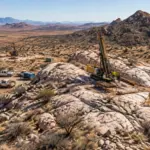
The expansion involves the construction of additional evaporation ponds and an upgraded lithium carbonate processing plant. While the RIGI approval provides the fiscal "green light," the project still awaits final environmental permits for the Stage 2 footprint. However, with the federal government's backing, local observers expect the provincial authorities in Jujuy to align with the expedited development timeline.
Regional Impact: Jujuy and the Lithium Triangle
Argentina sits at the heart of the "Lithium Triangle," alongside Chile and Bolivia. Unlike its neighbors, which have moved toward greater state intervention or more restrictive permitting, Milei’s Argentina is positioning itself as the most business-friendly jurisdiction in the region.
According to Economy Minister Luis Caputo, the Cauchari-Olaroz approval is one of 16 major projects currently fast-tracked under RIGI, representing a combined investment value nearing $30 billion across the mining and energy sectors. This influx of capital is expected to transform regional economies like Jujuy, creating thousands of jobs in construction and long-term operations.

Market Implications and Investor Sentiment
For investors, the RIGI approval is a "de-risking event" that changes the narrative around Lithium Argentina. The company has navigated a complex split from Lithium Americas and faced the same headwinds as other producers during the 2024-2025 price correction.
The ability to operate under a 30-year stability agreement allows the company to plan its capital allocation with a degree of certainty previously unavailable in Argentina. Furthermore, the company is already eyeing its next major move: the Pozuelos-Pastos Grandes (PPG) project. PPG is envisioned to produce up to 150,000 tpa LCE in successive phases and has also been submitted for RIGI consideration.
The timing is significant as global producers manage supply timing and capex cuts. By moving forward with a high-capacity, low-cost brine operation, Lithium Argentina is betting on its ability to remain competitive even in a lower-price environment.

Operational Risks and 2026 Outlook
Despite the policy tailwinds, operational and political risks remain. The sheer scale of brine expansions often presents technical challenges during the ramp-up phase. Evaporation pond performance is subject to weather patterns, and lithium recoveries must be optimized to reach the 85,000 tpa target efficiently.
There is also the question of political longevity. While RIGI provides legal protections, future administrations in Argentina have historically attempted to renegotiate or circumvent long-term contracts. However, the international nature of the JV and the multi-billion dollar scale of the investment provide a layer of diplomatic and legal protection that smaller projects lack.
The formal RIGI resolution for Cauchari-Olaroz is expected to be ratified by June 2026. If the timeline holds, construction activity at the site will likely intensify through the second half of the year, signaling a new era for Argentina lithium mining news.
Featured Lead/M&A Snippet for Social Distribution
Headline: The Milei Effect: $1.24B Lithium Expansion Approved ??
The News: Lithium Argentina (LAAC/LAR) has secured RIGI approval for its Cauchari-Olaroz Stage 2 expansion. This triggers a 30-year stability agreement including 25% corporate tax and offshore FX retention.
Why it matters: This is the clearest evidence yet that Argentina’s pro-market reforms are de-risking Tier-1 assets. The project is scaling to 85,000 tpa LCE, positioning Argentina to lead the next wave of global lithium supply.
Read the full analysis on Skillings Mining Intelligence: [Link to Post]
#Mining #Lithium #Argentina #CriticalMinerals #Milei #Investment #EnergyTransition
By Penny Langford
Skillings Mining Intelligence
May 16, 2026
Summary Table: Cauchari-Olaroz Stage 2 RIGI Impact
| Feature | Pre-RIGI Status | RIGI Approved Status |
|---|---|---|
| Corporate Income Tax | 35% | 25% |
| Export Duties | Subject to change/fluctuation | Waived after 3 years |
| Import Duties | Standard tariffs on capital goods | 0% (Duty-Free) |
| FX Restrictions | Strict capital controls | Offshore proceeds retention allowed |
| Stability Period | Year-to-year legislative risk | 30-year legal stability |
| Total Target Output | 40,000 tpa LCE (Stage 1) | ~85,000 tpa LCE (Stage 1 + 2) |