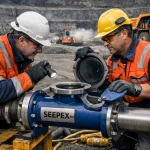
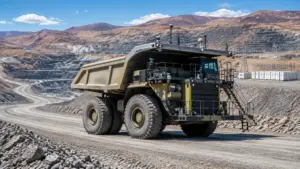
WAUNAKEE, Wis. , NORD DRIVESYSTEMS has expanded its digital twin and virtual commissioning service, enabling plant engineers to simulate and test configured drive systems before physical manufacturing begins. The move cuts development timelines from several months to a few weeks, addressing a persistent bottleneck in complex automation projects across mining, materials handling, and heavy industrial sectors.

The service operates through NORD's myNORD customer portal. Engineers configure drive systems by selecting performance specifications, mounting options, and output parameters, then request a simulation model of the customized setup. Those models are inserted into a virtual system environment where drives can be tested, modified, and validated before a single physical component is ordered.
Development time matters. Per facility.
For technically demanding applications, conveyors in underground mines, sorting systems in processing plants, automated material handling in smelters, virtual commissioning identifies integration issues early, when fixes cost hours instead of weeks and thousands instead of hundreds of thousands.
More Read

The Mechanics: Configure, Simulate, Validate
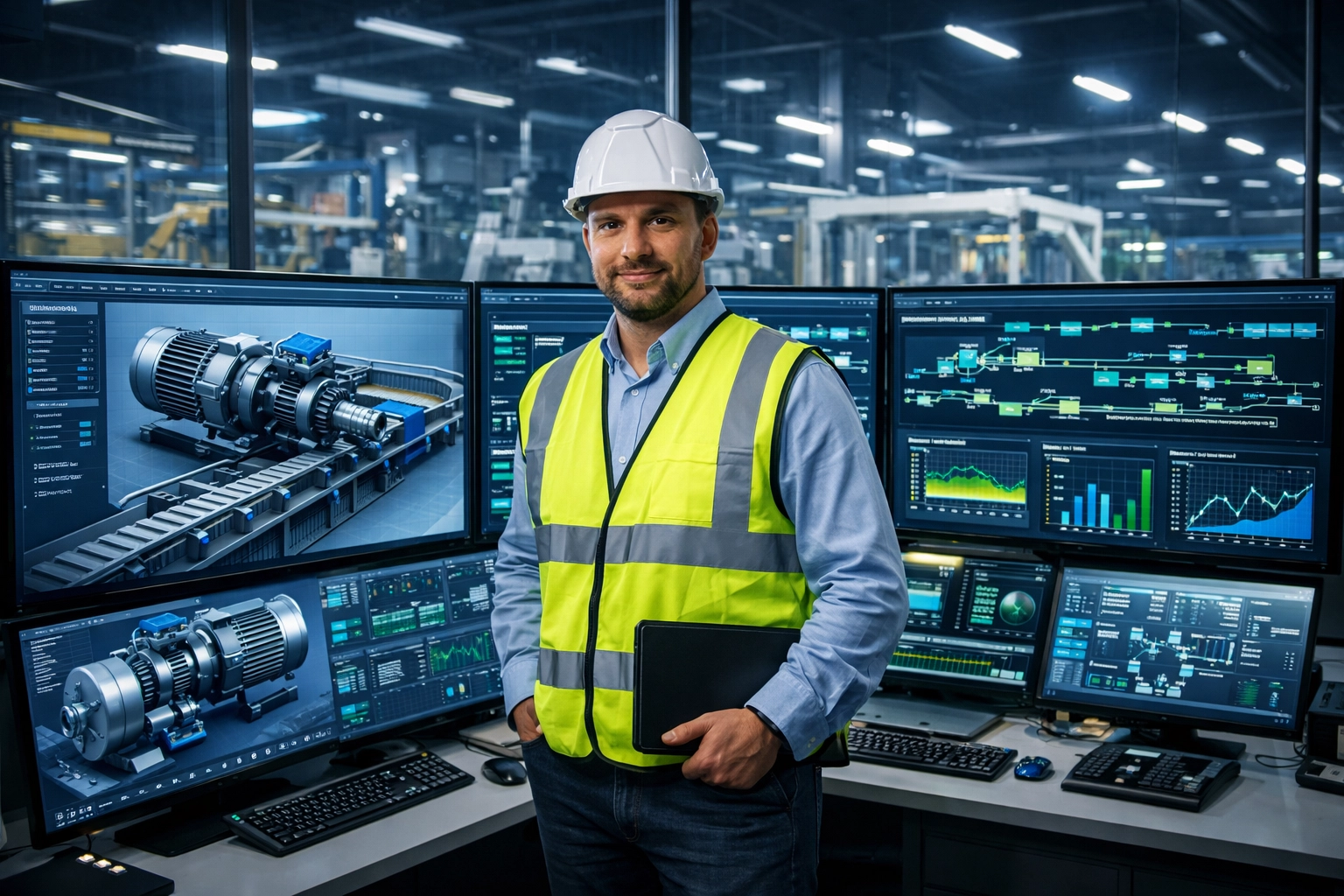
The workflow is straightforward. A plant engineer logs into the myNORD portal, selects drive components based on torque, speed, and environmental requirements, and submits a request for a digital twin. NORD generates the simulation model and delivers it in formats compatible with standard industrial automation software.

That model is then dropped into a larger virtual replica of the plant's control system. Engineers run the drives through operational cycles, start-up, variable speed operation, emergency stops, thermal stress scenarios, and collect performance data. If the drive configuration underperforms or creates control conflicts, adjustments are made in the model. Rinse, repeat.
Once the virtual system is validated by the customer, NORD manufactures the physical drives. The critical advantage: those drives arrive already functionally integrated into the plant's control architecture. Actual commissioning happens faster because the integration work was completed digitally.
More Read

No surprises. No costly rework during installation.
Early Movers: IE5+ and IE4 High-Efficiency Motors
NORD is initially focusing virtual commissioning on its IE5+ and IE4 high-efficiency motor lines, along with corresponding gear units and frequency inverters used in automated production environments. These are the workhorses of modern material handling: energy-efficient, variable-speed drives that power conveyors, crushers, and automated guided vehicle (AGV) systems.
IE5+ motors deliver efficiency ratings above 96 percent in many configurations. That's not marketing fluff, it translates to measurable reductions in operating costs for plants running 24/7 cycles. In large-scale mining operations where dozens or hundreds of drives operate continuously, the cumulative energy savings are substantial.
The company plans to expand simulation models to additional product lines over time, but the IE5+ and IE4 focus makes strategic sense. These are the drives most commonly deployed in technically complex applications where virtual commissioning delivers the highest ROI.

The Machineering Partnership: Software Muscle Behind the Simulation
NORD developed the virtual commissioning service in collaboration with Machineering, a Munich-based software firm specializing in digital twin technology for industrial automation. Machineering's platform handles the computational heavy lifting: physics-based modeling of electromechanical systems, real-time simulation of drive dynamics, and integration with third-party control systems.
The partnership gives NORD access to proven simulation tools without building the software stack in-house. For customers, it means compatibility with existing PLCs, SCADA systems, and automation frameworks from Siemens, Rockwell, Schneider Electric, and others.
Interoperability matters. Mining and industrial plants don't rip out entire control architectures to accommodate a new drive supplier. The digital twin needs to play nicely with what's already installed.
Why This Matters for Mining and Heavy Industry
Mining operations are increasingly automated, but automation introduces complexity. A modern mineral processing facility might have 200-plus drives controlling everything from primary crushers to tailings conveyors. Coordinating those systems, ensuring they start in sequence, respond to sensor inputs, and handle variable material loads, requires precise control logic.
Traditional commissioning involves building the physical system, writing control code, testing it on-site, debugging issues as they arise, and iterating until it works. That process can stretch for months. If a drive configuration proves inadequate during testing, ordering replacements and reconfiguring systems adds weeks or months to the timeline.
Virtual commissioning compresses that cycle. Problems are identified when they're still digital, when fixes are trivial.
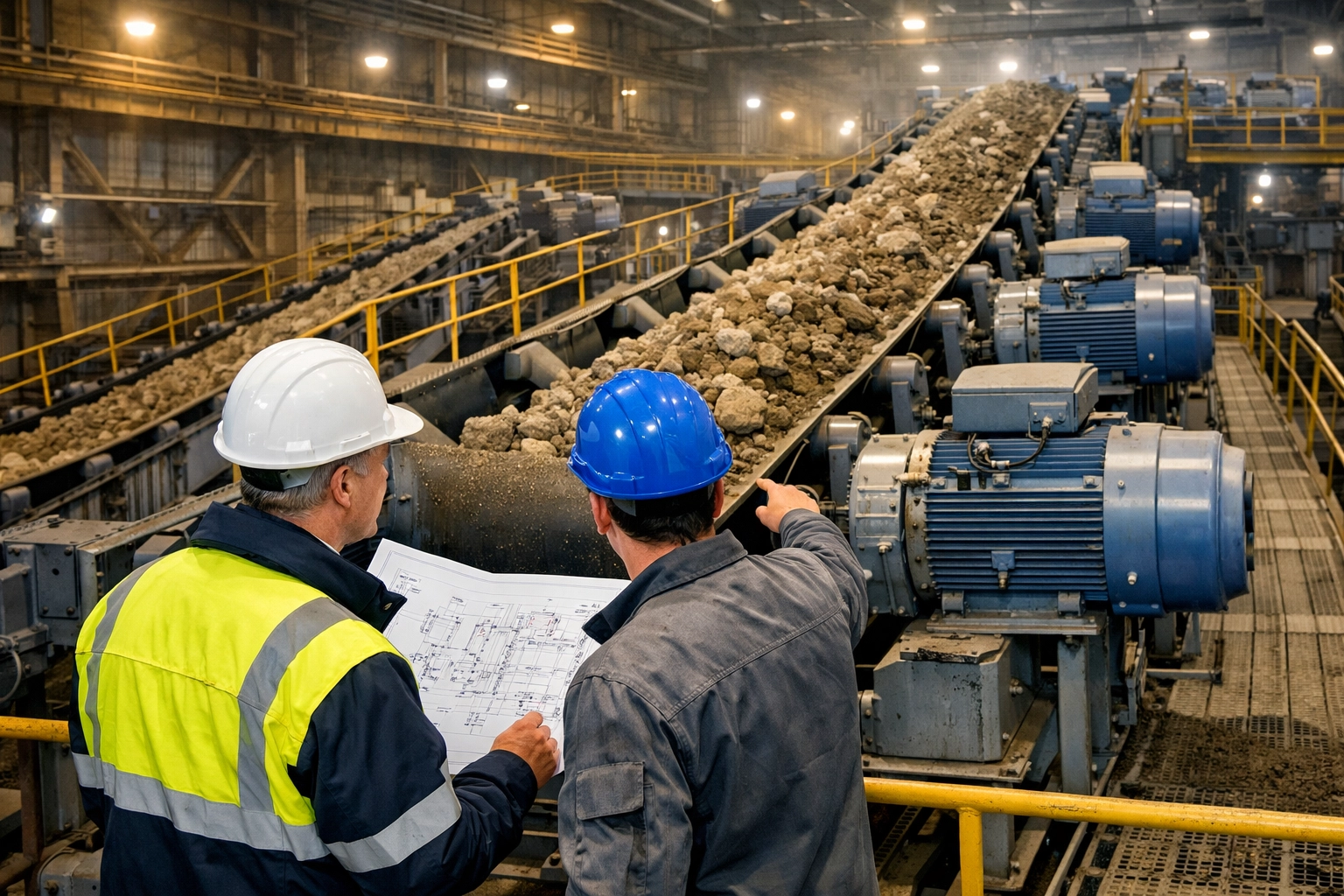
The economic case is clearest for greenfield projects, new mines, expansions, major retrofits, where drive systems are being designed from scratch. But the approach also applies to brownfield upgrades where operators are replacing aging equipment with modern, efficient drives and need to ensure compatibility with legacy control systems.
Operational Upside: Faster Startups, Lower Risk
Once the virtual drive system is validated and the physical equipment is manufactured, on-site commissioning accelerates. Engineers arrive with drives that have already been tested in simulation. Control logic is pre-written. Integration snags have been resolved.
Actual commissioning shifts from "figure it out on-site" to "verify what we already know works." That's a fundamentally different risk profile.
For mine operators facing tight project schedules, whether driven by financing milestones, commodity price windows, or contractual obligations, shaving weeks or months off commissioning timelines has real value. Faster startup means earlier cash flow. It also reduces the risk of cost overruns tied to extended commissioning periods.
Expanding the Digital Toolkit
NORD's move into virtual commissioning reflects a broader industry trend: digital tools are becoming standard practice in industrial engineering, not experimental add-ons. The mining sector, historically cautious about adopting new methodologies, is catching up.
Digital twins, simulation software, and predictive maintenance platforms are increasingly viewed as competitive necessities rather than nice-to-haves. Operators who can design, test, and optimize systems digitally before breaking ground gain schedule certainty and cost control that competitors relying on traditional methods cannot match.

The myNORD portal centralizes access to these tools. Engineers can configure drives, request simulation models, download technical documentation, and manage service requests from a single interface. It's part customer portal, part engineering workbench.
NORD plans to expand the range of products available for virtual commissioning as the service matures. The initial focus on high-efficiency motors makes sense, these are the drives seeing the most demand in new installations, but the long-term vision is broader: any NORD drive system should be simulatable before it's manufactured.
What Comes Next
Virtual commissioning is still early-stage for the broader mining and materials handling sectors, but adoption is accelerating. As more operators experience the benefits, faster commissioning, fewer surprises, lower risk, demand for simulation capabilities will grow.
For suppliers like NORD, offering digital twins becomes a competitive differentiator. Operators evaluating drive suppliers increasingly ask: Can you deliver a simulation model? Can we test this virtually before we commit? Companies that can't answer "yes" risk being left behind.
The technical infrastructure is maturing. Simulation software is more capable. Computing power is cheaper. Standards for data exchange between digital twins and control systems are improving. The barriers to adoption are falling.
NORD's expanded service puts the company ahead of that curve. For mining operators planning expansions, retrofits, or greenfield projects, the ability to virtually commission drive systems before construction begins is no longer a luxury.
It's the new baseline.