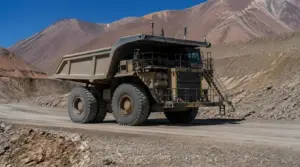
Western Australian gold development landscape with mining infrastructure and exploration activity.

By Penny Langford
Canadian gold and copper producer OceanaGold is buying Australian gold developer Ausgold for A$776 million, or approximately US$553 million, in a transaction that gives the company its first operating and development foothold in Australia.
The deal, announced on August 17, values Ausgold at A$1.36 per share and adds the Katanning Gold Project in Western Australia to OceanaGold’s portfolio. The transaction is expected to create a new growth platform for OceanaGold while giving Ausgold shareholders exposure to a larger, diversified producer with the balance sheet and technical capacity to advance Katanning toward construction.
OceanaGold said the acquisition is being implemented through an Australian court-approved scheme of arrangement. Completion is targeted for December 2026, subject to shareholder, court and regulatory approvals.
Deal terms at a glance
| Transaction detail | Terms |
|---|---|
| Acquirer | OceanaGold Corporation |
| Target | Ausgold Limited |
| Implied equity value | A$776 million |
| Approximate US dollar value | US$549 million–US$553 million |
| Offer value per Ausgold share | A$1.36 |
| Share exchange ratio | 0.03365 OceanaGold shares per Ausgold share |
| Maximum cash alternative | A$194 million |
| Expected Ausgold ownership of combined group | Approximately 6%–8% |
| Expected completion | December 2026, subject to approvals |
The offer represents a premium of approximately 28% to Ausgold’s last closing price before the announcement and a 44% premium to the company’s 20-day volume-weighted average price, according to the companies’ transaction materials.

Ausgold shareholders will primarily receive OceanaGold shares. They may instead elect to receive cash at the same implied value, although the cash component is capped at A$194 million, or about US$137 million. If cash elections exceed that amount, they will be scaled back and the balance will be paid in OceanaGold shares.
On completion, Ausgold shareholders are expected to own between 6% and 8% of OceanaGold, depending on the final mix of cash and share consideration.
The official OceanaGold announcement said the company intends to fund the cash component from existing cash reserves. OceanaGold has also agreed to provide Ausgold with a A$20 million bridge loan in November to support ordinary-course expenditures before closing.
No detailed project-level financing package has yet been disclosed for Katanning’s construction capital. OceanaGold has identified its existing cash generation and balance sheet strength as the principal sources of future funding flexibility, but the final debt, equity or internal cash-flow mix for development remains to be determined.
Katanning adds a development-stage gold platform
The centrepiece of the acquisition is Ausgold’s 100%-owned Katanning Gold Project, located about 275 km southeast of Perth and approximately 40 km northeast of the town of Katanning in Western Australia.
The project is based on the Katanning greenstone belt, a largely underexplored geological region within the broader Yilgarn Craton. Ausgold controls more than 3,000 square kilometres of exploration ground, giving OceanaGold a district-scale land position beyond the initial mine development footprint.
According to Ausgold’s project overview and its Katanning Gold Project page, an updated definitive feasibility study published in December 2025 outlined a conventional open-pit mine feeding a 3.6 million-tonne-per-year carbon-in-leach processing plant.
The study identified:
- A mineral reserve of 1.25 million ounces of gold grading 1.11 grams per tonne.
- A mineral resource of 2.44 million ounces grading 1.11 grams per tonne.
- Potential annual production of more than 100,000 ounces.
- A mine life of at least 10 years.
- Estimated pre-production capital of approximately A$355 million.
- First gold targeted for 2029.
The reserve estimate was constrained at a A$3,000-per-ounce gold price, while the resource estimate used a A$4,500-per-ounce price constraint. Those assumptions reflect the economic environment under which the study was prepared and will be reviewed as OceanaGold takes control of the project.
The A$355 million pre-production capital estimate is substantially smaller than the headline acquisition value, but it will still be a material future funding commitment. OceanaGold said it expects to apply its own project development and operating experience to refine the mine plan, reduce execution risk and assess potential optimization opportunities.

Carbon-in-leach processing equipment represents the proposed processing route for Katanning.
Why Australia, and why now?
For OceanaGold, the transaction expands geographic diversification beyond its current producing assets in the United States, New Zealand and the Philippines.
The company operates the Haile gold mine in South Carolina, the Macraes and Waihi operations in New Zealand, and the 80%-owned Didipio mine in the Philippines. Katanning would become its fifth asset and its first acquisition in Australia.
Western Australia offers an established mining services sector, experienced labour markets, existing transport and power infrastructure, and a mature regulatory and capital-markets environment. Those factors are important for a company moving a development asset from feasibility toward construction.
OceanaGold also has a technical office in Brisbane and management with experience in Australian mining. That existing presence could help the company integrate the project and assess contractors, equipment supply, permitting requirements and infrastructure options.
The acquisition also gives OceanaGold a development asset with a conventional mining and processing design. That is strategically relevant because it limits the need to introduce an unfamiliar extraction or metallurgical process at a time when mining companies are under pressure to control construction costs and shorten project schedules.
Gerard Bond, OceanaGold’s president and chief executive, described Katanning as an advanced open-pit development asset in a major mining jurisdiction. He said the company’s projected free cash flow and balance sheet should allow it to fund Katanning while progressing its existing growth pipeline, including the Waihi North Project.
The company has characterized the acquisition as potentially accretive to net asset value per share, future cash flow per share and earnings per share once Katanning reaches commercial production. Those outcomes remain dependent on the transaction closing, project optimization, construction performance, operating costs, gold prices and the timing of production.
Development work will continue before construction
OceanaGold does not intend to move directly from acquisition to full construction. The company plans additional drilling through 2027 to better define mineralization and reduce uncertainty around the operating ramp-up.
It also plans to publish an updated technical report in accordance with National Instrument 43-101 during 2028. That work is expected to inform the final development plan and provide the market with an updated view of capital, production, mine life and operating assumptions.
The approach creates a longer path to first production than the headline transaction may suggest. The current target is first gold in 2029, but the project must still move through further technical work, approvals, financing decisions, detailed engineering, construction and commissioning.
Katanning is described as well advanced through the permitting process. Ausgold recently received authorization from the Western Australian Environmental Protection Authority to publicly release its Environmental Review Document, which the companies identify as a key state-level approval milestone.
Even so, permitting remains one of several risks that investors and project stakeholders will monitor. Other issues include construction inflation, labour availability, water management, geotechnical conditions, metallurgical performance, community acceptance and the availability of power and other infrastructure.

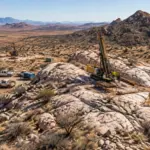
Geological drilling is expected to continue through 2027 as OceanaGold refines the Katanning development plan.
Approval process and shareholder support
The transaction requires approval under Part 5.1 of Australia’s Corporations Act. Ausgold shareholders must approve the scheme at a meeting with both a 75% voting threshold and a majority-in-number requirement for shareholders present and voting.
The Ausgold board has unanimously recommended the proposal, subject to customary conditions including the absence of a superior offer and a continued independent expert conclusion that the transaction is in shareholders’ best interests.
The board intends to vote its approximately 1.4% holding in favour. Dundee Corporation, which owns approximately 7.7% of Ausgold, has also indicated that it intends to support the scheme, subject to the same conditions.
Ausgold expects to dispatch the scheme booklet in October, with the shareholder meeting scheduled for late November. The transaction must also receive court approval and satisfy regulatory conditions, including Australian Foreign Investment Review Board and competition approvals, as well as Toronto Stock Exchange approval for the issuance of OceanaGold shares.
For Ausgold shareholders, the deal offers an immediate premium while preserving indirect exposure to Katanning’s future development through their OceanaGold holdings. For OceanaGold, the acquisition provides a new Australian growth asset, but also adds a development timetable and capital requirement that will need to compete with its existing projects for funding and management attention.
What mining professionals should watch next
The most important milestones will be the scheme booklet, the independent expert’s assessment, shareholder approval and the final transaction structure after cash elections are processed.
Beyond closing, the key operating questions will be whether OceanaGold can lower or contain the A$355 million capital estimate, how additional drilling changes the reserve and resource base, and whether the proposed 3.6 Mtpa processing design remains the preferred development route.
The acquisition shows how established producers are using balance-sheet capacity to secure advanced gold projects in stable jurisdictions. It also illustrates the trade-off involved: a project can offer a relatively conventional design and meaningful exploration upside, while still requiring several years of technical, permitting and financing work before it produces revenue.
OceanaGold’s entry into Australia therefore marks more than a change in ownership for Katanning. It creates a test of whether a mid-sized producer can add a new development project without weakening capital discipline across its existing portfolio.
Social snippet
OceanaGold is acquiring Ausgold for A$776M, adding the Katanning Gold Project in Western Australia and marking its first Australian acquisition. The proposed open-pit project targets 100,000+ oz/year, first gold in 2029 and requires about A$355M in pre-production capital. Read the deal terms and project timeline.
Sources: OceanaGold transaction announcement; Ausgold projects overview; Katanning Gold Project; Skillings gold coverage; Reuters report.